
Two decades of caring for the poor


Play
Doctor works near Tak mountains to treat hilltribes
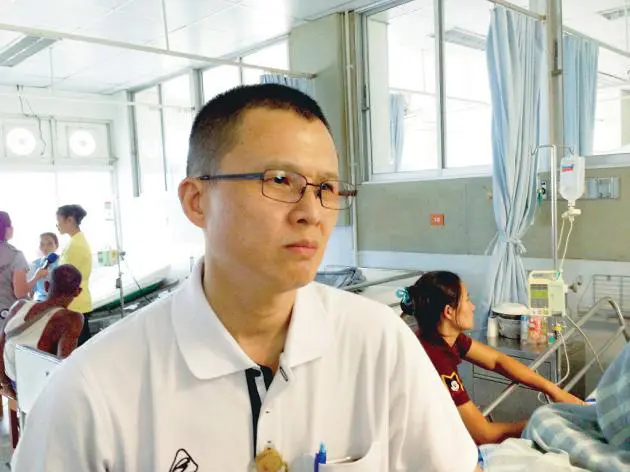
Instead of pursuing his dream to become an engineer and live in a big city, Worawit Tantiwatta-nasap, now 46, volunteered to leave his hometown in Chachoengsao near Bangkok and work as a rural doctor in the mountains of Tak’s Umphang district.
“When I first arrived at this [district] hospital, I asked myself how long I would work at this place because I grew up in an urban area where there were a lot of theatres and shopping centres, but this place had nothing. Only fresh air, cool breezes and a tranquil atmosphere,” he said last week.
However, he has never left and still works at Umphang Hospital caring for local people living along the Myanmar border since graduating from Srinakharinwirot University’s Medical School more than 22 years ago.
Umphang Hospital is a 60-bed facility located 247 kilometres – and 1,219 bends in the road – from Tak and 700km from his hometown. It can be reached only by a four-wheel-drive car.
In fact, he intended to work in this remote area for only a year to fulfil his obligations as a scholarship recipient but stayed on after learning that the hospital had been left undeveloped for many years as many doctors could not work there for more than one year.
“I had to learn how to adapt and continue to live here,” he said.
“There are a lot of places waiting for me to explore,” he said.
To treat hilltribe people living along the border with no access to healthcare services, he travels throughout mountainous areas, sometimes by trekking, sometimes by riding a motorised cart called an e-tok truck and sometimes by hiring an elephant to pull his 4WD.
In Umphang district, the hospital has to provide healthcare services including Caesarean sections and kidney dialysis for 84,875 people, of whom 52,273 are non-Thais with no health insurance. Most of them are suffering from malaria, dengue fever, tuberculosis or diarrhoea.
The hospital has to spend Bt34 million a year of its own money to provide free healthcare services to them. It receives about Bt30 million from the government to provide medical services under the universal healthcare scheme to Thais.
“We can’t charge those patients who have no health insurance, especially the non-Thai patients. They are very, very poor and have no money to pay medical bills. We help them not only for humanitarian reasons but also for disease prevention,” he said.
During the past few years, he has been working very hard to voice his demands to the Public Health Ministry and National Health Security Office to increase the budget to support remote hospitals, especially those located along the borders.
He also helped the local health authority in Myanmar to set up a primary healthcare unit for people living in the neighbouring country.
He not only serves as the hospital’s director, he also its electrician and plumber. He invented a small biodiesel machine to produce renewable and low carbon fuel to use in the vehicles transferring patients from their villages to the hospital.
Even though he receives an allowance from the ministry as an incentive for him to work in a rural area, he uses this money to grant scholarships to children in local villages so that they can attend school.
“Sometimes money means nothing when we learn how to be content and happy with what we’re doing and giving care to other people,” he said.
