
Dam planning meets fierce resistance
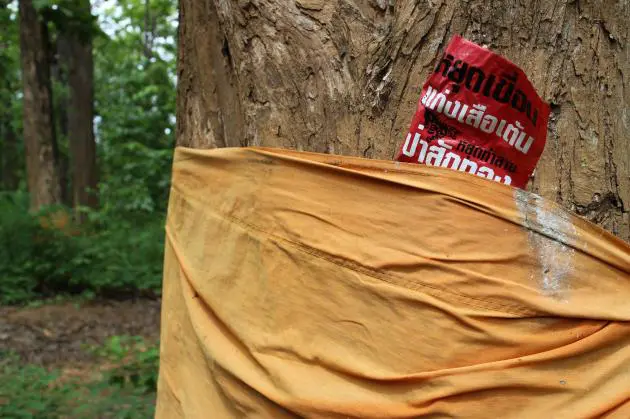


Villagers near Yom River expel EIA consultants
The government’s ambitious plans to build the Lower and Upper Yom dams in Phrae province’s tambon Sa-Iap may never leave the drawing board, due to fierce opposition from local residents, say critics.
Although work on the dams – among 28 to be built under the water-management mega-scheme – is ready to begin, hundreds of villagers have heavily opposed the project. They have even gone as far as expelling representatives of Panya Consultants – the company hired to assess the project’s impact.
Three representatives from Panya Consultants recently visited the area to explain to villagers that the company was no longer involved in the Environmental Impact Assessment (EIA) of the Lower and Upper Yom dams, which will be constructed by ITD-Power China JV, the company awarded the dam contract.
Experts from Panya Consultants were previously hired by the Royal Irrigation Department to conduct the EIA report before construction went ahead. The department allegedly spent Bt80 million on conducting the EIA study.
When locals learned that a group of representatives from the company was visiting the house of the village chief, they announced the visit via megaphone asking villagers to storm the house and expel the three consultants from the area. As the number of protesters grew, some of the villagers shouted abuse at the consultants, while others demanded to know what their intentions were.
“Why are you here? We are happy with our lives without this dam,” an old village woman asked the three consultants.
Locals in the area of the dam’s construction site are concerned that the government will begin construction of the dam very soon. The site of the Lower and Upper Yom dams is in fact not far from the site of the proposed Kaeng Sue Ten dam, which local villagers fought fiercely against for more than 24 years, forcing the government to shelve the plan.
If constructed, the Lower Yom Dam would retain 166 million cubic metres of water, while Upper Yom Dam would hold in the region of 500 million cubic metres. The cost of constructing these two dams is estimated to be over Bt15 billion.
Before the Panya representatives were expelled from the village, villagers forced them to go to the village temple and swear in front of Buddha that they would never return to the village with the intention of carrying out the EIA study.
However, tensions escalated when one of Panya’s female consultants said she could not bow to the villagers’ demands.
“I’m sorry, but I cannot follow your demands. Everyone has their own responsibilities and duties – I cannot swear to this,” the women told hundreds of villagers.
A few minutes later, a male villager brought a bowl of holy water and splashed it over her from head to foot. The woman remained calm and after sometime finally gave in to the villagers’ demands and swore an oath never to return as an EIA consultant.
Anti-dam activist Prasitthiphorn Kal-onsri said he was concerned that the clash between the villagers and the contractor of the dam project would escalate because villagers would not allow any agency involved in the dam project to enter the village. “If the contractor or state agencies try to visit the village now, they will almost certainly be expelled by Sa-Iap villagers,” he said.
Instead of building the two dams, he said the government should consider constructing 77 small reservoirs to retain 2.1 billion cubic metres of water from the Yom River’s tributaries. Another 1.5 billion cubic metres of water could be retained through smaller water-retention projects along the river. This option would cause less impact on local communities and natural resources, he added.
