
Ministry eyes nitrogen as fumigant


Play
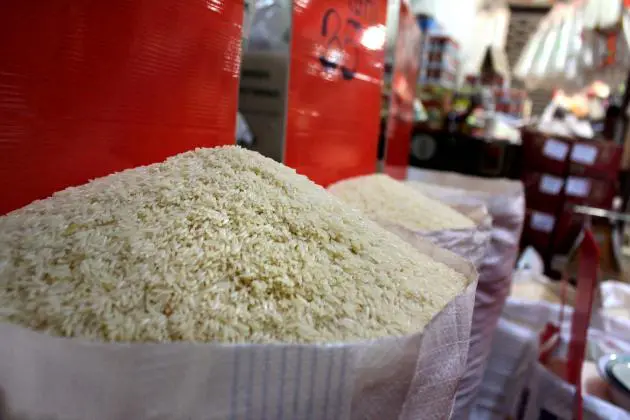
THE SCIENCE and Technology Ministry is now promoting the use of nitrogen as a fumigant for stockpiled rice, describing it as a safe, quick and low-cost option.
“It’s going to be a new alternative for entrepreneurs, especially those in the organic-rice sector,” Science and Technology Minister Peerapan Palusuk said yesterday.
Wanlop Pichpongsa, deputy managing director at Capital Rice Co, said that Thailand exports more than Bt243 million worth of organic rice every year.
Capital Rice is working with Siam Water Flame Co and the Department of Agriculture in a Bt24-million project to develop a nitrogen-based system for the eradication of weevils and red-flour beetles in stored rice.
Peerapan recently visited Capital Rice’s facility in Samut Prakan to see how the nitrogen-based system worked. “The rice weevils and red flour beetles cannot survive when the storage room’s atmosphere has 99.5 per cent nitrogen,” he explained.
Meanwhile, concerns have been growing about the safety of packaged rice. Recent tests show that packaged rice sold under certain brands have a high level of methyl bromide, a chemical used to eradicate insects. The authorities are planning to ban this chemical in the near future. Phosphine is another chemical widely used for the purpose.
In the organic-rice sector, carbon dioxide is used in controlled-atmosphere storage to kill insects instead of chemicals.
Samrit Sae Jiang, president of Siam Water Flame, said nitrogen worked faster and was cheaper and safer in comparison to carbon dioxide.
“Nitrogen costs just Bt10 per tonne, while carbon dioxide costs Bt110 per tonne,” he said, adding that the nitrogen-based pest-control system was also used in other countries such as the Netherlands.
