
Vietnamese jumping at chance to learn Thai prior to start of AEC


Play
Hotel staff and workers in shopping malls see it as a way to boost income
AN increasing number of Vietnamese are learning Thai as second language in a bid to attract tourism and business investment to the country ahead of the Asean Economic Community (AEC), when it commences in 2015.
Languages and communication skills are increasingly being seen by Asean countries as the path to improving economic competitiveness ahead of the AEC, with Vietnam realising that it could bring more investment to the country, especially in the area of tourism.
Vietnam is therefore promoting the importance of language skills in different industry sectors, expressing its wish that people should be able to speak at least two languages.
In recent years, Thai language has become particularly popular among Vietnam’s hotel staff and among staff working in shopping malls.
Quang Tri province resident Houng Quac Hung, 25, said that following the government’s initiative to promote language learning, many people had become interested in learning a second language, with a large number opting to learn Thai.
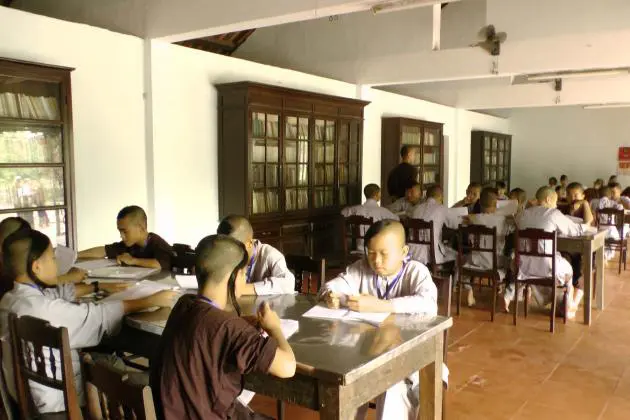
Schools and universities, especially those in the provinces, had launched Thai language classes and some Vietnamese students had also crossed over into Thailand to learn Thai at schools in border provinces. Houng said most people agreed that if Thai was studied as a second language, it would enable one to find a good job – perhaps as a tour guide – a position which offered a larger-than-average income.
Houng said Thai language courses in Vietnam mostly focused on conversational Thai and the main reason people wished to study it was because an increasing number of Thai businessmen were investing in Vietnam, especially in Da Nang province’s furniture business.
Tourism was also another key reason because many Vietnamese liked to visit Thailand in December, as well as during Thailand’s Songkran Festival in April.
Houng spent five years studying at Roi Et Rajabhat University, with his first year spent studying Thai language. The subsequent four years went on studying tourism and hotel management. Thailand, said Houng, put special emphasis on the importance of tourism management and promotion, which could then be applied in his own country.
Da Nang resident Nguyen Van Nhat, 68, said he used to teach at a vocational college in Da Nang and after retirement began working as a tour guide. Since the age of 20, he had been learning Thai and had many relatives living in Thailand. Although most Vietnamese still preferred to learn English and French, Nhat said Thai language had become more popular lately, with some universities making it a compulsory subject. Language institutions had also begun offering six-month conversational courses in Thai, he added.
Nhat said that Vietnam required its university graduates to speak at least two foreign languages in order to get a job, which gave those proficient in foreign languages a big advantage over others in the job market.
However, comparatively-speaking there was still only a small number of Vietnamese studying Thai, because the language was difficult to master and, if not used regularly, was easy to forget, Nhat said.
Thai-Vietnamese Business Association board member Woramai Punpassorn said while Vietnamese people were ready and keen to learn Thai, Thais were not enthusiastic enough about learning Vietnamese, or other Southeast Asian languages.
She advised those wishing to do business in Vietnam to learn Vietnamese, so that they could boost their chances of success following the commencement of the AEC in 2016.
