
Reform may lead to new ad hoc court for drug cases


Play
Bid to address lengthy proceedings with more than 20,000 cases clogging the system
UNDER THE anticipated judicial reform, appeals against drug-related convictions would be handled by a new ad-hoc court in a bid to ease the workload and address very lengthy court proceedings.
Appeals against verdicts in special cases would also be heard and tried by the Court of Appeals instead of the Supreme Court, according to conclusions reached at the Courts of Justice workshop.
Drug-related convictions make up 70 per cent of all court proceedings.
Appeals should be dealt with by the new court, potentially called the Court of Appeals for Drug-relate Convictions, said Bowornsak Thawiphat, the spokesman for the Courts of Justice. The workshop was held on Friday at Chanthaburi and was presided over by Court of Appeals Chief Justice Ekkachai Chinnaphong.
Bowornsak said appeals in special court cases regarding labour disputes, bankruptcy, tax fraud and tax-reclaim requests, intellectual property and international trade should be tried by the Court of Appeals instead of the Supreme Court as they are now.
He said there were more than 20,000 cases in the judicial system, prompting long delays and the ensuing criticism from the public.
The steps towards Supreme Court proceedings should also be altered. Currently, joint approvals by a central quorum of senior judges was needed to decide which Court of Appeals verdicts deserved final scrutiny by the Supreme Court. This should be changed to preliminary agreements by the Supreme Court judges, who would handle the verdicts.
Bowornsak said the objective of the reform, which would be facilitated through an amendment to court regulations and other procedural laws, was to ensure each case would take no more than a year.
“The changes will not be a burden added further to the Supreme Court judges, but will ensure quicker processes and shorter proceedings for all parties involved including the parties in dispute,” he added.
The proposed changes will need to be approval by the board of the Office of the Judicial Administration Commission, which is chaired by Supreme Court president Direk Ingkhaninant, before being submitted to the National Legislative Assembly for scrutiny and promulgation.
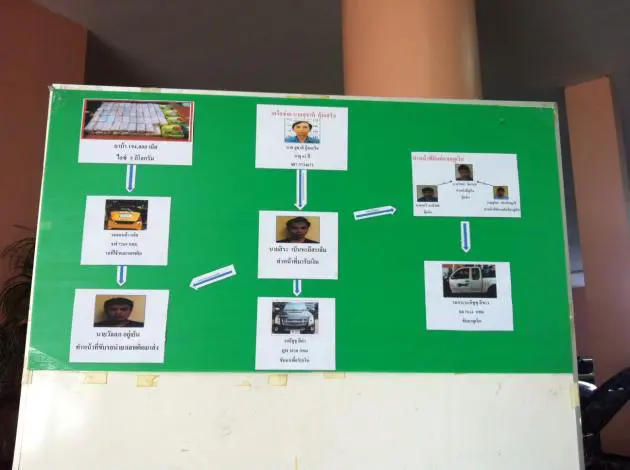
Meanwhile, deputy police chief General Pongsapat Pongcharon yesterday made public the arrests of five people and the seizure of drugs worth more than Bt63.5 million in street value.
The drugs consist of some 194,000 amphetamine tablets and 5kg of “ice” flakes.
The suspects were identified as Korwee Maliwan, Witthaya Jitsuk, Suriya Pradabyart, Wallop Yooyen and Siri Benhaji-salem.
Police said they were going after a key suspect in the case, identified as Suchart Khumsej.
The five were arrested yesterday in a sting operation at a medical centre in Nakhon Nayok’s Ongkharak district.
At another police press conference, police showcased the seizure of 100kg of marijuana and a suspect identified as Bunchuay Anthama, who was arrested recently at a hotel in Saraburi province.
