
Envoys urge media restraint


Play
Graphic photos, private info and 'useless details' being reported, which distress victims' families
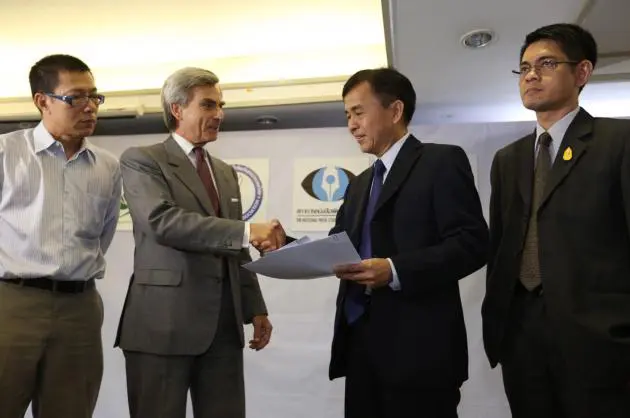
IN AN UNPRECEDENTED move, eight ambassadors from European Union member states met with representatives of four Thai media associations yesterday to urge the media to exercise restraint by not disseminating disturbing photos and private information about foreign tourists slain in Thailand.
For instance, gruesome pictures and private details about two British nationals murdered on Koh Tao have been spread by some media, including social networks.
“We’re sometimes a little bit annoyed by the way information were [is] given,” said Italian Ambassador to Thailand Francesco Saverio Nisio, who represented the group as Italy now holds the rotating presidency of the EU.
Severio Nisio said some news items on such murder cases contained “too many absolutely useless details and information” that were “extremely disturbing” to friends, families and even countries of the victims.
The media associations were given a letter on this matter signed by representatives of 21 nations, mostly European but also including Japan.
British Ambassador to Thailand Mark Kent said during the meeting, which took place at the Thai Journalists Association, that the signatories were not trying to undermine the freedom of the Thai media. Graphic pictures and personal details that add nothing to the stories should be left out, however.
The letter urged that ethical guidelines and self-regulation for broadcasting be duly observed and respected.
“As ambassadors we have, on several occasions, had to plead with the media to respect the privacy of tourists and their families. In particular it is very distressing to see details of the passports of those who have lost their lives posted on media and social media. These contain personal information and add no value to any news story. It is especially upsetting if families learn details via the media before they have been informed themselves. This has happened on occasion,” the letter stated.
“Nor does anyone gain from seeing graphic pictures. We can only imagine how distressing this is for the families of those who have lost their loved ones here in Thailand.
“The most recent example of this is the tragic case of the murder of two British nationals on Koh Tao. Families should be left to grieve at a time of emotional distress, rather than be subject to media harassment.
“It is also important that the media respect due legal process and refrain from publishing content which could prejudice the right of accused persons to a fair trial.”
Thepchai Yong, president of the Thai Broadcast Journalists Association, thanked the ambassadors and said: “We strongly take note of all concerns.” He promised to discuss ways to make journalists aware of this issue. Thepchai added that it would be a long process but hoped it would be part of the “media reform” now under discussion.
Chalermchai Yodmalai, deputy secretary-general of the National Press Council of Thailand, told the ambassadors that the council had no power to force its members’ actions, but it could try to make them recognise their responsibility.
