
Investigation zeroes in on source of food poisoning
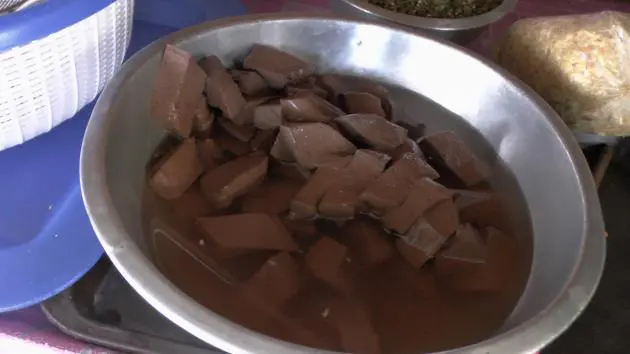


THAILAND HAS become the first country to detect Vibrio parahaemolyticus, a bacterium that causes food poisoning, in chicken blood.
“There are no reports that such a case has existed anywhere else before,” Opart Karnkawinpong, deputy director-general of the Disease Control Department, said yesterday.
V parahaemolyticus is usually found in freshwater fish.
Opart added that in collaborating with his department, the Livestock Development Department had closed down the factory where the bacteria had been found in chicken blood.
“We will conduct random checks at other factories too,” he said.
In Thailand, chicken blood is included in various dishes such as khao man kai (chicken and oily, flavourful rice).
Rajaphum Khiaosanam, a veterinarian at the Nakhon Ratchasima livestock development office, said that province was the biggest base of chicken processing, which delivered both poultry and chicken blood.
“More than 600,000 chickens are slaughtered and processed each day here,” he said.
He said the plants operated by big companies had clearly demonstrated good hygienic standards in line with requirements for food exported to the European Union. There are plants operated by small, local entrepreneurs too.
“We have collected chicken blood from these facilities to determine if there is any contamination. Results should be known within three days,” Rajaphum said.
Disease Control Department director-general Sopon Mekthon advised consumers to boil chicken blood at a temperature of at least 75 degrees Celsius for 15 minutes before consumption to avoid risks from V parahaemolyticus contamination.
He also urged food shops to stick to hygienic standards strictly.
