
Driven by a passion for teaching


Play
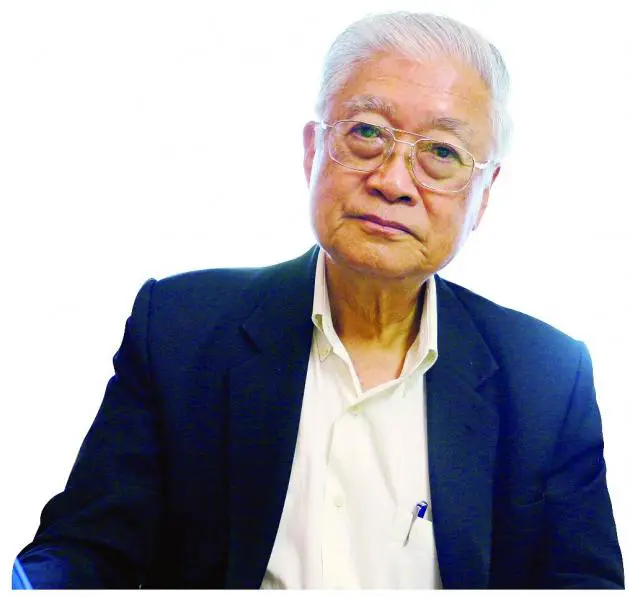
Prof Vicharn Panich is anxious to help boost Thai teaching standards
THOUGH trained as a doctor, Prof Dr Vicharn Panich has spent his retirement years reading education-related theories, writing commentaries about how to boost educational quality and making real efforts to change Thailand’s education for the |better.
Vicharn, indeed, has practically made it his mission to promote the production of great teachers.
“I think there are too few good teachers these days,” the 72-year-old man said during an exclusive interview with The Nation. “The rest are just pseudo-teachers”.
In his view, pseudo-teachers are those preoccupied with their own interests, academic rank and pay level. Without any devotion to their students, these teachers do not care if most of their students fail to achieve learning objectives.
“Back in my school years, I found lots of good teachers,” he lamented.
In December, the Roong Arun School Foundation published a book to reflect Vicharn’s hope to promote the production of good and respectable teachers, as he wants to see Thai children grow up in good hands.
“Inspiring teachers, with great teaching skills and devotion, should be able to raise the educational quality across Thailand,” a part of the book’s foreword suggests.
The book has a compilation of his articles about “teachers for students”.
Vicharn considers himself lucky to have had good teachers in his childhood, one of whom headed to his home to persuade his father to send him to a medical school.
After graduation, he spent more than two decades as a lecturer. Looking back, Vicharn believes that long period was probably a reason why he has associated himself with teaching. “At heart, I am a teacher,” he declares in the book.
Vicharn said teachers these days were prone to focus their attention on smart students, while ignoring the real needs of the average and slow-learning students.
“I am not going to say I am 100 per cent right. But I have come to this conclusion after observing the educational system for so many years,” he said.
He noted that while the country celebrates whiz kids for their remarkable successes at international academic contests every year, it practically turns a blind eye to the fact that most students achieve far less.
“For society to benefit, we must not ignore the majority of children,” he stressed.
Vicharn, now the chairman of the Knowledge Management Institute (KMI), recounted that he became obsessed with “dedicated teachers for students” concept after reading the book titled “Teach Like Your Hair’s on Fire: The Methods and Madness inside Room 56”, which was given to him by prominent educator Varakorn Samkoses in early 2008.
He was so impressed with the book, he started blogging educational articles on http://gotoknow.org/blog/thaikm/tag/rafe.
In Vicharn’s eyes, Thai educational quality slipped over the past few decades because policies are flawed, while many government teachers have successfully bribed their way into their jobs and continued to use dishonest means to claim promotion and rewards.
“What can we expect from such dishonest teachers?” he asked critically.
Vicharn said while not all teachers were bad, a significant number were careful not to work too outstandingly for fear that their colleagues would get angry.
“From my perspective, any change must be done through a system. We need to foster a system that encourages teachers to work well and efficiently.”
He said a KMI initiative had already kicked off at 20 pilot schools, under which everyone at the schools must be active in improving educational services, with school directors playing the lead role.
Vicharn hoped to encourage all Thai teachers to follow their Finnish peers’ style of working. In Finland, students and teachers are in classrooms together from 8.30am till 2.30pm only. After that, teachers have discussions with the school director.
“That approach encourages teachers to be lifelong learners. Indeed, teachers must learn harder than their students,” he said.
He also said Thai educators should stop putting academic excellence over well-rounded development. “To me, learning should develop humanity,” he said, “We need to learn many more things, not just academic matters.”
He said in the 21st Century, teachers should encourage their students to acquire and apply knowledge via activity-based learning.
“When they do activities together, smart students will learn to listen and be kind to slower learners. They will get social skills too,” he pointed out.
Although the Thai education sector is mired with many problems, Vicharn does not lose his hope. He has confidence that everyone can change and with positive psychology tactics, all players should be able to deliver much better performances.
“Let’s share the success stories and tell all teachers how the contributions of each particular great teacher proves so valuable to children and the country. Then, we should see the differences,” he said.
The powers-that-be should also have the guts, he said, to change rules and regulations that crippled the education system.
“Of course, there will be stiff opposition from those who will lose benefits. But if we go ahead with it, we should be able to achieve great changes,” he said.
Vicharn suggested that officials from the Educational Council should work full time with the KMI for three to four years so that they step out of their old mindset and embark on new practical initiatives, which pursue learning-based activities and a professional learning community.
In addition to sitting at the helm of the KMI, Vicharn also sits on a government-appointed steering committee on educational reform and serves as an active adviser to a panel headed by former deputy education minister Sirikorn Maneerin.
“Her panel has been introducing a new approach in about 300 schools. We hope these schools will set example for all other schools to follow,” he said. There are now more than 30,000 schools in Thailand.
Vicharn said he believed everyone should help improve the country’s education, wherever they can.
“In my capacity, I will do all I can including addressing educational issues on my blogs and delivering thought-proving speeches at events where I am a guest speaker,” he said.
