
Officials brace for transfer of temple tigers


Play
ALL 146 TIGERS currently at Wat Pa Luang Ta Bua in Saiyok district in Kanchanaburi will be moved to Khaoson and Khao Pratabchang wildlife breeding centres in Ratchaburi, a top official said yesterday.
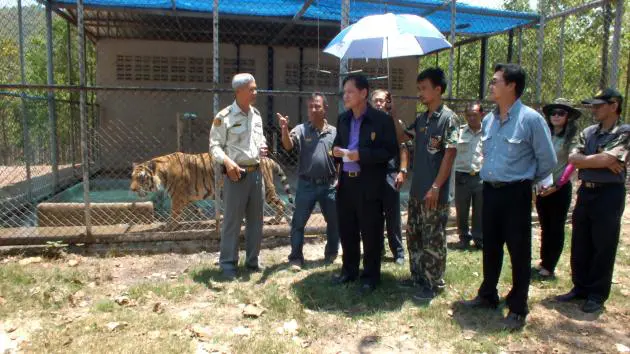
Nipon Chotiban, director-general of the Department of National Parks, Wildlife and Plant Conserva-tion (DNP) yesterday visited the breeding centre to make sure that cages and other facilities were ready for the tigers.
However, Nipon was unable to predict if the impending transfer would spark the kind of protest witnessed at the temple three days ago.
Wat Pa Luang Ta Bua, known as the “Tiger Temple”, was rocked by a 24-hour stand-off between 200 monks, novices, local residents, and more than 600 local officials who tried to relocate six Asian black bears to a new sanctuary in Chon Buri.
“We have to map out a careful plan before executing the relocation of the wildlife,’’ he said.
The centres would have adequate tiger specialists, veterinarians and handlers to take care of the tigers. Eventually, some tigers native to the area would be released to the wild.
“This will depend on the species. Most of the tigers at Wat Pa Luang Ta Bua are Bengal tigers, not local breeds. So we must take care of them till they die,” he said.
Some of the tigers would be donated to zoos with licences to breed wildlife.
This will help reduce the financial burden on the state for the upkeep of the tigers, each of which costs about Bt7,000 a month to feed and take care of.
He said the tigers would be transferred after Songkran.
