
Fishing trawlers 'need proper monitoring'
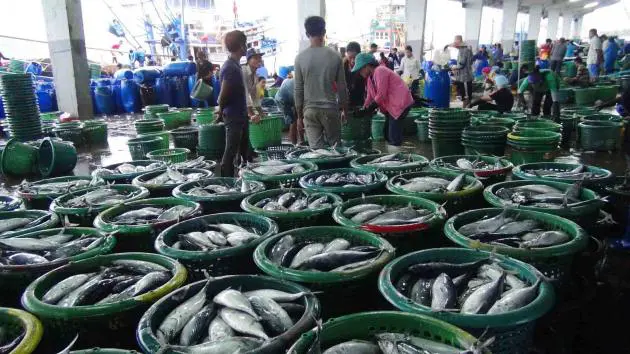


ABUSE of fishery workers is found mostly in deep-sea fishing - on vessels a long way from law enforcement, rather than on boats in coastal areas, a labour rights activist has said.
Sompong Srakeaw, founder and head of the Labour Rights Promotion Network Foundation, said that while national and international regulations do exist, law enforcement was often absent. A stricter mechanism to scrutinise and monitor the industry was badly needed, he said.
Serious problems in the fishing industry emerged almost 10 years ago. But it has come into the spotlight only after the US downgraded Thailand in its annual Trafficking in Persons (TIP) report to Tier 3, the lowest level, last year. The European Union also issued a warning to the country recently over its poor record of illegal, unreported and unregulated fishing.
Thousands of workers work legally and illegally on trawlers both in coastal areas in the Gulf, the Andaman Sea and foreign waters. In Indonesia alone, the number of fishers is around 4,000 – from Thailand, Myanmar and Laos.
But, officials were not well informed, Sompong said, because fishing industries hide information from the public.
In an interview with The Nation, Sompong – who has helped rescue Thai workers – revealed some of the suffering endured by Thai, Myanmar and Laotian labourers in Ambon Island in Indonesia.
“Fishermen who came back from Indonesia’s Ambon told us about their working conditions. Then we decided to visit the island with the goal of meeting labourers, in particular those affected by harsh working conditions,” he said.
Fishery workers usually work out of ports in Ranong, Samut Sakhon and Samut Prakan provinces. Only a few possessed legal documents, while the others falsified documents to avoid problems.
After getting to Ambon Island they would wait for two weeks before joining smaller vessels at sea. Once on board, the fishermen were vulnerable, he said – forced to work with just three to four hours sleep and little chance to escape.
“They might stay at sea for months or even two to three years without returning to port,” Sompong said.
“Some might die and their bodies would be left at sea.”
Thai authorities should do more in terms of coordination with international groups, he said. A more active role for bodies like the International Labour Organisation or International Organisation for Migration – would help to counter such abusive treatment.
Owners and operators of vessels, plus buyers of fish should be more cooperative with state authorities – reveal the real number of fishermen at sea and care about their well-being, Sompong said.
