
New charter keeps NCPO in power until new govt formed


Play
A TRANSITIONAL clause in the draft constitution retains the power and authority of the National Council for Peace and Order until a new government replaces the present one.
Article 278 of the charter states that all NCPO members have to leave office when the current Cabinet finishes its term.
“During the [transfer] period, the NCPO chief and the NCPO still have the powers and duties stated in the provisional constitution of 2014,” the clause says.
Constitution drafter Paiboon Nititawan said yesterday that this was tantamount to extending the NCPO’s stay in power until a new government assumes office.
“They will stay in power to complete their task of maintaining peace and order, particularly during the next election,” he said.
Two charter drafters have expressed confidence that the National Reform Council will vote to accept the constitution on September 6.
Constitution Drafting Committee member Lt-General Nakhon Sukprasert expects as many as 220 NRC members will vote in support of the charter draft.
He based that belief on the fact that the NRC’s eight panels and Cabinet had accepted the CDC’s explanations concerning its handling of NRC and Cabinet proposals and recommendations for amending the charter draft.
CDC member Dr Chuchai Supawong said he was certain the NRC would accept the draft because the NRC and the CDC had worked together for a common goal.
“They have a sense of co-owning the charter draft,” he said.
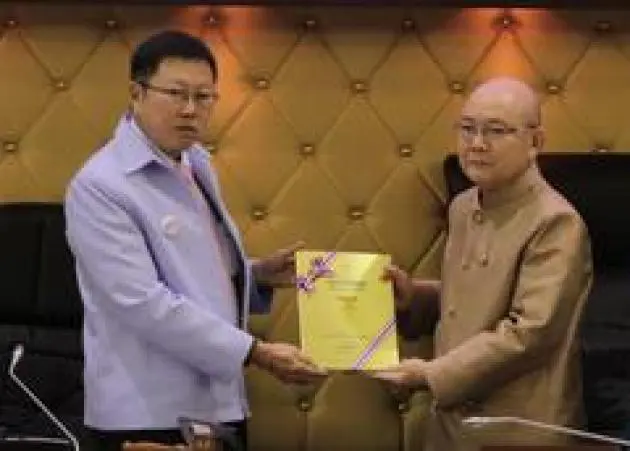
The two CDC members spoke after NRC president Thienchay Kiranandana received the charter draft – complete with gold cover – from CDC chairman Borwornsak Uwanno. This took place at 11.59am – considered an auspicious time.
CDC deputy chairwoman Nareewan Chintakanond handed another charter draft to NRC deputy president Tassana Boontong.
Borwornsak said the CDC met 150 times to draft the charter, taking into account recommendations from the NRC, the Cabinet and political parties, and doing the job in accordance with the guidelines set forth under Article 35 of the interim charter.
September 6 has been set as the date for the vote on the charter as the interim charter stipulates it must be done 15 days after the NRC received the charter.
The NRC member representing Tak, Thaveekij Jaturajarernkul, was heard asking Thienchay yesterday whether NRC members would receive royal decorations.
Meanwhile, CDC deputy chairman Manit Suksomjit dismissed concerns the proposed National Strategic Reform and Reconciliation Commission could dismiss an elected PM.
He said the charter draft stipulated that the NSRRC would take over from an administration only under the following scenarios: if there is a need to uphold the country’s sovereignty; or a need to prevent or suppress the destruction of peace, order and national security; and when the country encounters a conflict caused by domestic or international factors that the government cannot resolve.
The NSRRC must consult the Constitutional Court and the Supreme Administrative Court presidents if it believes the country faces one of those situations, he said. Any decision to dismiss the PM would require at least two-thirds of commission members voting for such a move.
Parliament would also cross-check the power of the NSRRC, while senators and MPs would have the right to file petitions against the NSRRC with the Constitutional Court, Manit said.
In normal circumstances, he said the NSRRC would push for national reform by suggesting reform policies and proposals that aim to reduce social and economic disparities, ensure justice and create sustainable reconciliation.
