
Hunger strike student consigned to solitary confinement
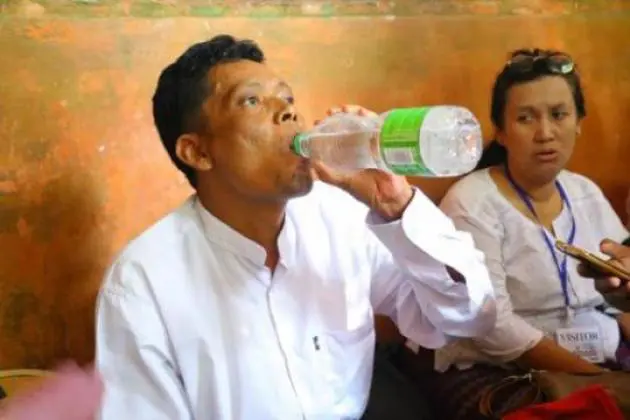


Ba-Ka-Tha student Aung Hmaing San, who began a hunger strike on October 23, demanding the immediate release of all political prisoners on trial, has been consigned to solitary confinement.
“Aung Hmaing San was consigned to solitary confinement for not following prison rules,” said Ba-Ka-Tha member Min Thaway Thit.
His body weight had considerably decreased by the fifth day of his hunger strike. His blood sugar volume has also dwindled.
“Our trial was postponed to November 3. Aung Hmaing San’s trial was the same as ours today. When I asked the situation of Aung Hmaing San, I knew that his blood sugar volume was quite low,” said Phyoe Phyoe Aung, another detained Ba-Ka-Tha leader.
The detained students and activists on trial for their involvement in the democracy education protest column were brought to their twenty-third trial session at the Thayawady court on October 27.
“Aung Hmaing San told the warden of the dormitory in advance that he would begin a hunger strike. The prison authorities told him that this was against prison rules. He went to see the prison authorities on that day. The prison authorities said that if he did not follow the prison rules, he would be kept alone. Healthcare services are carried out for him two times per day,” said Min Thaway Thit.
Aung Hmaing San said he would risk his life for the release of the political prisoners.
“The prison doctors do medical check-ups twice a day. My blood pressure is declining. The doctors tried to put glucose into my body. But I did not accept it. I was carried to the hospital. I know my hunger strike will cause other side-effects. I am determined to encounter these situations,” Aung Hmaing San said.
“There is no rule of law in our country. The judicial system is in a bad condition. For that reason, the politicians are trying to amend our inappropriate and outdated laws. The government sends activists to the prison. Political prisoners should be freed. The country is in a transition to democracy. The government should not imprison its opponents. For that reason, I support the hunger strike of Aung Hmaing San with the aim of freeing all political prisoners,” said detained student Ei Thinzar Maung.
