
Charter draft sent for final phase of royal endorsement
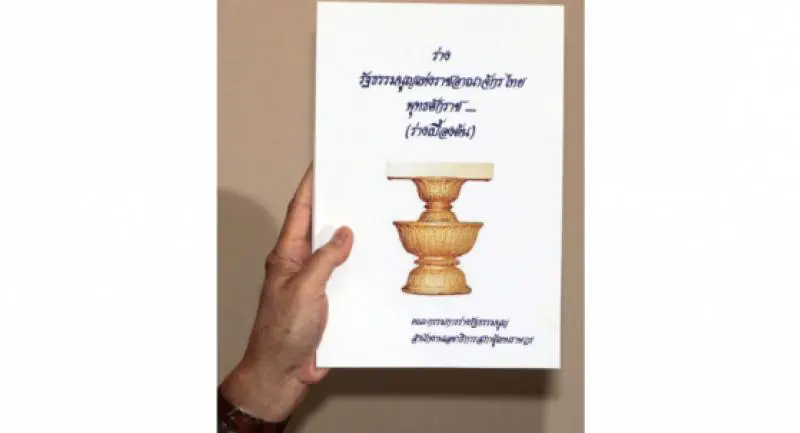


THE GOVERNMENT has already submitted the charter draft to the Office of HM Principal Private Secretary to proceed with a royal endorsement, the final step in the draft’s promulgation, Deputy Prime Minister Wissanu Krea-ngam said yesterday.
Wissanu added that he was not worried about legal impasses in regards to the preamble’s revision as the Constitutional Court had already ruled on the amendment.
There are two points left to be completed in the preamble – a traditional calendar date that would normally be attached at the beginning and the king’s signature – he said.
Prime Minister General Prayut Chan-o-cha on Tuesday said he had signed the charter draft forwarded to him by the Constitution Drafting Commission (CDC) and that it would be forwarded for royal endorsement.
Yesterday was the last day of the 30-day deadline the government had been given under the interim charter to review and sign off on the submission of the document.
The royal endorsement will take place within 90 days according to the same charter.
The charter draft has been through two revisions since it was passed in the August 7 referendum. The first revision involved a process to select a prime minister in a joint parliamentary meeting of the Senate and the Lower House if the House fails to select a prime minister from lists specified by political parties.
The second revision took place following the passing of His Majesty the King, whose role and contribution were mentioned in the charter’s preamble.
Wissanu yesterday also met Thailand’s ambassadors and consuls general, who are stationed in foreign countries worldwide, at an annual meeting to instruct them about the country’s direction and public-administration reforms following the coming promulgation of the constitutional draft and the 20-year national strategic plan.
“I delivered policies and instructions to Thai ambassadors who are responsible for making clear to foreign countries the details of the charter draft, a general election and the national strategic plan,” Wissanu said.
He added that he had not emphasised the country’s “road map to democracy” because the details should already be clear to foreign countries.
The deputy prime minister also exchanged ideas with participating officials regarding the reform of Ministry of Foreign Affairs and overseas policies, adding that the government would ask the ministry for opinions regarding reforms, which the ministry would then formulate action plans to implement.
