
THAI acting president appointed
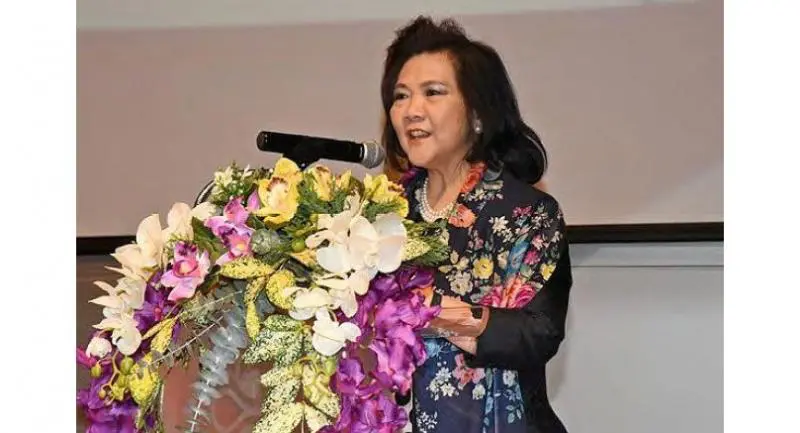


Chairman of the THAI board Areepong Bhoocha-oom said Tuesday Usanee Sangsingkeo, executive vice president of the airline’s aviation business unit, would be acting president for the interim in addition for her current position, from February 10. Usanee will oversee the national carrier for three months.
Areepong said the company had responded to Rolls Royce’s admission to the UK Serious Fraud Office (SOF) – that bribes were paid in several countries including Thailand between 1991 and 2005 so airlines would buy its aircraft engines and that THAI employees had received money – by appointing two committees to investigate the claim.
The first committee is to gather information to support the National Anti-Corruption Commission (NACC), while the second will investigate engine maintenance deals.
In order to prevent corruption, the latter committee will look into the processes involved in past and present engine maintenance procurements. That will be a responsibility of Pichait Riengvattanasuk, vice president of the risk management department.
This is to ensure that the airline’s processes are sound and no loopholes exist. The process has been completely revised and is regarded as flawless. The engine procurement process was also revised in accordance with procurement regulations in 2012.
This rule states that: 1/ Procurements must not be made through a middle man; 2/ Committees and working groups must be set up to provide a check and balance on power; 3/ Procurements must meet international airline standards for transparency and righteousness, with detailed processes and procedures, complete with documents that can be cross-checked.
The company has drawn up an Integrity Pact for procurements with engine manufacturers and maintenance companies to ensure no bribery of THAI staff.
