
Staggering down memory lane


Play
Southern Japan's famous saké city sends one visitor reeling back through time
This is a saké town, so I want to drink some good alcohol,” I thought as I set out on a glorious spring day.
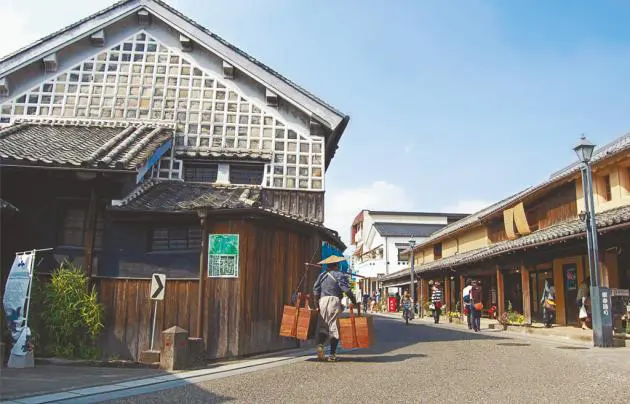
A row of houses with old-fashioned tile roofs punctuated by a single brick chimney reaching up into the sky against a mountain backdrop made me feel as though I’d stepped into a sumi-e ink painting from another era.
The Mameda district of Hita is famous for its old buildings, and the most famous of all is the Kuncho saké brewery. Though the chimney isn’t used anymore, it remains a town landmark.
The area is home to five old saké warehouses, the oldest of which was built in 1702. One has been turned into a museum. Inside among the old saké-making tools in the dim light, you feel shut off from the world. I venture in to taste some of the saké they brew – it is fantastic.
“The water’s good here. It’s because of the cold winters in this valley,” says brewery director Yuko Tomiyasu, 54.
Hita is on Kyushu, the southernmost of Japan’s four main islands, where the climate is milder but temperatures still plunge below zero in winter. At times though, the harshness of nature does have its blessings.
Back out on the streets of Mameda, the traditional buildings sport a variety of facades, from white plaster with namako grid patterns to black and brown walls made of mud. Early in the Edo period (1603-1867), Hita was put under the direct control of the Tokugawa shogunate, and the homes of the town’s old families reflect the styles of the different eras.
Amid this unusual atmosphere, a voice calls out: “Moist anpan, moist! Ishigaki manju, ishigaki!”
Dressed in a top with a kasuri splashed pattern, traditional loose-legged pleated hakama trousers and straw sandals, Fumio Ishimaru, 56, walks the streets selling sweets from wooden boxes that hang on a pole draped across his shoulders.
He seems interesting, so I tag along and find that his treats actually sell quite well. He fits right in with the Mameda atmosphere in his Meiji era (1868-1912) costume, which would look odd anywhere else.
Ishimaru’s main job is running a local hardware store, but he started dressing up to sell treats at events about 25 years ago. Around the time he turned 40, he started coming out to “peddle” on his days off, except during the hottest days of summer.
Selling sweets isn’t making him rich; “I just want people to have fun,” Ishimaru says. He’s been doing it for so long now that he has become part of the scenery.
In addition to the saké made in Hita, south of Mameda is the Kyushu-Hita plant of Sapporo Breweries. But why is “Sapporo” in Kyushu? Yep, it’s the water again. A frosty mug after a tour of the brewery tastes outstanding.
But when one thinks of Kyushu, it’s usually shochu – whose 25-per-cent alcohol gives a stronger hit than saké – that springs to mind first. And indeed a sucho distillery of the famous iichiko brand lies north of Mameda, at which tours and tastings are also available.
Inside the grounds of the distillery, which originally produced whisky, is a virgin sawtooth oak forest, a great place for a walk among the birdsong.
“The microbes you need to make shochu thrive in the water here,” says Kiyotaka Uematsu of Sanwa Shurui Co, producer of iichiko.
The delicious sake, beer and shochu here all condense the region’s essence from its air, water and scenery, as well the personalities of people like Ishimaru.
Even after I leave, just a sip of Hita alcohol brings to mind the old streets of Mameda and the spacious sawtooth oak forest.
