
Cities That Win the Future Will Be Built for Life, Not Just Growth
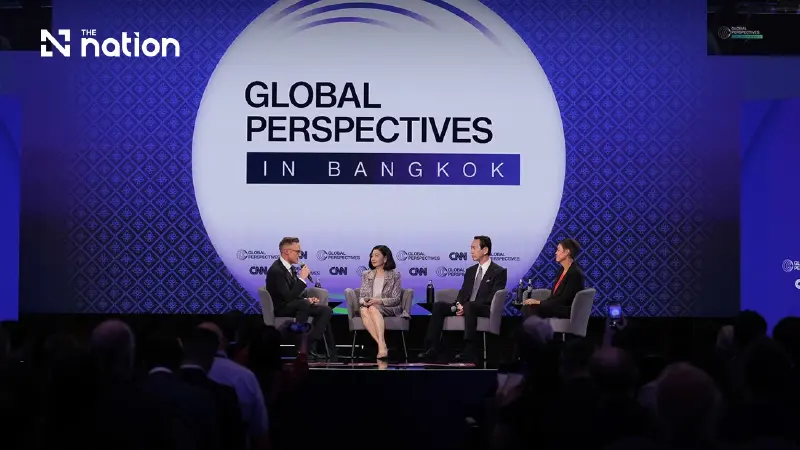


Leaders from Bangkok, Hong Kong and Copenhagen tell CNN Global Perspectives that talent, visitors and investment follow a city's soul, not its skyline
- Successful future cities will prioritize their "soul" and quality of life over traditional metrics like GDP growth to attract talent, visitors, and investment.
- Cities like Hong Kong and Bangkok are making multi-billion dollar investments in cultural districts and community-focused developments to enhance their liveability and global competitiveness.
- Copenhagen is cited as a leading example of a "city for life," having transformed its infrastructure over decades to be more walkable, bikeable, and centered around accessible public spaces.
- Experts argue for sustainably redeveloping existing cities to be greener and more inclusive, as the design of public space is a key determinant of residents' health and wellbeing.
Leaders from Bangkok, Hong Kong and Copenhagen tell CNN Global Perspectives that talent, visitors and investment follow a city's soul, not its skyline.
If you could relocate to any city in the world tomorrow, where would you go, and why? For the job, the food, the lifestyle or the people? Some places, as CNN anchor Will Ripley put it at CNN Global Perspectives in Bangkok on Wednesday, simply have "that intangible pull".
Cities that win the future will be the ones that learn to create it on purpose. That question framed "Cities That Win the Future", a session moderated by Ripley, CNN news anchor.
It featured the Honourable Bernard Chan, chairman of Asia Financial Holdings, Chadatip Chutrakul, chief executive of Siam Piwat Group, and Helle Søholt, co-founder and board chair of Gehl, the urban design consultancy, who had travelled from Copenhagen.
Their answers pointed in the same direction. The cities people want to live in, work in and visit are built around people, with GDP only one measure of success.
Beyond the balance sheet
"How do we measure the success of a city?" asked Chan. "Traditionally, at least on this side of the earth, we tend to look at GDP growth, because that's a benchmark. But more than ever now, people look beyond just a number. What about the soul of the city?"
He pointed to Hong Kong's West Kowloon Cultural District, an arts and culture quarter in the centre of the city, which he said has cost US$5bn to date.
Anticipating the obvious objection, he said, "I often get asked, 'Is it worth it?' We're not building this district just for those who enjoy art, culture and music. If it is, then it doesn't add up. It has to be for everyone."

His reasoning was practical. Every city is competing for talent, and with remote work, "you can be anywhere now". Families look for safety, education and quality of life, "the whole package".
The investment, he said, has helped Hong Kong stay as competitive as New York, London and Bangkok. He added that the arts scene in Bangkok is booming. But money is only part of the answer.
"When I say five billion dollars, that's the hardware," Chan said. "If you have the money, you can build the hardware, but where's the software? You need good content and you need creativity."
A new chapter for the river
For Chadatip, Siam Piwat's Iconsiam is the Bangkok example of that principle. The riverside destination has become a global attraction, and CNN has broadcast its New Year's Eve coverage from there for the past three years.
The group's mission, she said, is to build a world-class destination that "represents the best of Thailand". Iconsiam stands on the Thonburi side of the Chao Phraya, in what she called the "third capital of Thailand" before Bangkok.
She described the river as "a lifeline of Thai people" and said the aim was not only to create a landmark but also to "elevate the quality of life" and raise Thonburi to stand equal with Bangkok.
The company, she said, did not do it alone. It started by consulting 13 communities within a kilometre of the site, along with boat commuters, river associations and other stakeholders, and asked what they wanted to see on "this new landmark of Bangkok".
The group invested US$1.5bn in infrastructure, including piers (one designed for disabled passengers) and support for a sky train link. Planning and construction took about seven years. Ripley noted that the project has also lifted property values in the area.

Chadatip said the project is meant to be a platform, not just a building. It brings together "art, design, fashion, craftsmanship and all the best of Thailand" and offers local producers from across the country, which she said number 77 provinces, a place to show their food and handicrafts.
"Every iconic project has to have its heart and soul," she said.
She credited Thailand's appeal to its people. "We embrace every religion, we embrace diversity, and we value equality," she said.
That hospitality, she added, also extends to healthcare, with visitors coming to Thailand for treatment and staying for the welcome.
Chan agreed, noting that Asia's growing middle class wants better healthcare and quality of life. Thailand, he said, is "by far the largest cluster of good healthcare providers in this region", and other countries are following its lead in offering affordable, accessible care.

The Copenhagen lesson
Asked about the rankings of the world's most liveable cities, Søholt began with a number: "Two-thirds of the population globally is already living in cities."
Ripley displayed a ranking in which Copenhagen leads, followed by Vienna, Melbourne, Sydney, Zurich, Geneva, Osaka, Adelaide, Vancouver and Tokyo. Søholt, who advises many of those cities, said the goal is not to copy Copenhagen.
It is "to learn from the culture, from the people living there, documenting the public life, as we call it", and to plan cities that accommodate and celebrate it.
Over the past two to three decades, she said, Copenhagen has turned car parks into local parks and squares and made its streets walkable and bikeable. Its harbour front, once inaccessible, is now somewhere you can swim, and you can walk or cycle the whole inner harbour.
"Just the sheer walking through the city is enjoyable," she said. "Raising a kid is now possible in Copenhagen. It's easy to get to and from school or work."
That kind of city, she argued, attracts talent and investment. She called for more cities "built for life", meaning "both the public life between the buildings" and "nature within cities".
A second graphic showed the fastest risers in the liveability rankings, including New York, Rio de Janeiro, Johannesburg, Tokyo and a number of Chinese cities.

Against the megacity
Søholt also made a pointed case against the grand new-build city.
Ripley noted that she had argued "the era of the mega-city is over", citing Saudi Arabia's The Line, where, as far as is known, construction has stalled.
Søholt said it is "incredibly important" to develop cities from existing infrastructure. "It's the most sustainable," she said, adding that the aim is to turn what has already been built into "much more green, much more inclusive, much more liveable spaces". She argued that design directly shapes wellbeing.
"Eighty per cent of a person's health is really determined by the design of the public space," she said.
Healthcare access alone is not enough.
"I often argue that public space is a human right." Alongside fresh water, clean air and affordable housing, she said, urban residents should have access to public space where they can walk, cycle, find healthy food and feel a sense of belonging.
