
Top of the form


Play
Mexico opens first school to provide formal training to mariachi musicians
Mariachis, street musicians in Mexico who wear suits adorned with silver fittings and large sombreros, are a national treasure.
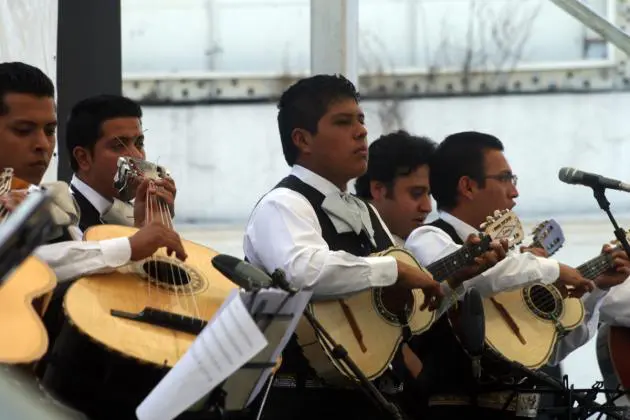
Until now the tradition had been passed on from father to son in Mexico and musicians learned their craft by listening to other mariachis in street performances. But now, for the first time, Mexico has its very own mariachi school in the heart of Mexico City.
The United Nations Education, Science and Culture Organisation in 2011 declared mariachi bands as part of the world’s Intangible Cultural Heritage, feeding into a trend that has spread internationally.
There are about 300 music schools and cultural centres that train mariachi musicians in the US alone. Mariachis are very popular also in Japan and Colombia and mariachi bands have sprung up in countries such as France, Italy and Croatia.
But up until now, there had never been a school for mariachis in Mexico itself because the mariachi craft was forged within families with musicians developing their routines by listening to others who had mastered the technique and style.
The new facility is called the Ollin Yoliztli Mariachi School. It is located in Garibaldi Square, the epicentre of mariachi culture in the Mexican capital.
“With this new school we seek to take advantage of the current wave of interest in mariachis all over the world,” says local government Culture Minister Lucia Garcia Noriega.
“It was a wake-up call for us that there are many mariachi schools abroad, but so far, none in Mexico,” says the director of the Ollin Yoliztli Cultural Centre, Federico Banuelos Barcenas.
Dozens of mariachi bands converge on Garibaldi Plaza every night calling out for customers who agree to hire them right there or to have them make their way to private homes or other events elsewhere in the city.
Garibaldi Plaza has numerous bars or cantinas and restaurants where tourists and locals alike can enjoy beer, tequila and mariachi music.
The Ollin Yoliztli Mariachi School began offering classes a year ago to about 100 students aged 18 to 35, female and male. But the school preferred to wait until the first group of students who became professional technicians in musical execution was ready, before formally inaugurating the school.
That first group of 20 musicians formed an ensemble called the Ollin Yolitztli Mariachi band and early last month, they gave their debut performance.
The budding mariachis at the school are taught how to perform and write music as in a classical conservatorium. But they also train with street mariachis “who have learned their art by listening and imitating,” says the school director, Leticia Soto.
The first mariachi groups emerged in the 19th century in Jalisco, Nayarit and Michoacan, states in the western part of Mexico. Mariachi bands began to surface in the United States in the 1960s, and since then “there was a huge boom,” Soto says.
The mariachi is not a separate musical genre but stands for the formation of a group with at least four musicians who use typical instruments such as guitars, violins, trumpets and the Mexican vihuela stringed instrument.
Mariachis play a range of different kinds of music such as polkas, waltzes and corridos, which are traditional ballads that speak of love, war and life in the countryside.
They also take pieces from other genres such as rancheras and cumbias and put them into their repertoire. The mariachi ensembles play at weddings and funerals and on birthdays. On weekends they play in front of restaurants and in lively squares.
Mexican historian Alejandra Moreno Toscano says that the new mariachi school will foster this type of music and turn Garibaldi Plaza into an even more popular “Mariachi Mecca”.
“Mexico gave the mariachis to the world, now they return,” she says.
