
They've got The Moves


Play
This too are now seeing "Exercise is Medicine" as the movement arrives
Consult a doctor today and the chances are you won’t just leave with a prescription for medication but instructions to improve your life through a healthy diet, lifestyle and plenty of exercise.
However, several doctors fail to specify the kind of exercise suitable for each individual and while working out on a treadmill may be good for someone with a serious need to lose weight, it won’t be appropriate for an older person suffering from arthritis.
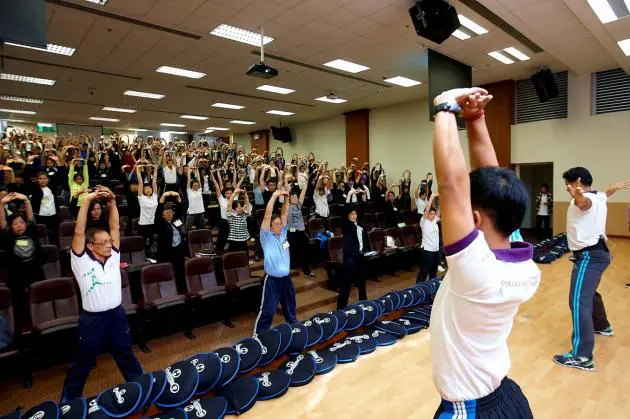
To educate doctors and medical professionals in the methods of effectively, correctly and suitably prescribing exercise to patients, Mahidol University's College of Sports Science and Technology has joined with the Royal College of Family Physicians of Thailand and Golden Jubilee Medical Centre in introducing the “Exercise is Medicine” (EIM) programme in Thailand. It got underway recently with a first workshop “How to prescribe exercise” that was attended by more than 200 participants.
EIM was established by the American College of Sports Medicine (ACSM) in 2007 to promote physical activity as well as the benefits of prescribing physical activity as part of routine medical practice for the ongoing treatment of related diseases.
The project, which operates in 31 countries, arrived in Thailand thanks the dean of the College of Sports Science, Dr Arth Nana, who secured Bt1.9 million in funding from the Coca Cola Foundation. EIM Thailand plans to hold series of workshops and train 600 medical professionals nationwide within the first two years of implementation.
As set conditions for exercise revolve around each disease, it is incumbent on the doctor to ensure his patient is properly informed about type, intensity and frequency.
“We understand that doctors have only a brief time with each patient so they can’t give patients all the details. Sometimes too it goes beyond their expertise. So they may refer the case to other medical professionals like nurses, physiotherapists or sports scientists at rehabilitation centres. However, it’s vital that before making that referral, the patients’ is properly diagnosed. The workshops aim to provide the proper guidelines,” Dr Arth says.
Sport Sciences graduates, he adds, are the professionals best equipped to design proper exercises for people. Thailand is now producing 2,500 new graduates annually in this field but the vast majority makes their career in the fitness business and work as personal trainers.
While some have now started working in rehabilitation centres, the numbers of sport scientists in hospitals is still limited. In a major hospital like Siriraj, he says, there are only some 10 to 12 sport scientists while Ramathibodi has only 4 to 5 persons in its centre.
“Before they give the exercise schedule to the patients, they need a rundown of the patient’s health condition and proper guidelines from the doctors,” he says.
Four major health conditions were selected for the first workshop: diabetes, hypertension, osteoporosis and care for elderly patients. The proper exercises for each symptom were provided in detail and included aerobics, running, walking, swimming and weightlifting. Information was also provided on heart rate measurement, frequency of exercising and symptoms that mean the patient must stop exercising.
The participants were also given the chance to try such popular workouts as stretching, yoga and aerobics to gain firsthand experience of the exhaustion and fatigue that plagues many elderly patients and those suffering from diabetes and hypertension.
It is hoped that doctors will now use exercise as a medical tool rather than rely on the regular campaigns that aim to raise awareness about its benefits.
Statistics reveal that number of Thai people who risk contracting non-communicable disease increased from 676 in 100,000 people in 2008 to 1,050 in 100,000 people in 2012 due to decreased physical activity.
Meanwhile the World Health Organisation’s Global Recommendations on Physical Activity for Health in 2010 indicates that about 31 per cent of adults over 15 years old do not meet the recommendations for sufficient physical activity. Physical inactivity constitutes the fourth leading cause of death globally follow by high blood pressure, tobacco use and high blood glucose.
Regular physical activity can reduce mortality and risk in several cancers, including breast and colon cancer, Alzheimer’s, heart disease, high blood pressures as well as depression.
Getting well through exercise
The guidelines are available at www.ExerciseIsMedicine.org. Details of certain disease and the exercises that help are being translated into Thai for www.ExercseIsMedicine.org.th.
