
Shades of Saffron
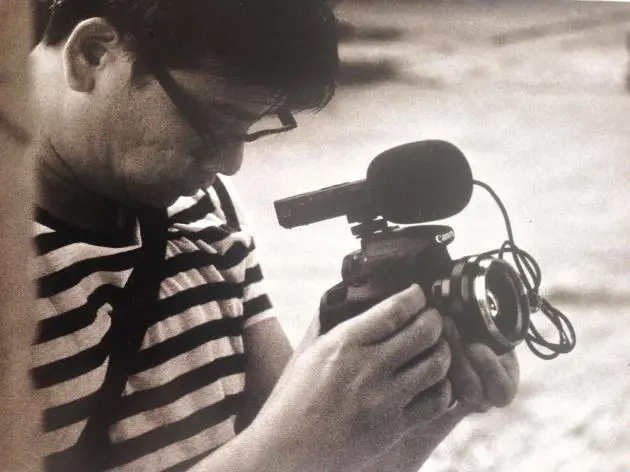


Director Kongdej Jaturanrasmee takes a mindful approach with a documentary about novice monks
ALWAYS READY FOR a new challenge, screenwriter and director Kongdej Jaturanrasmee was delighted when cable-TV company TrueVisions asked if he would be interested in making a film about children and Buddhism.
The broadcasters religious channel was looking for a documentary that would focus on its Samanen PlookpanyaNovice Project, a reality series that follows nine novices between the ages of seven and 12 as they are ordained during the long school holidays. They spend a month learning and practising Buddhism with a well-known monk and scholar.
The result is “A-Wang” (“So Be It”), which opens today at House cinema in Bangkok.
But Kongdej’s piece is far from the promotional piece that might reasonably have been expected to come out of such an undertaking. It focuses on two boys whose lives are tied up in Buddhism in very different ways. One is eight-year-old Thai-American William. He became interested in Buddhism and applied on his own to join the Samanen Plookpanya project. The other is Bundit, a Karen youngster sent by his parents to Wat Sa Kaeo in Ang Thong province, a well-known orphanage and boarding school for underprivileged children that is home to more than 2,000 youngsters under the guardianship of the monks.
“I found making this documentary very exciting because it was such a different way of working from my usual feature films. While everything in a feature happens from the script I have written, the body of a documentary takes shape from the subject and you work with what you get from the shooting,” says Kongdej.
“Usually when I receive the offer of a project, I sit down and see if I can work with it. I then send the script to the investor to approve the idea before starting the project. I’ve been lucky so far in that the investors haven’t rejected my ideas and left me alone to pursue them in my own way,” he adds.
That laissez-faire approach has paid off too. His last project, the critically acclaimed “Tang Wong”, was commissioned by the Culture Ministry with the aim of promoting Thai culture. The story was about about teenage boys learning a traditional dance, but rather than portray the beauty of the country’s national heritage, Kongdej gave his film a satirical edge .
Likewise for “So Be It”, he’s veered away from pretty pictures of little boys in saffron robes and instead examines the pursuit of happiness.
“I feel that people use religion as a helping hand to find contentment in their lives. I was curious as to how that played out in two kids with very different backgrounds,” says the director.
Kongdej chose Sorawit William “Willy” Caudullo from among the channel’s novice group. The youngster, who comes from a privileged background that would normally not lend itself to the humility of the monkhood, shot to instant stardom in the second season of the True Plookpanya novice project.
“Being of mixed race makes him an interesting and attractive subject but what makes him stand out is his obsession for learning Buddhism. In fact, he is even more enthusiastic about religion after leaving the monkhood,” says Kongdej.
In the documentary, after finishing “Samanen Plookpanya”, William is still eager to learn more about Buddhism. So he is taken to a remote temple in the North to visit Sanan Titameto, the monk and teacher he admired during the TV show, where he follows his every move.
Bundit Laocharoeysuk, on the other hand, was selected from among the thousands of kids at Wat Sa Kaeo boarding school.
The two boys couldn’t be more different. Sent by his impoverished parents to receive an education at the temple, the 11-year-old hates the school and everything about it. He has difficulty obeying the rules and simply wants to go home.
While William is friendly and chatty, Bundit barely talks. He shuts himself off from the outside world and no one seems to know what he is thinking. Kongdej however finds Bundit charismatic, explaining that it’s easier to observe his inner feelings through his eyes rather than through his words.
He does concede though that working with the Karen youngster was difficult. “On one occasion, we confirmed we would pick him up in the morning and then go and shoot some scenes but he disappeared when we arrived and we couldn’t do anything,” he says.
Kongdej, who received post-production funding from the Busan International Film Festival, recently took his documentary to premiere at this year’s fest and was amazed to see monks in the audience at every screening.
He experienced a similar situation with “Tang Wong”, which despite its totally Thai content, had audiences at Berlin, Busan and other festivals totally engrossed in the story.
“That confirmed to me that some messages are universal though I was still surprised to see so many of the Korean audience crying during ‘So Be It’,” he says.
As a filmmaker, Kongdej obviously wants his work to reach as many viewers as possible, though this is harder now that he works independently of any studio.
“A common problem for independent filmmakers in this country is that they don’t know how to work on a marketing strategy because of limited budgets and target audiences.
“I always tell Soros [Sukhum], my producer, that we don’t want a quiet release otherwise people will never know that our film is showing. We have to use every channel we can promote our film so we can get more recognition and better audience numbers,” says the director.
That philosophy is behind today’s release of the film at House, limited as it might be, and is the reason the documentary was prepared in the DCP (Digital Cinema Package) format despite being produced for television.
“I want the audience to enjoy the cinematic feeling,” Kongdej says, adding that the release is taking less time than has been the case for his earlier movies. “TrueVisions has scheduled to air it on their movie channel so it’s important we get it out in the cinema before it goes to small screen,” he says.
