
Places not people


Play
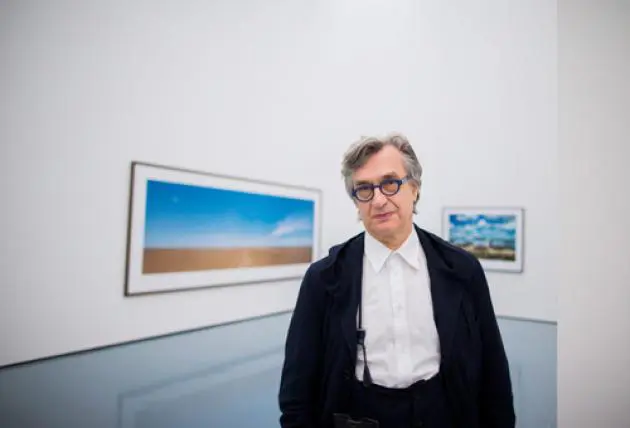
Director Wim Wenders showcases his stills in a new exhibition
Stills photography forms another aspect of German film director Wim Wenders’ palette. The reality he perceives in places – with people intentionally kept out of the picture – is on view at a new Dusseldorf retrospective.
Alongside his better-known role as one of Germany’s best known directors, Wenders is a keen photographer determined to show reality, albeit from a subjective perspective.
“Precisely because we dissemble and tell tall tales so much in cinema, I don’t want to be seduced into that in my photography,” he says while looking over the display at Museum Kunstpalast.
Wenders, who turns 70 in August, prefers to leave people out of his photography, focusing instead on places.
“I’m not a landscape photographer. I photograph the traces of our civilisation and I document cities, streets, houses and squares, rather than people,” he says.
“A person has scarcely entered the frame, when everyone looks at this person, and the place can no longer tell its story.
“With my photography I don’t want to have a story in my baggage that I want to tell. That’s what I do with film. With photography it’s precisely the other way round – there I want to be told a story,” Wenders says.
“I want places to speak, and that’s the reason my pictures are so big – so that the viewer can stand before them as at the point of taking the picture.”
Another aspect of photography that attracts the director of films like “Paris, Texas”, “The State of Things” and “Wings of Desire”, is that he can do it alone, lugging even his large panoramic camera without assistance.
“When filming you need a lot of people. Making a film is a truly social and highly communicative task. When I’m taking photographs, I don’t have to explain anything to anyone, and I don’t take anyone along.”
Wenders notes that the kind of photography that interests him means that he is perpetually on the move, standing on his own before the places that are his subject.
“That is a precondition for being able to sink into places and lose myself in them,” he says. “Only then can I draw out what they say about us.”
Wenders says he got his first cheap plastic camera at the age of six. It had a viewfinder he had to look down into and came with no automatic features. He acknowledges that he had little success with it.
Later he bought a single-lens reflex camera and his father presented him with his old Leica when he finished his schooling. That camera has unfortunately been stolen.
He sticks with analogue film for his work, but is by no means dismissive of digital photography, even that with a mobile phone. However, he sees such efforts as “contemporary communication, like making notes.”
Asked to choose between film-making and photography, if he were allowed to do only one, Wenders evades the choice.
“Then I’d be a painter. If I can’t do one, then I don’t want to do the other,” he says.
