
Sharing the pain over ramen


Play
A brave restaurateur reopens her noodle shop in the relocation area for those affected by the Fukushima disaster
The stockpot used to make the ramen soup simmers gently. The sound of a knife chopping green onions rings through the air. The kitchen, bustling since 7am, is thick with steam. It’s now just before 10 and a customer who can’t wait until opening time sticks her head round the door.
“Good morning! Can I come to eat now?” she ask.
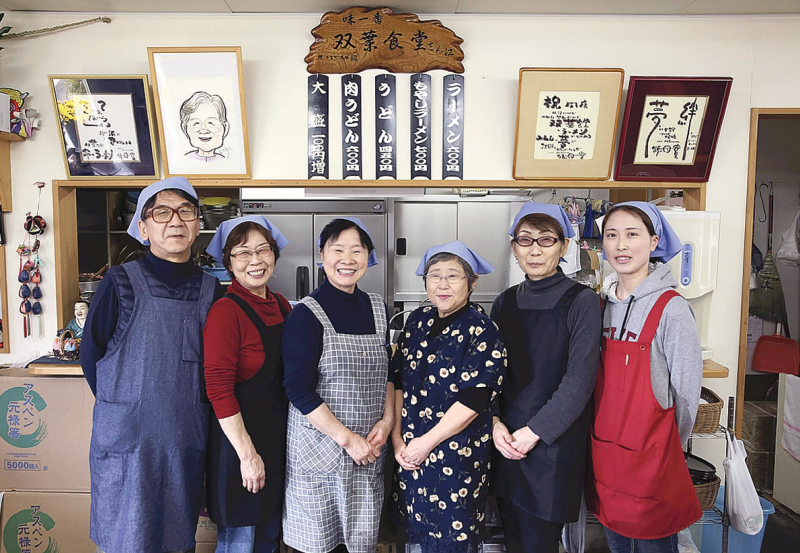
“Sure!” responds restaurant owner Eiko Toyoda, 66, welcoming her guest with a bright and cheerful voice. I’m on dishwashing duty, and I roll up my sleeves: It’s time to get to work.
For five years, I’ve commuted back and forth to Fukushima to take notes. But I wonder how much I have truly understood. I came here with the idea of sharing, however briefly, time with those who have had their lives turned upside-down by the tsunami and nuclear accident.
A ramen shop came to my mind; Futaba Shokudo, an eatery near Odaka Station on the JR Joban Line in Minami-Soma, Fukushima Prefecture. The shop had to relocate from the Odaka district, 15 kilometres from the Fukushima No. 1 nuclear power plant, north to a temporary site in the Kashima district, where it has remained for four and a half years. I worked there for a week.
The “open” sign would go up at 11am. Then, until past 2pm, Toyoda and her four-woman staff would serve up to about 300 bowls of ramen a day.
It was impressive. The women would keep their right eye on the boiling pots of ramen, and their left eye on the customers in the restaurant’s approximately 40 seats. Influenced by the images of those who’d lost hope in the wake of the devastating nuclear accident, I was floored to see such a lively, positive atmosphere. So many bowls from the ravenous clientele would come back to me for washing that I felt utterly overwhelmed. I drank energy drinks to cope with the workload. It was pathetic.
And then, somewhere along the line, as I began to get accustomed to the job, I realised: Lots of people eat all their soup in this shop.
“It tastes good. It’s the Odaka flavour!” said a beaming customer.
The clear chicken soup with a tinge of soy sauce has a history that goes back way further than the No 1 nuclear power plant. Toyoda took over the shop from her 90-year-old mother, who opened it in 1951. Many of the customers who flock to the restaurant for its flavour come from the evacuated Odaka district and the nearby town of Namie.
Many different types of people visited the eatery while I was there.
A woman had come from temporary housing, on a break from providing nursing care for a parent with dementia. Another you knew no one at her own evacuation residence had come from Koriyama, 60 kilometres away. And then there were the fishermen who claimed that they could take their boats out only once a week nowadays due to the marine pollution tests.
I heard someone ask, “Are you okay?” There was an elderly person who had finished eating but still just sat there looking lonesome and lost in thought. I heard about a person who was trying to rebuild their life and construct a new home in a different town – but graffiti had been spray-painted on its walls, and the person was explicitly chastised for evacuating from the nuclear accident, as such evacuees are entitled to compensation.
At this restaurant, it seemed, everyone came to remember a familiar environment they had lost, confirm their circumstances with each other and search for hope – through enjoying the precious old tastes.
After the shop closed, the women working at the shop talked to me about “the tsunami and accident, five years later” over a late lunch.
Toyoda had already lost her husband; she was looking after her aged mother alone after the disaster when she made the decision to close the restaurant. It was then that she met 69-year-old Masuko and others at the shelter, who encouraged her to open up a temporary shop.
Masuko and her friends brought 65-year-old Yukiko and 61-year-old Hatsumi onto the staff; both women had lost their homes in the tsunami.
The women kept a stiff upper lip, but the pain in the background of the people of Fukushima is deep. In the five years since the disaster, I have learned how deep the scars are. borne
There are people who have been deprived of the farmland they rely on to make a living and have seen their families divided. There are people who are ridiculed for living on the compensation they received for the nuclear accident. There are people who could not receive any compensation and are in dire economic straits. There are people who are pressed by the government to choose between going back to their old towns or relocating elsewhere, who cannot return for fear of radiation’s effect on their children. There are people who wince when they’re asked, “Have you abandoned your hometown?”
Many people who are suffering in many ways have shut their pain away in their hearts and are unable to see a future for themselves. I think about the things the administration for reconstruction has left behind.
There is the phrase “sharing the pain.” Fiscal policy expert Naohiko Jinno told me: “Sharing the pain heals us. People who share their pain eventually become happy. That’s because people experience happiness when they feel that they’re needed.”
For these people, the past five years have meant a series of single days trying hard at life. But if they have a friend with whom they can share the pain, they would be able to start moving forward a little. I was there in the shop just a week, getting in everyone’s way, but I learned that Futaba Shokudo is a place where people can share the pain.
On the morning of my fifth day, when I was cleaning the shop, Toyoda passed me a little slip of paper. She said, “This my favourite saying.” On the paper was written: “To live, doing what is thought to be a matter of course naturally everyday.”
Toyoda decided to close her temporary shop at the end of March and reopen it once the evacuation order for Odaka district is lifted.
“Running a restaurant is all I can do. I want to create a place where even those who can’t go back can feel right at home.”
And so, in her own everyday life, Toyoda takes another step forward.
