
Far more than just a watch
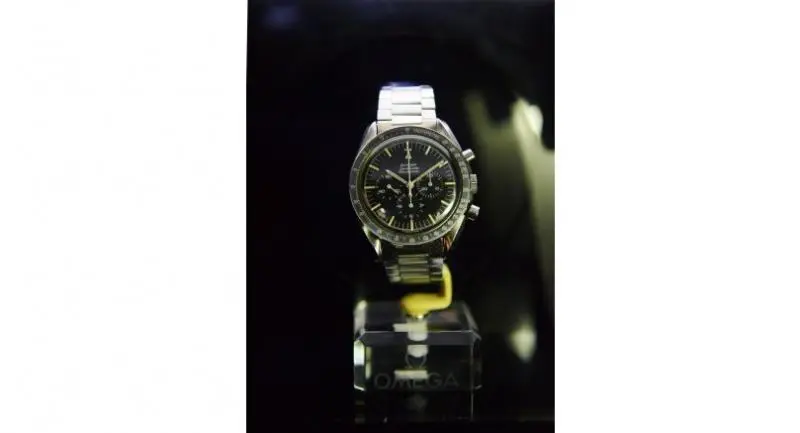


The Omega Speedmaster celebrates its launch into history as the first watch to be officially certified by NASA for all manned space missions
WATCHMAKER Omega has been busy this year celebrating the 60th anniversary of the first watch on the moon by organising a series of exhibitions around the world. Thailand was the latest to host the exhibition, with the tribute to the Moonwatch and other timepieces in the Speedmaster series held recently at Central Embassy.
Twelve vintage chronograph museum pieces were on display at the event, among them the original timepiece in the Speedmaster family, the Broad Arrow CK 2915, the Moonwatch ST105.012, and the Apollo-Soyus ST 145.022, 1975, which honoured the American-Soviet space mission.
The first two of seven exhibition zones explored the brand’s pioneering spirit, its pursuit of perfection and countless achievements, its role as the first Official Timekeeper of the Olympic Games in 1932 and the breakthroughs in water resistance that established the brand’s place in the world of ocean exploration.

The Speedmaster was introduced in 1957 as a sport and racing chronograph that was waterproof, easy to read, easy to use and exceedingly precise.
Five years later astronaut Walter Schirra wore his personal Speedmaster CK 2998 on the Sigma 7 mission of the Mercury programme and the Speedmaster’s space legacy was launched. In 1964, the National Aeronautics and Space Administration (Nasa) went in search of one watch that would qualify for all manned-missions. After surviving rigorous and extreme testing, only the Omega Speedmaster was declared “Flight Qualified” and the announcement changed the course of Omega’s history forever.
The fourth zone looked deeper into the Sppedmaster’s role in space. In 1965, on the Gemini IV mission, Edward White became the first American astronaut to walk in space with a Speedmaster strapped to his wrist. The watch’s place in history was sealed four years later with Buzz Aldrin showing off the watch as he set foot on the moon.
Zones 5 and 6 presented the Speedmaster as a navigational tool for terrestrial explorers. In 1968, Ralph Plaisted used his Speedmaster and sextant to determine the exact location of the geographical North Pole for the first time and it is this pioneering spirit that has been carried into every new model made since.

In the seventh zone, guests were able to admire 12 remarkable pieces from the Omega Museum including the CK 2915, the first Speedmaster and the second generation Speedmaster 1959 CK 2998. This was different from the e original Broad Arrow in that it sported a black aluminium bezel, a lollipop seconds hand for Air Force orders, and Alpha style hour and minute hands.
The third generation ST 105.003, 1963 was the Speedmaster model that passed Nasa’s rigorous testing for flight qualification. The fourth generation ST105.012, 1965 has since become the watch that has served on the most lunar missions. In design, the watch was the first Speedmaster featuring an asymmetrical case, done so to provide added protection for the crown and pushers. For the first time, the word “Professional” was also printed on the dial.
Also on show is the Apollo 11 edition from 1969. This was the first 18K gold Speedmaster, created in a numbered edition with a rare burgundy bezel. The first watches in this series were presented to 19 astronauts during a gala dinner in Houston, Texas on November 25, 1969 to celebrate the Apollo 11 moon landing.
The Apollo-Soyuz 1975 marked the occasion when Russian cosmonauts and American astronauts wore Speedmasters during a historic meeting in space that signalled the beginning of the end of the Cold War. Made in a limited edition of 500 pieces to mark this famous American-Soviet space rendezvous, this watch was the first of the “Patch” watches. It sports the mission patch at 12 o’clock in place of the Omega logo as well as longer markers on the dial and wider pushers.
