
AP intern programme fosters realty expertise
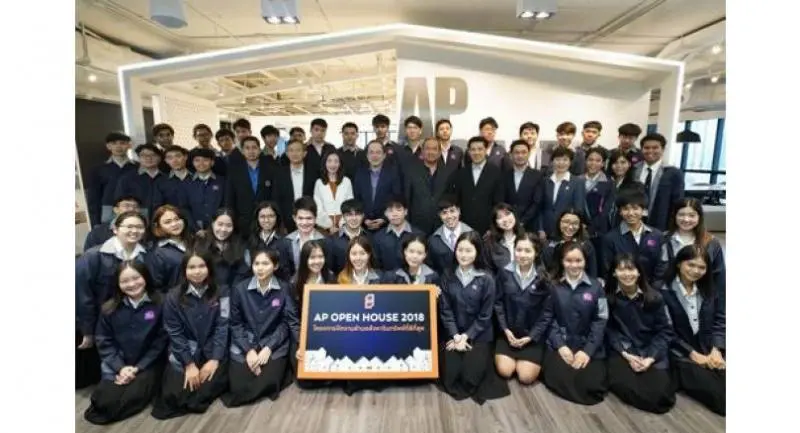


Now in its third year, AP Open House – organised by property developer AP (Thailand) – is an internship programme offering two months of hands-on experience for 50 students interested in the real-estate industry.
The programme adapts Stanford University’s “design thinking” process to prepare students to be quality employees of the industry, able to handle all aspects of change.
The interns will be prepared for real-life work through hands-on practice emulating an actual work environment with experts advising them.
There are two courses – Civil Engineering for 30 students and Marketing and Sales for 20 persons. Upon completing the internship, the students will receive a certificate from the AP Academy.

Four interns whose performance is outstanding will be sent on a study trip to Japan, at the Mitsubishi Estate Group’s Mitsubishi Jisho Residence.
“We hope the design thinking process we pass on to the students will be an essential tool they can use in the long term,” says chief executive officer Anuphong Assavabhokhin.
“Design thinking is a customer-centric process used to deeply understand problems. There are five steps – empathise, define, ideate, prototype and test.”
Prof Chuenchit Chaengchenkit of the Faculty of Business Administration’s Department of Marketing at Kasetsart University agrees that this programme will offer students an opportunity for self-development in real business.
“It allows them to study how the business works full circle, because AP is a company with a full-circle operation, from land development to project management after delivery. Students of any discipline must understand that, in business development, you cannot do everything alone. You need expertise from different lines of profession.”
Intern Puripat Limwattananonth, a civil engineering student at Mahidol University, said at the orientation, “I liked the programme as soon as I saw the curriculum because it guarantees you’ll be training in what you study.”
