
Songkhla Edges Closer to World Heritage Status as Key Bid Approved
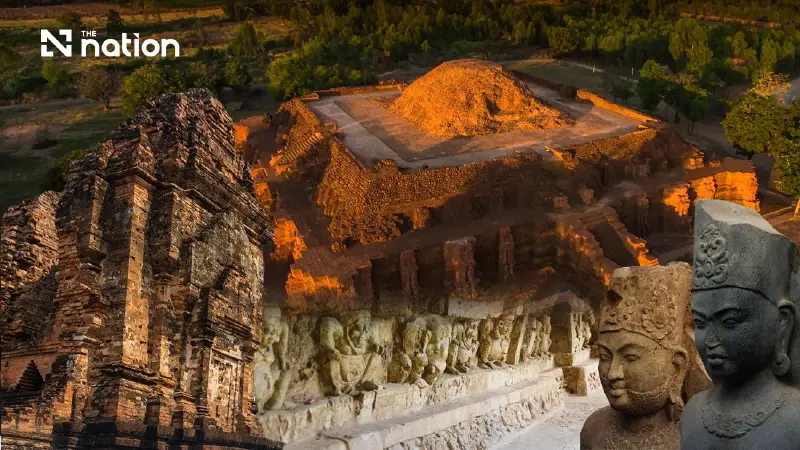


Thailand’s cultural sub-committee greenlights preliminary UNESCO assessment for historic Songkhla Lake settlements and conservation updates for Si Thep
- Thailand's Cultural World Heritage Sub-committee has approved a preliminary assessment dossier for the "Songkhla and Associated Communities around Songkhla Lake" to be submitted to UNESCO.
- The bid for World Heritage status is based on the area's historic role as a maritime crossroads for cultural exchange and the unique relationship between its settlements and the lake's ecosystem.
- Following this approval, the dossier will be sent to a national committee for final sign-off before being formally transmitted to the World Heritage Centre in Paris.
Thailand’s cultural sub-committee greenlights a preliminary UNESCO assessment for historic Songkhla Lake settlements and conservation updates for Si Thep.
Thailand’s bid to place the rich cultural landscapes of Songkhla onto the global stage took a major leap forward after heritage authorities formally approved key dossiers destined for UNESCO.
Meeting at the Ministry of Culture Convention Centre on 3 September 2026, the Cultural World Heritage Sub-committee, chaired by Minister of Culture Sabida Thaiseth, officially endorsed two major submissions for the World Heritage Centre, marking a milestone in Thailand’s ongoing cultural preservation drive.
Leading the agenda is the preliminary assessment dossier for the "Songkhla and Associated Communities around Songkhla Lake" cultural landscape, scheduled for submission by the upcoming 15 September deadline.

A crossroads of seafaring and cultural exchange
The Songkhla nomination highlights the exceptional harmony between human settlement and the unique aquatic ecosystem of Southeast Asia’s only natural lagoon.

The submission builds on two core UNESCO criteria:
Criterion (ii): The historic role of the lakeside settlements as vital crossroads for intercultural exchange along ancient maritime trade routes.
Criterion (v): Traditional human settlements that demonstrate a resilient, dynamic relationship with Songkhla Lake’s delicate saltwater and brackish ecosystems.
Geographically positioned between inland waterways and an enclosed sea, the area flourished over centuries into an influential seafaring hub with a distinct cultural identity.

The proposed heritage zone encompasses four interrelated historic clusters:
The ancient settlements of Phang Yang, Pha Kho, and Si Yang
The ancient town of Sathing Phra
The 17th-century fortified port city of Singgora at Khao Daeng
The historic quarter of Bo Yang (Songkhla Old Town)

Safeguarding Si Thep’s ancient legacy
Alongside Songkhla’s advancement, the sub-committee reviewed an extensive conservation progress report for the Ancient Town of Si Thep and its associated Dvaravati monuments, inscribed on the World Heritage list in 2023.
Responding to recommendations from the 47th session of the World Heritage Committee, the Fine Arts Department outlined crucial mitigation measures ahead of a 1 December 2026 reporting deadline.
Key actions include land acquisition and expropriation around the monumental Khao Klang Nok stupa, enhanced buffer-zone town planning across the Si Thep and Wichian Buri districts, and ongoing coordination with the Department of Mineral Fuels to regulate petroleum concessions near the archaeological core.
Both files will now head to the National Committee on the Protection of World Cultural and Natural Heritage for final sign-off before being transmitted to UNESCO headquarters in Paris.

Nine cultural gems in the pipeline
Reflecting an ambitious cultural vision, the sub-committee also reviewed nine heritage sites previously endorsed for Thailand's Tentative List, earmarking them for future research and nomination dossiers:
The architectural masterpieces of HRH Prince Narisara Nuvadtivongs
The living cultural landscape of the Chao Phraya River
The historic Death Railway in Kanchanaburi
Wat Suthat Thepwararam and the Giant Swing in Bangkok
Wat Ratchanaddaram Worawihan and surrounding historical precincts
The archaeological and living cultural heritage of Nan province
The trans-regional cultural route of Chaiya, Nakhon Si Thammarat, Sathing Phra, Yarang, and Saiburi (Kedah)
The cross-border archaeological landscapes of Chiang Saen Old Town and Suwan Khom Kham (Lao PDR)
Phra Pathommachedi in Nakhon Pathom
With comprehensive documentation and community heritage protection moving in tandem, Thailand continues to enrich its international cultural footprint, safeguarding its living traditions and ancient monuments for generations to come.
