
Batik from Pattani joins 37-design showcase at IMF–World Bank meetings on October 12–18
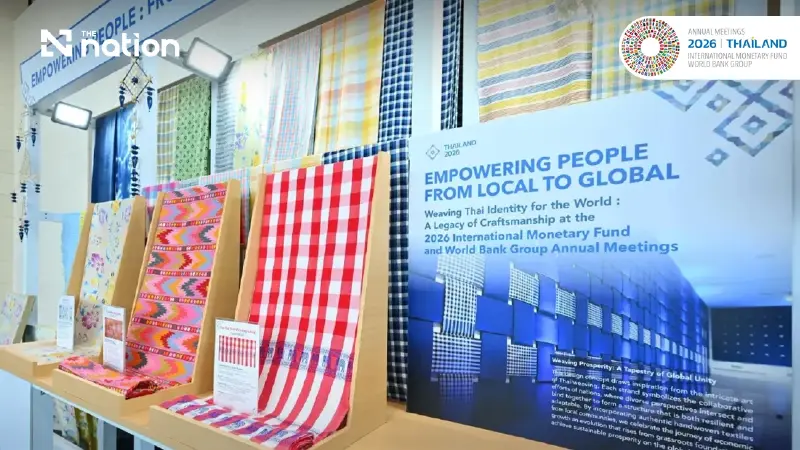


Pattani’s artisans spent months creating silk batik for Bangkok’s IMF–World Bank meetings, where Thai textiles decorate rooms and help absorb sound.
- Batik from the "Batik de Nara" group in Pattani is featured in a showcase of 37 textile designs from 26 Thai communities at the IMF–World Bank meetings.
- The selected design is the royally bestowed “Buppha Borom Rachineenart,” a hand-drawn pattern on Thai silk with floral motifs honoring Queen Sirikit The Queen Mother.
- The textiles, including the Pattani batik, are being used as functional, sound-absorbing materials for the meeting rooms at the Queen Sirikit National Convention Center.
- The showcase provides an opportunity for Pattani artisans to present their craftsmanship to an influential international audience of finance ministers, central bank governors, and executives.
Thai textiles are doing more than decorating the venue at Bangkok’s 2026 Annual Meetings of the International Monetary Fund (IMF) and World Bank Group on October 12–18. Fabrics featuring 37 distinctive patterns from 26 communities in 21 provinces have also been selected as sound-absorbing materials for meeting rooms, according to the Bank of Thailand.
The IMF–World Bank meetings at the Queen Sirikit National Convention Center bring together finance ministers, central bank governors, academics and financial institution executives to discuss the direction of the global economy and finance. For Thailand’s textile communities, the gathering offers a setting beyond the clothing and locally made products through which their work is usually encountered.
Pattani’s batik takes months to prepare for Bangkok

Every floral outline on Batik de Nara’s cloth was drawn by hand. The Pattani group spent months submitting samples and revising details for the IMF–World Bank organisers before the silk batik was ready.
According to the Southern News Centre of the Thai Public Broadcasting Service, Batik de Nara founder Rowiya Hayiyama recalled that the selection panel first became interested after seeing the group’s craftsmanship. The panel asked for examples, the story behind the work and photographs showing the production process.
Batik de Nara submitted its royally bestowed “Buppha Borom Rachineenart” design, developed by Her Royal Highness Princess Sirivannavari Nariratana Rajakanya from flowers named in honour of Her Majesty Queen Sirikit The Queen Mother. The floral motifs carry their own meanings and pay tribute to the Queen Mother’s contributions.

The Buppha Borom Rachineenart pattern combines Dona Queen Sirikit mussaenda, Queen Sirikit lotus, Queen Sirikit rose and Queen Sirikit Cattleya orchid motifs with the Kho Somdet–Chao Fa motif. Flowing vines connect the flowers, with the composition depending on delicate lines and carefully worked details.
Rowiya said the Buppha Borom Rachineenart design attracted considerable interest from the organisers. The floral tribute to Queen Sirikit also had a natural connection with the Queen Sirikit National Convention Center, where the meetings are being held.
Thai silk puts hand-painted batik skills to the test
Creating Batik de Nara’s designs on Thai silk demanded more care than working with other fabrics, Rowiya explained. The silk had to be boiled and washed before colouring, then tested repeatedly, with the results assessed and samples sent to the organisers for consideration.
At Batik de Nara, artisans draw wax lines directly onto the cloth using a tool called a tjanting before carefully applying colour. Clean outlines and consistent floral details depend on skill, experience, patience and precision.
Thai silk added another challenge to the batik process. Rowiya described its fibres as fine, strong and smooth, properties that required particularly careful handling when preparing and colouring the material.
Batik de Nara softened its colours for an audience of bankers, business leaders, academics and senior international delegates. Rowiya wanted the silk to look understated and elegant without losing the identity of the original design.
For Rowiya, the extra work involved in using Thai silk was justified by the finished result. “Compared with other fabrics, Thai silk wins hands down. It looks luxurious. It belongs there, on display to the world,” she said.

Chiang Rai and Sukhothai weave local stories into cloth
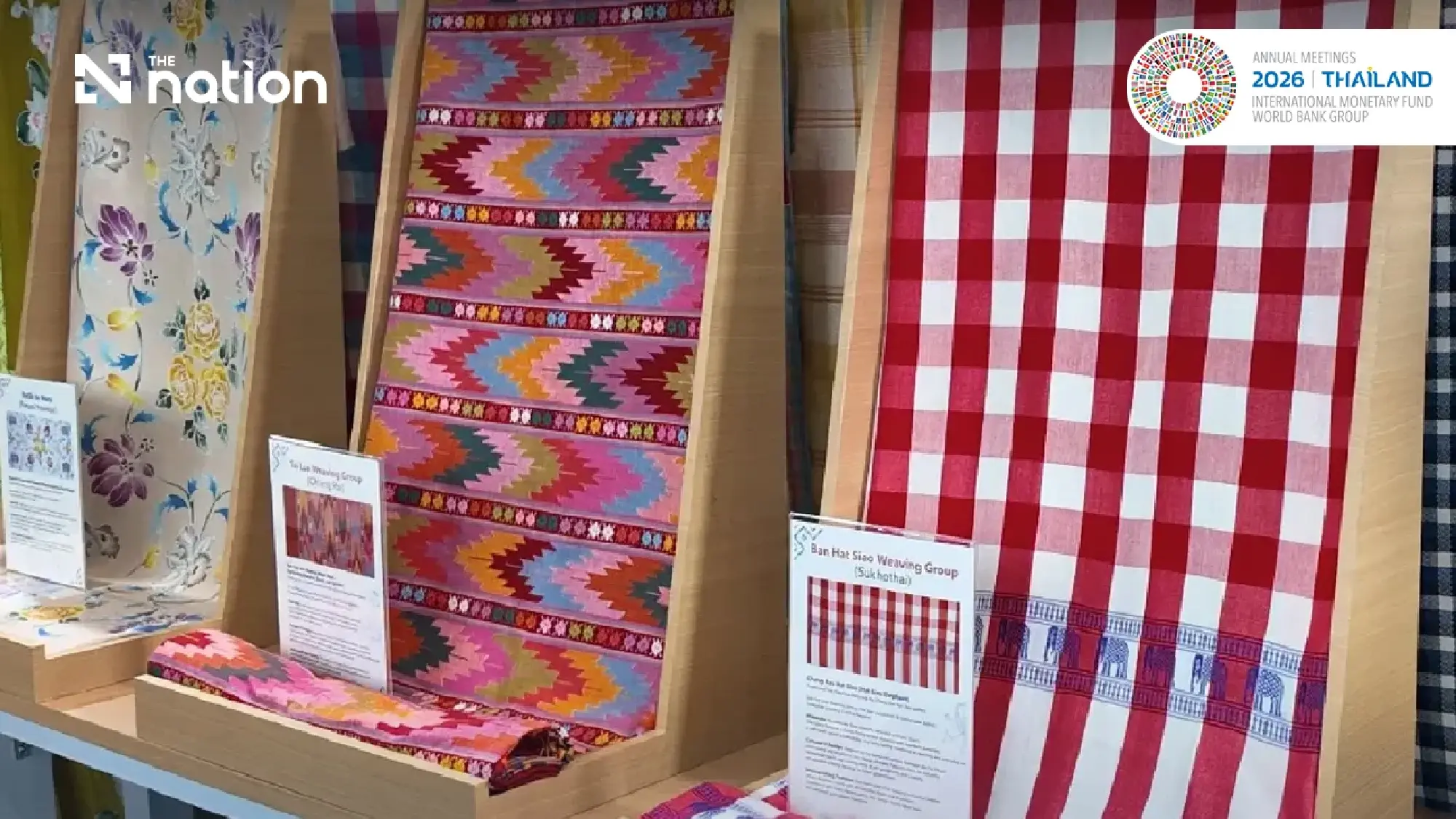
Tai Lue fabrics from Chiang Rai draw on banana shoots and spider webs, while Sukhothai’s selected cloth depicts elephants and their historical role. The designs bring community beliefs and local history into the meeting rooms alongside Pattani’s floral batik.
The Tai Lue weaving group in Si Don Chai subdistrict, Chiang Khong district, Chiang Rai, contributes the “Ko Yot” and “Maeng Mum” patterns to the IMF–World Bank meetings. The group’s weaving preserves knowledge passed down through generations, with motifs rooted in nature, beliefs and local life.
The traditional Ko Yot pattern resembles a banana shoot pointing upwards. The shape represents excellence, success and progress, as well as the unity and strength of the community.
For Tai Lue communities, the banana plant is auspicious because it grows readily and produces new shoots quickly. Those qualities connect the plant with prosperity and the beginning of a new stage in life.
Maeng Mum, or the spider motif, takes its inspiration from the interconnected strands of a web. The traditional design represents close family ties and community solidarity, expressing the idea that bonds between people, like connected threads, help make a community strong.
In Sukhothai, the Ban Hat Siao weaving group in Hat Siao subdistrict, Si Satchanalai district, contributes pha khao ma cloth with the “Chang Ban Hat Siao”, or Ban Hat Siao elephant, pattern to the IMF–World Bank meetings. Pha khao ma has long been part of everyday Thai life, and this design uses the precision of khid weaving to create small elephants within the fabric.
The elephants woven into Ban Hat Siao’s cloth are depicted with a sap khap, a seat carried on an elephant’s back. The detail recalls the animal’s historical place in Thailand as a symbol of power and a means of transport and trade, preserving a local story in woven form.
Pattani’s artisans see a chance to reach new customers
For Batik de Nara, appearing at the IMF–World Bank meetings is an opportunity to bring Pattani’s craftsmanship before an international audience again. Rowiya sees local handicrafts as a form of valuable traditional knowledge and soft power, capable of introducing both community stories and the skills of their makers.
For Thai batik to become better known internationally, Rowiya believes producers need consistent standards, high-quality handwork and new trading opportunities.
Online sales offer a way to reach niche customers who value meticulous craftsmanship and are prepared to pay an appropriate price for quality, according to Rowiya. Developing products that reflect contemporary fashion and can be worn in everyday life could also broaden the audience for Thai textiles.
Batik de Nara already has customers in Thailand and overseas, particularly in Japan, where buyers value the care involved in the work. Selection for the IMF–World Bank meetings gives the Pattani group another chance to introduce that craftsmanship to potential customers from other countries.
“Local handicrafts are a valuable form of traditional knowledge and part of our soft power,” Rowiya said of the IMF–World Bank meetings. “Having our work presented at these meetings is an important opportunity to show the world what local people can do. We are proud to have our local products displayed and used to decorate the event.”
Source: Krunthep Turakij
