Navamindra Maharaj Day honours King Rama IX’s 70-year reign and legacy
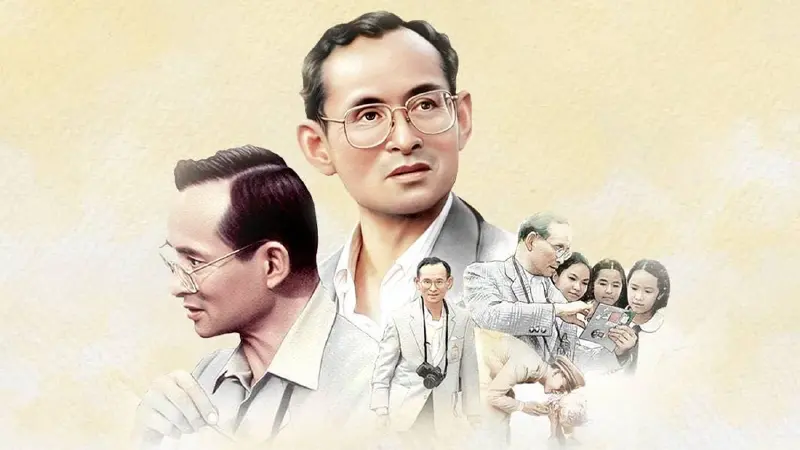


From rural roads and reservoirs to rainmaking and soil conservation, King Bhumibol’s projects improved lives in Thailand and earned international recognition.
- Navamindra Maharaj Day, observed annually on October 13, was established to commemorate the passing of King Bhumibol Adulyadej (Rama IX) and honor his legacy from a 70-year reign.
- His reign was defined by a commitment to improving the lives of Thai people, leading to numerous royal development projects in water management, infrastructure, and soil restoration.
- King Rama IX was also a celebrated innovator, creating the Royal Rainmaking Project and the patented Chaipattana Aerator, which earned him significant international recognition, including the UN's Human Development Lifetime Achievement Award.
Throughout his 70-year reign, His Majesty King Bhumibol Adulyadej the Great, Rama IX, never abandoned his people.
His royal duties were guided by a firm commitment to relieving hardship and improving the lives of Thai people in every part of the country.
After ascending the throne on Sunday (June 9, 1946), King Bhumibol decided to begin development work immediately.
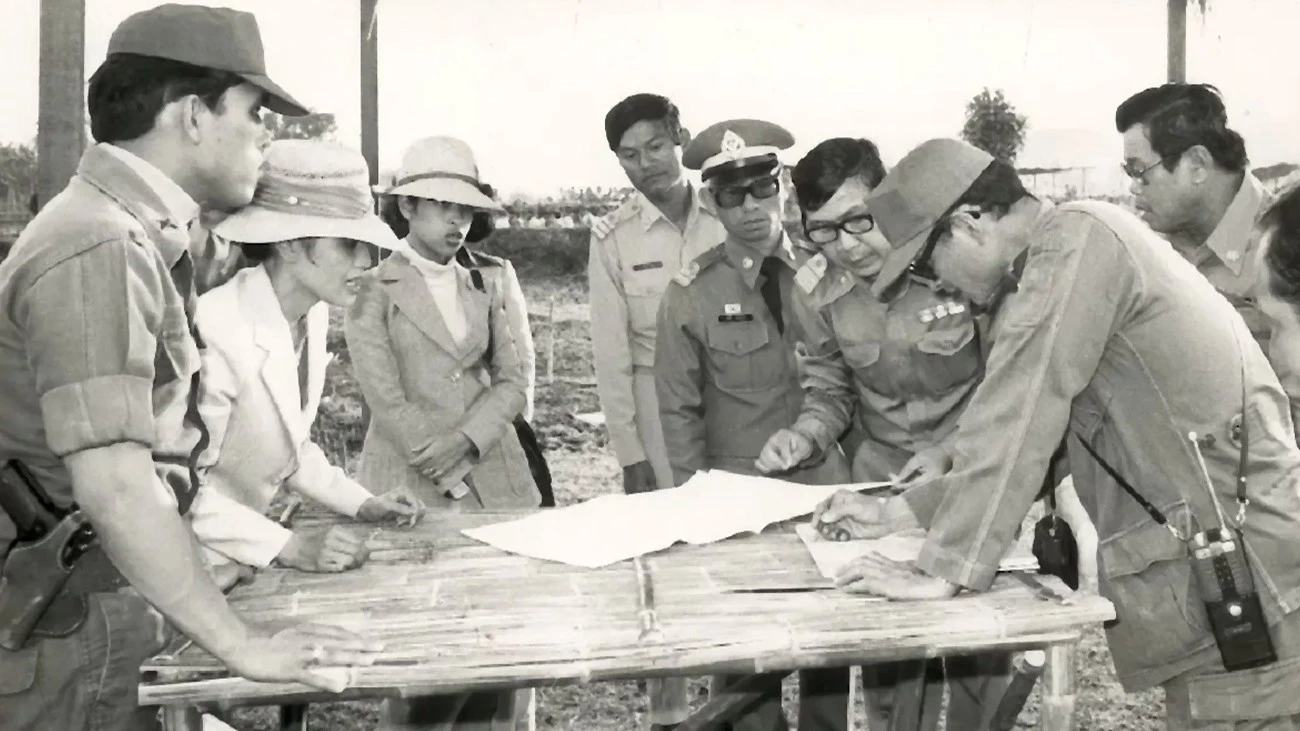
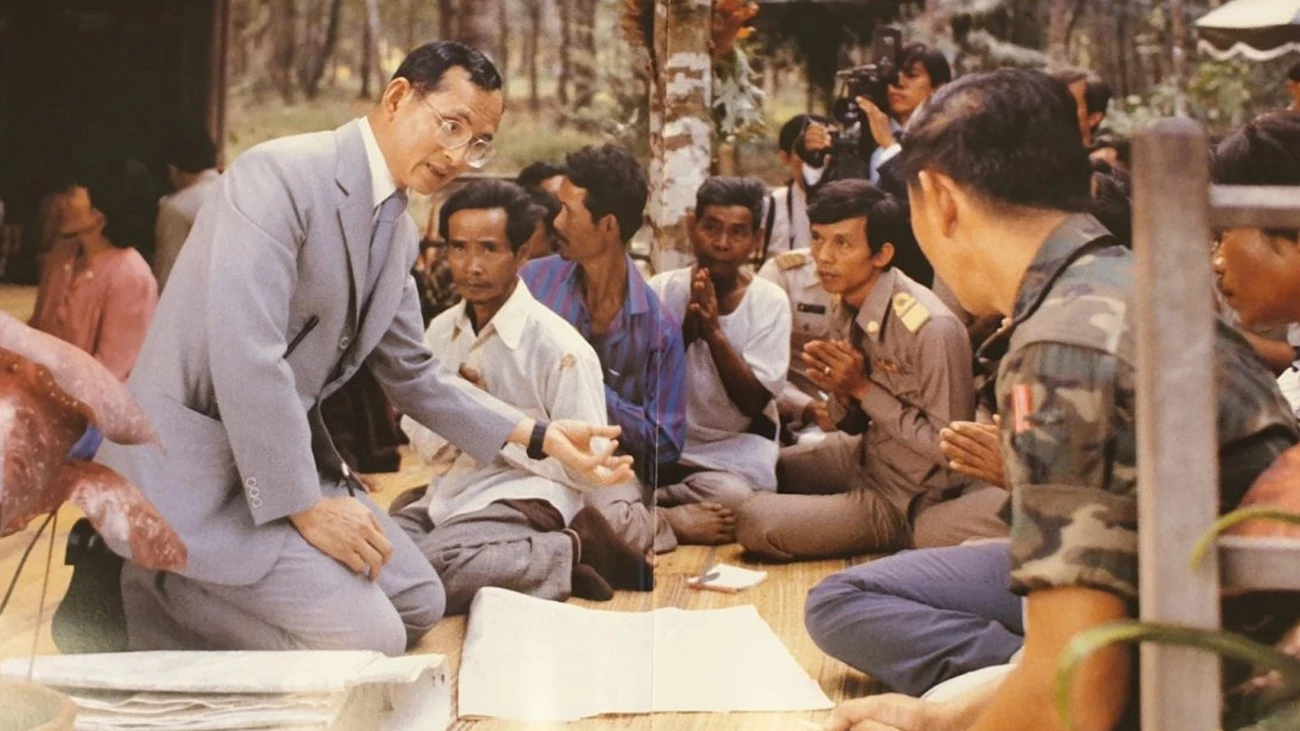
He visited people in the provinces, reaching them regardless of how remote or difficult the terrain was.
King Bhumibol’s visits brought him face to face with the poverty of farmers in remote rural communities, where unsuccessful farming and a lack of water left people struggling to make a living.

Chapter 1: “Water is life”, from early projects to water management
King Bhumibol’s rural development work began to take practical form in 1952, when he took up residence at Klai Kangwon Palace in Hua Hin district, Prachuap Khiri Khan province, and visited people in nearby communities.
During a visit to Ban Huai Khot in Hin Lek Fai subdistrict, Hua Hin, in May 1952, King Bhumibol’s car travelled along a rough, potholed cart track before becoming stuck in mud near the home of Ruai Ngamkham. Ruai helped the accompanying police officers, soldiers and officials lift the vehicle free.
King Bhumibol asked Ruai about the villagers’ problems and learnt that their greatest difficulty was the absence of a road.
Taking crops to Hua Hin market, about 20 kilometres away, meant travelling on foot or by cart for one or two days.
Hiring a jeep cost as much as THB500 per trip, making it uneconomical given the value of the produce they could sell.
In cases of sudden illness or snakebite, villagers were unable to reach hospital in time.
King Bhumibol therefore initiated a road from Hua Hin to Ban Huai Khot, donating bulldozer machinery to the Border Patrol Police at Naresuan Camp.
The officers were operating in an area facing the cultivation of narcotic crops, illegal entry by members of minority groups and the smuggling of contraband.
Helping the community brought the police closer to residents and built trust, giving people greater confidence in sharing information with the authorities.
Border Patrol Police officers working on the road stayed at the village headman’s home.
After finishing work in the evenings, they taught lessons and joined villagers in recreational activities.

The road to Ban Huai Khot, the village later renamed Huai Mongkol by King Bhumibol, was built gradually over several years and has been improved continually since.
The journey from Hua Hin to Huai Mongkol now takes just 20 minutes.
King Bhumibol later learnt of the shortage of fresh drinking water in Ban Khao Tao, a coastal village in Nong Kae subdistrict, Hua Hin.
Residents had to travel a considerable distance to mountains west of the village to collect water, bringing back only small amounts each time.
Khao Tao residents had also jointly presented King Bhumibol with about 48 hectares of land subject to seawater flooding, referred to as “thung takat”.
The saline land could not be used for agriculture.
King Bhumibol asked the Royal Irrigation Department to consider building Khao Tao Reservoir and contributed THB60,000 from his personal funds for the initial work.
He ceremonially anointed the main foundation pile on Tuesday (April 9, 1963). The reservoir was his first irrigation project to address water shortages affecting local people.
Guided by the principle that “water is life”, King Bhumibol devoted sustained attention to developing water resources.
His water management initiatives addressed drought, flooding and the improvement of water quality, with solutions adapted to each area’s problems to provide the greatest benefit to residents.
Chapter 2: King Bhumibol’s innovations and the restoration of the land
King Bhumibol initiated and pioneered the Royal Rainmaking Project to combat drought by modifying the weather to produce rain in tropical regions.
The work gained international recognition, with the World Meteorological Organization presenting him with a mark of distinction recognising his pioneering role in the technology.
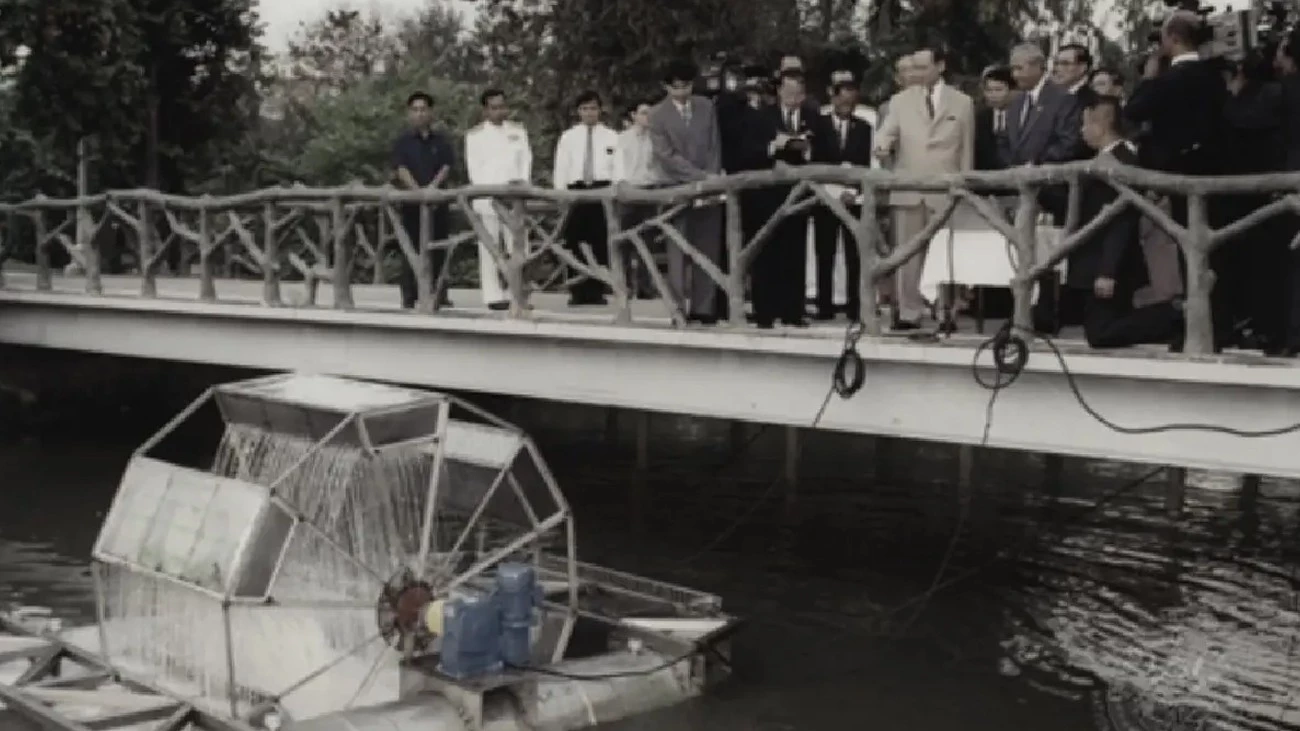
King Bhumibol also invented the Chaipattana Aerator, a mechanical device that adds oxygen to wastewater in urban communities.
It became the world’s ninth patented aerating device, making King Bhumibol the first monarch in the world to be granted a patent.
International and national committees also honoured King Bhumibol’s Chaipattana Aerator with trophies, medals and certificates, including:
- The MINISTER J. CHABERT trophy for outstanding invention, presented by the economy minister of the Brussels-Capital Region.
- The Grand Prix International trophy for outstanding invention, presented by the International Council of the World Organization of Periodical Press.
- The Prix OMPI Femme Inventeur Brussels EUREKA 2000 medal and certificate for an outstanding invention at international level, presented by the World Intellectual Property Organization.
Although the public may be familiar with the Chaipattana Aerator’s 12-sided form, King Bhumibol studied and developed nine prototypes, RX-1 to RX-9, with RX standing for Royal Experiment.
The designs catered to different water conditions in communities to achieve the greatest possible efficiency.
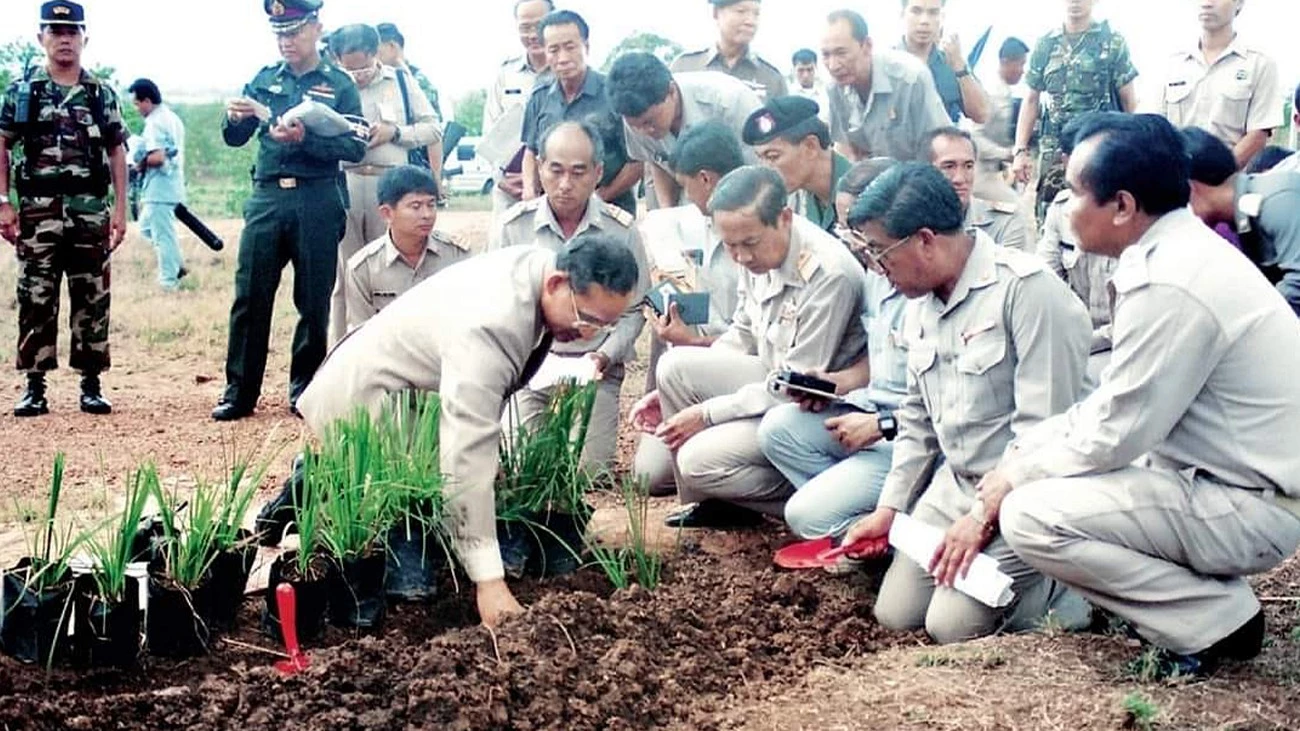
King Bhumibol’s soil development projects in remote areas throughout Thailand helped restore farmers’ livelihoods.
In recognition of this work, the International Union of Soil Sciences (IUSS) presented him with the Humanitarian Soil Scientist award on Monday (April 16, 2012), making him the first recipient of the award in the world.
The United Nations subsequently designated December 5, King Bhumibol’s birthday, as World Soil Day, effective from 2014.
King Bhumibol also introduced the Sufficiency Economy philosophy and New Theory agriculture as practical guides to self-reliance and lasting security for families and society.

Chapter 3: Worldwide recognition for King Bhumibol, ‘King of Kings’
King Bhumibol’s development work earned him international recognition as “the development king”.
In 2006, the United Nations Development Programme presented him with the Human Development Lifetime Achievement Award, a new United Nations honour introduced as a special tribute to mark the 60th anniversary of his accession.
Thai people’s loyalty and King Bhumibol’s standing were evident at the celebrations marking 60 years of his reign on Friday (June 9, 2006).
Wearing yellow, the colour associated with the weekday of his birth, crowds packed the plaza in front of Ananta Samakhom Throne Hall to attend a royal audience and loudly shouted “Long live the King”.
Images of the gathering were seen around the world.
King Bhumibol’s jubilee celebrations drew monarchs and royal family members from 25 countries, who attended to offer their congratulations.
Kings and queens from 13 countries were present in person.
The Sultan of Brunei Darussalam, speaking on behalf of all the visiting royal families, called King Bhumibol “a beloved and most highly respected friend” and “an inspiration to fellow monarchs”.
Tributes from around the world hailed King Bhumibol as “King of Kings”.
Navamindra Maharaj Day and everlasting remembrance
The Bureau of the Royal Household announced King Bhumibol’s passing on Thursday (October 13, 2016), marking the saddest day for Thai people.
People travelled from every part of the country to pay their respects to his royal remains and attended his royal cremation ceremony at the Sanam Luang ceremonial ground on Thursday (October 26, 2017), with the highest royal honours accorded to him.
His Majesty King Maha Vajiralongkorn Phra Vajiraklaochaoyuhua bestowed the name Navamindra Maharaj Day to mark the seventh anniversary of King Bhumibol’s passing on Friday (October 13, 2023).
The name means “the day commemorating the great King Rama IX”.
The Cabinet had resolved on Tuesday (September 26, 2023) to designate October 13 each year as Navamindra Maharaj Day.
Navamindra Maharaj Day honours King Bhumibol’s boundless benevolence and immeasurable contributions to Thailand in enduring remembrance.
Source: Bangkokbiznews