Four lotus ponds frame Queen Sirikit’s Royal Crematorium
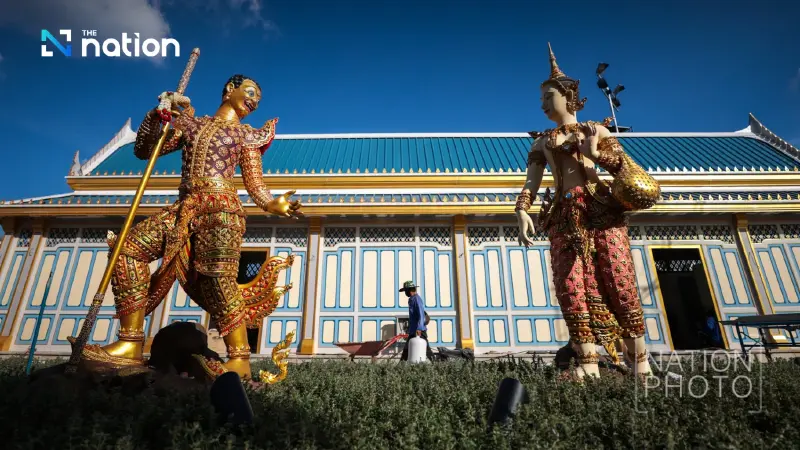


Temple art and khon inspired Sudsakorn Chaisem’s sculptures for Queen Sirikit’s Royal Crematorium at Sanam Luang, ahead of the December 16 ceremony.
- The four ponds surround the Royal Crematorium of Queen Sirikit The Queen Mother at Sanam Luang, representing the sacred Pokkharani lotus pond from traditional Thai cosmology.
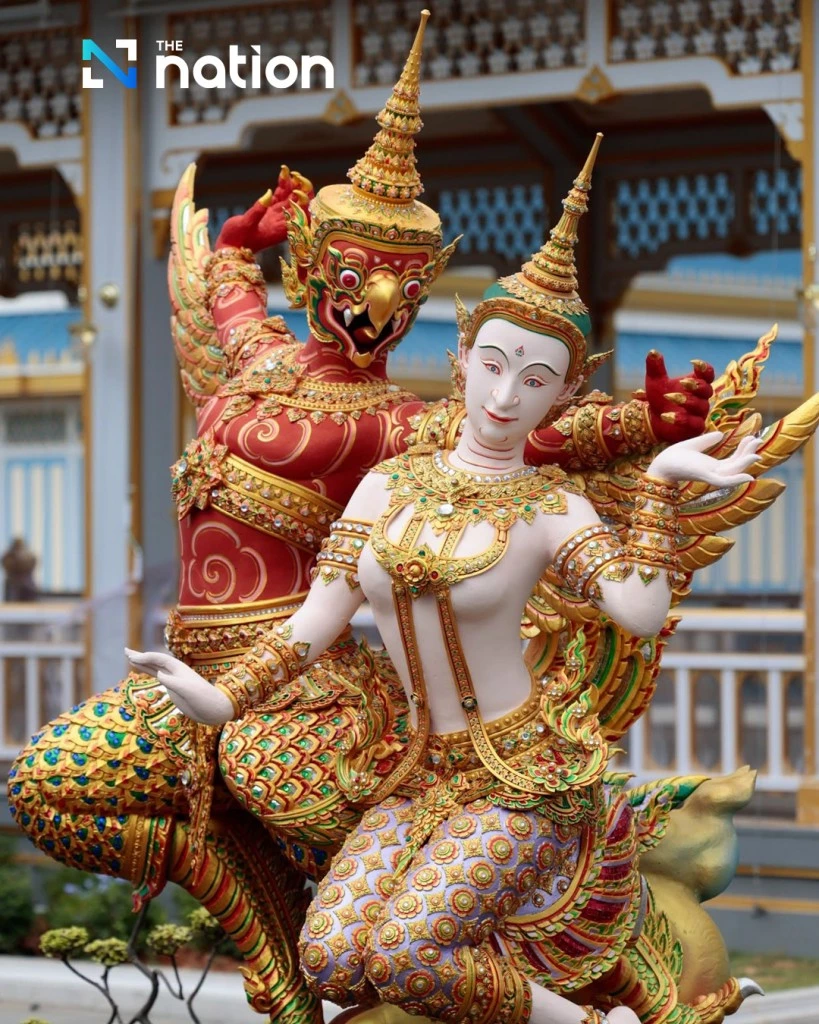
- Designed by National Artist Sudsakorn Chaisem, the ponds feature sculptures of mythical creatures from the Himmaphan Forest, including kinnara (half-human, half-bird figures), elephants, and swans.
- The design was inspired by the Queen Mother's love of lotuses, Thai literature, and khon (classical masked dance), which she helped revive.
- The specific sattabongkot lotus was chosen for its full, rounded shape, with the sculptures crafted by artisans at the Koh Kerd SUPPORT Center and positioned on rocks above the flowers.
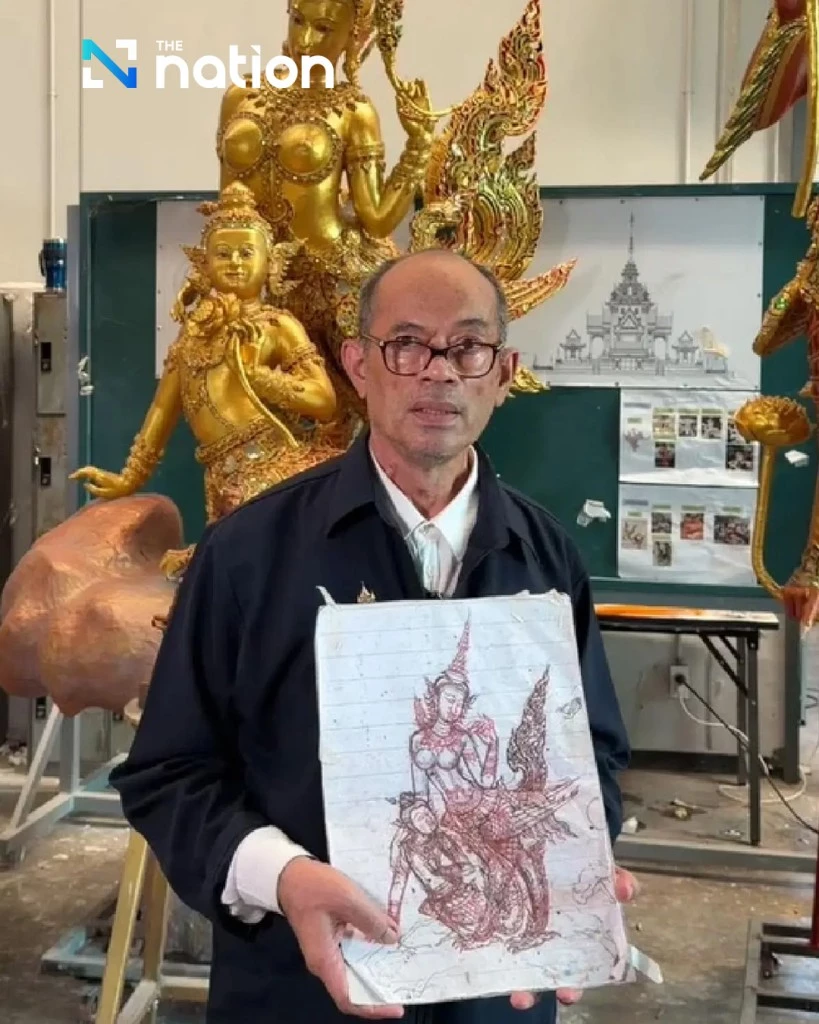
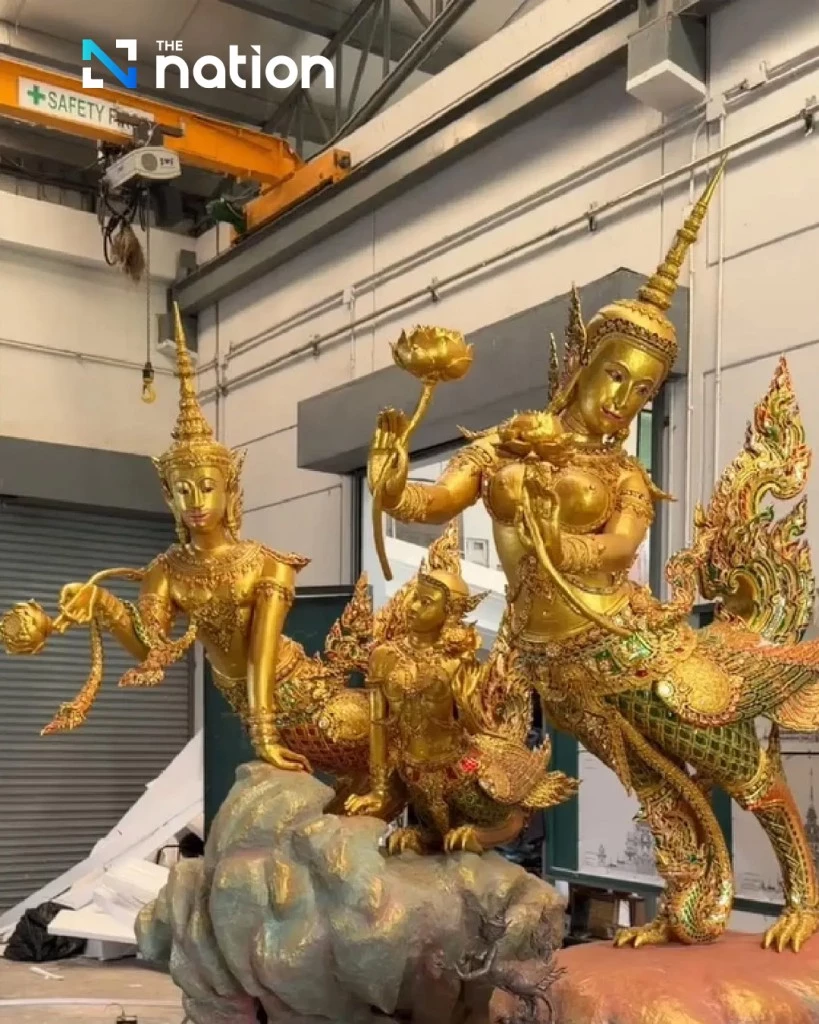
A young kinnara holds a lotus with its father, a mischievous look in its eyes. National Artist Sudsakorn Chaisem gave the half-human, half-bird child that expression for one of the four lotus ponds surrounding the Royal Crematorium of Her Majesty Queen Sirikit The Queen Mother at Sanam Luang in Bangkok.
The Royal Cremation Ceremony will take place there at 4.30pm on December 16, 2026. In designing the sculptures, Sudsakorn drew on the Queen Mother’s love of lotuses, Thai literature and khon, the classical masked dance drama she helped revive.
From a temple image to a mother and child
For a kinnari mother and her child, Sudsakorn turned to an image in the ordination hall of Wat Suthat Thepwararam in Bangkok. He sketched the pair and worked out how their forms would look in three dimensions. Speaking to Krungthep Turakij, he drew attention to the eyes of the young kinnara beside its father. “We have to give them a story,” he said.

Artisans at the Koh Kerd SUPPORT Center in Ayutthaya worked from his drawings, modelling the figures in miniature before enlarging them to a height of 1.8 metres. They cast and painted the figures, then applied pieces of mirrored glass, sequins and gems. The curved lines around the eyes recall those of a swan. Light catches the glass as well as the painted contours.

Sudsakorn, named a National Artist for 2023 for his work in the visual arts, including stage props, had also designed sculptures for the Royal Crematorium of His Majesty King Bhumibol Adulyadej The Great. He said the Fine Arts Department had commissioned him and that Her Royal Highness Princess Maha Chakri Sirindhorn had placed her trust in him. At Koh Kerd, the Queen Mother had arranged for young people from Omkoi in Chiang Mai to learn art, handicrafts and agriculture.
Why the figures stand above the lotuses
The Royal Crematorium, or Phra Merumat, represents Mount Meru in traditional Thai cosmology. Around its base, four ponds evoke the sacred Pokkharani lotus pond. Sudsakorn chose creatures from the mythical Himmaphan Forest that would look at home by the water. He worked with the landscape team to position them on rocks above the flowers.

The choice of lotus mattered as much as the choice of bird. Some varieties flower on stiff stems well above the water, while water lilies bloom close to the surface. For the sculpted flowers, Sudsakorn favoured the sattabongkot lotus. Its rounded head and densely packed petals gave him the full shape he wanted.
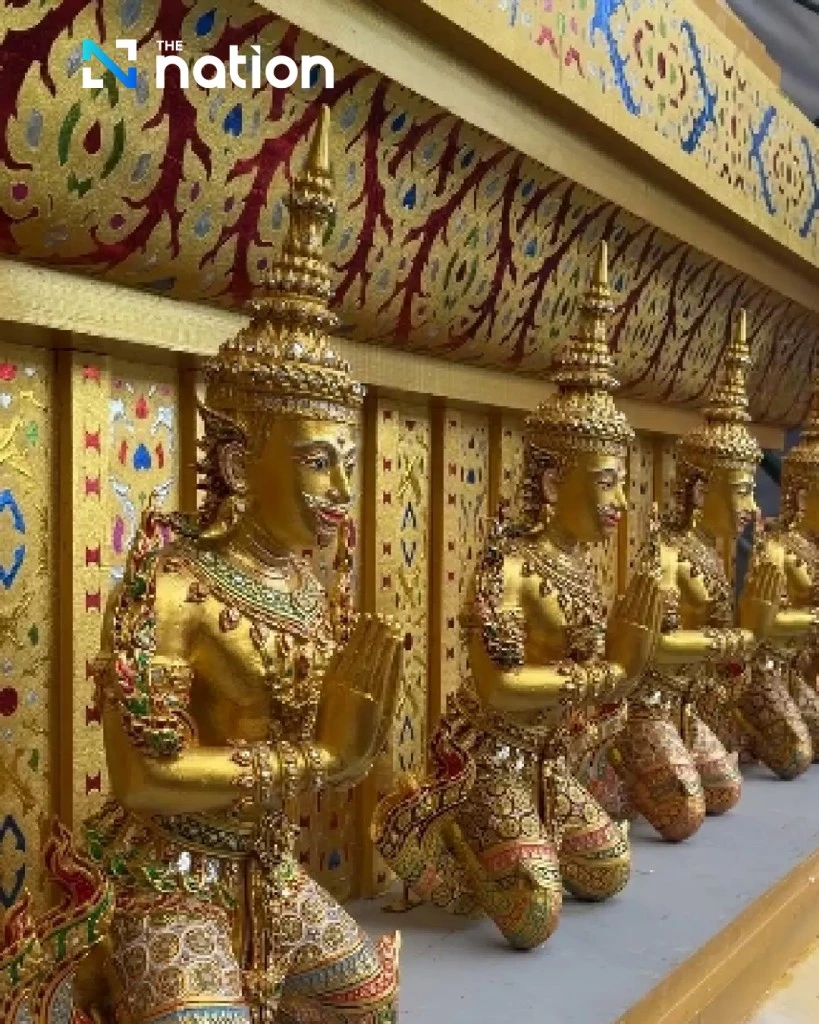
The centre’s sculptures include 12 elephants, eight mythical swans, four hemarat birds and four pairs of kinnara and kinnari figures, each depicting a parent and child. Three karawik birds appear to leap among the lotus clumps. Seated deities line the base of the crematorium. Elsewhere, scenes from the Ramakien show Hanuman with Matchanu, Hanuman with the mermaid Suphannamatcha, and Rama drawing his bow on a deer.
The khon episode that returns for the Royal Cremation
Sudsakorn has designed scenery for the SUPPORT Foundation’s khon productions since their beginnings. In 2003, after seeing a Fine Arts Department performance, the Queen Mother used her own funds to support research into historical costumes and have new ones made. The work helped revive skills ranging from costume embroidery to making masks from khoi paper.

In 2007, the foundation staged Prommas, an episode from the Battle of Indrajit in the Ramakien. The Fine Arts Department has chosen it for the performance before the Royal Merit-Making Pavilion ahead of the cremation. The foundation’s 2025 production was Bali’s Unbreakable Oath (Satya Pali). UNESCO inscribed Thailand’s khon masked dance drama on its Representative List of the Intangible Cultural Heritage of Humanity in 2018.
The five days of royal ceremonies
- December 15 — The Ok Phra Men royal merit-making ceremony begins at 5pm at Dusit Maha Prasat Throne Hall in the Grand Palace.
- December 16 — At 7am, the Royal Urn will be conveyed in procession from the throne hall to the Royal Crematorium at Sanam Luang. The Royal Cremation Ceremony begins at 4.30pm.
- December 17 — The ceremony for collecting the Royal Relics and Royal Ashes begins at 8am.
- December 18 — A royal merit-making ceremony for the Royal Relics takes place at 5pm at Dusit Maha Prasat Throne Hall.
- December 19 — After the morning offering of food to monks, the Royal Reliquary Urn will be enshrined at Chakri Maha Prasat Throne Hall. At 5pm, the Royal Ashes will be enshrined at Wat Ratchabophit and Wat Bovoranives.
Where to see the artisans’ work in Ayutthaya
At Koh Kerd in Bang Pa-in district, the Arts of the Kingdom Museum displays works by artisans of the Queen Sirikit Institute. Among them are a model of the Sri Suphannahongse Royal Barge, a gold niello throne, a carved teak screen recounting Sang Thong and a silk-embroidered screen depicting Inao.

Nearby, the Borom Mangalanusarani Pavilion commemorates milestones in the lives of members of the Royal Family. At the All About Khon Learning Center, visitors can see how Sudsakorn and his team brought scenes from the Ramakien to the stage, including the throne room of Lanka and a giant Hanuman taking an entire royal pavilion into his mouth.
The museum normally opens Wednesday to Sunday from 10am to 3.30pm. It will close from December 16 to 18 for the royal ceremonies and reopen on December 19. The free shuttle programme from Bangkok runs through December 26 and requires advance booking. The bus leaves Na Phra Lan Road, opposite Wiman Thewet Gate, at 11am and reaches Koh Kerd at about 12.30pm. It leaves at 3.30pm for Krung Thep Aphiwat Central Terminal, arriving between 4.30pm and 5pm.
Source: Krungthep Turakij