
The sizzle of socialisation: How Moo Kata makes Thailand’s table glow
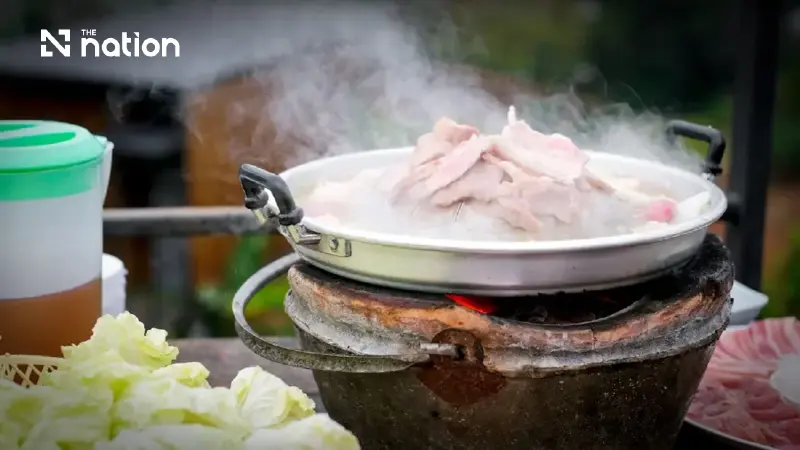


Thailand’s Moo Kata turns dinner into a shared ritual, blending soft power, tourism and communal comfort around one sizzling grill.
- Moo Kata is a communal, cook-it-yourself Thai barbecue that requires diners to actively grill, share, and interact over a single, dome-shaped pan.
- The dining experience is a lively social ritual where the shared process of cooking together fosters conversation and turns the meal into a collective, co-created event.
- It embodies Thai hospitality by transforming the dinner table into a place for connection and participation, allowing people to join in the culture rather than just observe it.
In Thailand, dinner does not always arrive perfectly composed on porcelain. Sometimes it comes hissing on a dome-shaped grill, surrounded by broth, chopsticks, laughter and the quiet diplomacy of passing the tongs.
That is the charm of Moo Kata, the cook-it-yourself Thai barbecue that has grown from an everyday craving into one of the country’s most expressive dining rituals.
At a moment when travel is increasingly curated through screens and meals are often photographed before they are felt, Moo Kata demands presence. You cannot outsource it to the kitchen. You grill, simmer, turn, dip, share and negotiate space over the same pan.
The format is simple but wonderfully theatrical. A brass or metal dome sears marinated pork at the centre, while a moat of broth catches the juices and softens vegetables, noodles and herbs. The result is not a stiff formal meal but a kind of calculated chaos: smoke, steam, splutter and conversation moving at the same pace.
Its democratic power is part of its beauty. Moo Kata is equally at home or in a restaurant. Even as more polished outdoor venues adopt it, the dish resists becoming precious. It remains relaxed, generous and unmistakably Thai.
That quality gives Moo Kata a place in the wider story Thailand is now telling about itself. Tourism campaigns led by the Tourism Authority of Thailand increasingly highlight “Must Taste” and “Must Try” experiences, while the creative economy frames culture not as decoration, but as value.
Moo Kata sits neatly between the two. It is food, performance, design, memory and social engineering in one sizzling circle.
The most authentic Thai experiences are not always pre-plated or explained. Some are built collectively, one slice of pork, one ladle of broth and one shared joke at a time.
As Thailand presents its cuisine as a living form of soft power, Moo Kata offers a particularly warm argument. It does not merely feed the body. It restores the table as a place of contact, care and cheerful disorder. In the communal steam of a shared grill, Thailand’s hospitality becomes something visitors do not just observe, but join.
