
From Royal Trade Gateway to Riverside Boutique Stay: How Bangkok’s Custom House Turns a New Page
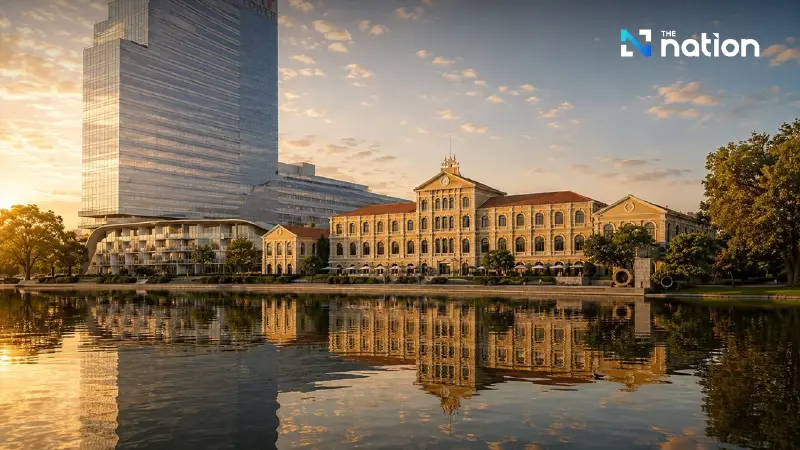


Built in 1888 as Siam’s trade gateway, Bangkok’s restored Custom House opens on 20 December 2026 as a boutique hotel blending river history and modern craft
- Bangkok's historic Custom House, originally built in 1888 as Siam's primary gateway for international trade, is being transformed into a luxury boutique hotel.
- The restored building is set to reopen on December 20, 2026, as "The Langham, Custom House, Bangkok," managed by Langham Hospitality Group.
- The extensive restoration involved a complex engineering project that lifted the 138-year-old masonry structure by 1.20 meters to ensure its long-term conservation.
- The new development will feature the conserved heritage building for public dining and bars, alongside a new contemporary wing housing 75 guest rooms and suites.
Built in 1888 as Siam’s trade gateway, Bangkok’s restored Custom House opens on 20 December 2026 as a boutique hotel blending river history and modern craft.
Along the western edge of Bang Rak, where the Chao Phraya River carries the steady pulse of Bangkok’s commercial life, a cluster of nineteenth-century masonry stands as a quiet witness to Siam’s opening to global trade.
Established in 1888—2431 in the Buddhist era—during the reign of King Rama V, the Custom House (Rong Phasi Roi Chak Sam, or Sulaka Sathan Building) once served as the kingdom’s primary customs post and a vital gateway connecting Siam to international shipping lanes, alongside the historic post office precinct.
Across 138 years, the site has mirrored Bangkok’s shifting economic and urban geography.

The cutting of Charoen Krung Road during King Rama V’s reign turned the surrounding riverside into one of Siam’s most vibrant commercial quarters, drawing foreign merchants and diverse communities to settle beside landmarks that endure today, including the French Embassy, Haroon Mosque, Wat Muang Khae, long-standing shophouses, and Assumption Cathedral and school.
Beyond collecting import and export duties, the Custom House hosted royal and foreign gatherings and formed part of celebrations marking King Rama V’s return from his first tour of Europe.
In 1959 (BE 2502), the Custom House became the Bang Rak Fire Station for more than six decades before operations moved elsewhere. Left closed over time, parts of the historic masonry deteriorated, with sections of the structure falling into disrepair.
Now, following extensive structural stabilisation and conservation work, the heritage precinct is preparing for its soft launch on 20 December 2026 as The Langham, Custom House, Bangkok, managed by Langham Hospitality Group in partnership with Rabbit Holdings, a subsidiary of BTS Group, under an investment reported at roughly 6 billion baht.

Engineering a Delicate Lift in Unreinforced Brick
Restoring a 138-year-old load-bearing brick building next to a tidal river demanded precision engineering rather than cosmetic repair. Unlike modern reinforced concrete frames, traditional load-bearing masonry relies on thick walls and arches to distribute weight, making uneven movement a serious risk for cracking or tilting.
As structural engineering specialist Dr Taned Weerasiri explained on the Changroo (“ช่างรู้”) YouTube channel, engineers raised the historic Custom House structure by 1.20 metres to support long-term conservation and future use—described as one of Thailand’s largest and most complex load-bearing brick lifting projects.
Teams positioned more than 400 hydraulic jacks across key points to lift the structure vertically in small increments of a few millimetres per cycle, backed by real-time sensors, tilt and vibration monitors, and optical alignment instruments programmed to halt lifting if movement exceeded set thresholds.
Work progressed in measured stages—from roughly 9–16 millimetres on day one to around 29 centimetres on day two and 40 centimetres ahead of reinforcement extensions—without damage to the original fabric.

A Conversation Between Past and Present
Rather than replicating the Custom House, the development pairs the conserved heritage buildings with a new contemporary wing designed by Thai architect Smith Obayawat, founder and principal of the Office of Bangkok Architects (OBA).
Curving lines inspired by the flow of the Chao Phraya River frame an architectural dialogue between old and new—described in project materials as a relationship akin to “grandfather” and "grandson", linking nineteenth-century trade heritage with present-day urban life.
Accommodation spans 75 rooms and suites in the project’s hotel configuration—comprising 60 guestrooms and 15 suites (with separate coverage also noting 78 rooms in the new accommodation block)—looking out toward landscaped courtyards, the Bangkok skyline, or the river beside the Custom House.
Inside, natural materials and warm lighting are paired with Siamese motifs: sculptural bathtubs set against brushed gold-toned metal panels etched with geometric rhombus patterns inspired by Thai temples and sculptural craft, as well as coinage and gilded finishes from King Rama V’s reign, alongside suite details drawing on Thai aristocratic heritage.
Wellness and guest facilities in the new wing include Chuan Spa—combining traditional Chinese medicine concepts with contemporary wellness—and a fitness centre equipped with Technogym’s Sandstone Collection, cited as its first installation in Asia, complemented by butler service, private river excursions, and chauffeured Bentley transfers.
Meanwhile, the restored Custom House and adjacent heritage structures are set to reopen as public dining, bar, and lifestyle spaces, with specific culinary concepts—such as signature dining, afternoon tea, or British-inspired pub and Cantonese dining references noted in early previews—to be rolled out in stages, alongside a formal grand opening targeted for early 2027.

Strategic Context on the Riverfront
The opening places The Langham, Custom House, Bangkok—marking the British-rooted hospitality group’s first property in Thailand and its wider Southeast Asian expansion—into an intensely competitive stretch of the Chao Phraya luxury riverfront alongside established names such as Mandarin Oriental, The Peninsula, Four Seasons, and Capella.
Positioned within reach of Asiatique The Riverfront, ICONSIAM, Chinatown, and Charoen Krung’s galleries and creative venues, the project’s commercial test will lie in balancing heritage conservation and pre-opening local talent recruitment with day-to-day operations.
In earlier remarks, Langham Hospitality Group CEO Bob van den Oord said the group wanted the property to be a source of pride for Thai people by weaving local history, culture, and culinary craft into the guest experience.
For visitors arriving by river or road from 20 December 2026, the Custom House’s return to active life offers a tangible link to how Bangkok built its global trade ties—and how it chooses to keep them standing.

Photo Credit: The Langham, Custom House, Bangkok Facebook
