
Ready for your own Olympics?


With the Olympic Games approaching, athletes around the world are practising carefully - no one wants to get injured.
Fortunately most sports injuries can be treated effectively and the patients return to competition. Even better, the proper precautions will prevent most injuries.
Assistant Professor Dr Pasakorn Watanatada is Samitivej Hospital’s specialist in performance and motion analysis and regularly advises athletes who want to boost efficiency while avoiding injury. He also guides non-athletes who exercise but are often, he warns, unaware of their own strength.
"Injuries can ruin hopeful athletes’ bright future," Ajarn Pasakorn says, "so they should be physically fit at all times. Different sports require strength in different groups of muscles – total leg and low-back muscles are required for football, for example.
"They need to be in balance, too, meaning the muscles need to be equally strong. Otherwise the weaker muscle will pull the stronger one and can cause damage."
Sports medicine has now progressed further with the Humac Isokinetic dynamometer, which measures and improves the performance of muscles, core strength, agility and coordination and greatly reduce the chance of injury.
Once you know your body strength, Pasakorn can recommend the kind of exercise and training you need to be in top form if you want to feel like the Olympians. And if you just want to just play sporting games safely and happily, he can give you a few tips, too.
Pasakorn also knows about sports shoes. Soccer players have to consider the ground surface – for synthetic grass they need shorter spikes and for natural surfaces that can get wet and muddy, they need the longest spikes.
Pasakorn tells tennis players to use a two-handed backhand to avoid the agony of "tennis elbow". It occurs when the arm and forearm muscles are overused, resulting in either an abrupt or subtle injury to the muscle and tendon area around the elbow.
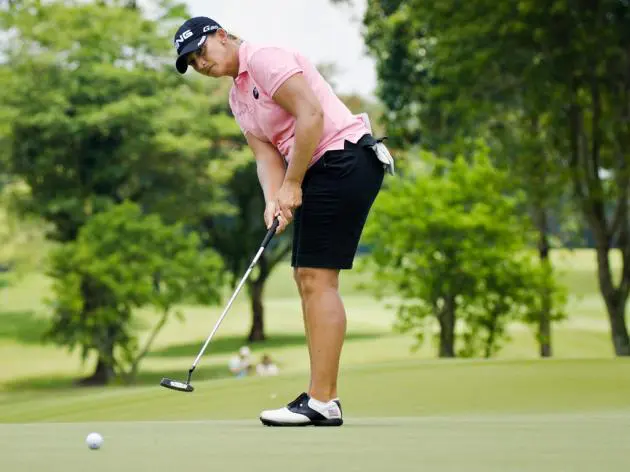
"And in golf you need to develop strong back muscles," he says. "I recommend 18-hole golf as good exercise for all ages and all states of health – except for people with knee problems, who would first need treatment. Even heart-surgery patients can play golf after recuperating.
"The only drawback with golf is that it’s time-consuming, but if this isn’t a problem for you, it’s the best exercise, because you have to walk at least nine kilometres while playing 18 holes."
"And no cheating with a golf cart!" he laughs.
In fact walking is the best exercise for everyone, Pasakorn says, since it requires no strenuous action, so body tissues are never overused. Take a one-hour walk three times a week and your health will be perfect.
Unless you do sports training, he says, you only need to exercise for 40 minutes three times per week – and that doesn’t even have to be 40 continuous minutes. It can be 10-minute workouts four times a day as long as the workouts are identical.
