
After the earth moved


Play
A Japanese artist helps earthquake-hit children turn their trauma into toys
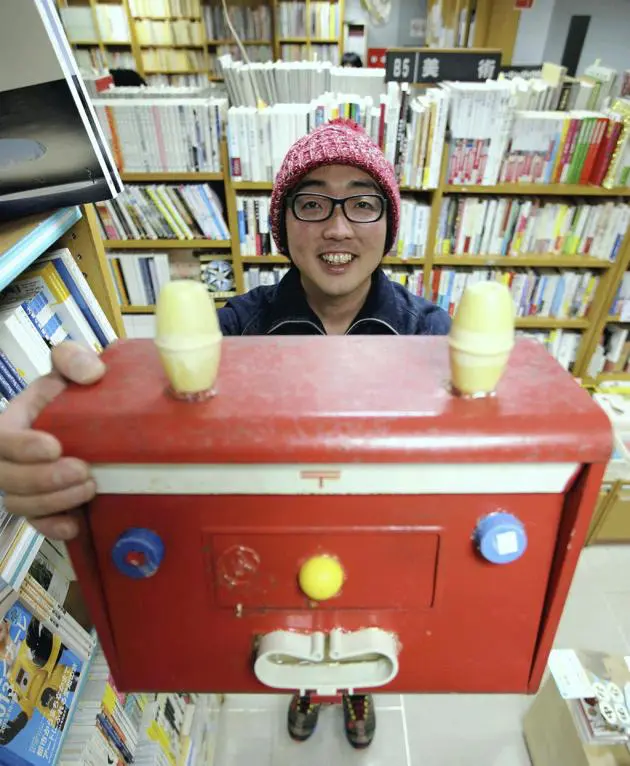
With their cute, smiling faces, characters made from the debris of buildings destroyed in the Great East Japan Earthquake in March 2011 are helping bring grins back to the faces of children traumatised by the disaster.
The creators of such characters as “Lady Heavy Makeup” and “Uncle Demon” are sculptor Tomo Inukai and students in the west-coast city of Ishinomaki.
After the quake and tsunami laid waste to much of the city, Inukai launched the Watanoha-Smile project with students who took shelter from the devastation at Watanoha Primary School.
He recently published a book about the project, titled “Watanoha Sumairu Egao ni Natta Garekitachi” (“Watanoha-Smile: Recovery Art Objects Made by the Children of Ishinomaki”).
The stories and some 200 characters are deeply touching and will linger long in the mind of anyone who reads the book.
“The works are filled with students’ memories of trying to get on their feet again after the disaster,” Inukai says. “So these works are very precious. I wanted to record them.”
Inukai, a resident of neighbouring Yamagata Prefecture, has held workshops for children across the nation on how to make works of art using discarded objects.
At the invitation of a volunteer organisation, he visited the primary school in Ishinomaki three weeks after the disaster.
Seeing survivors who couldn’t eat or sleep, and piles of the debris that filled the school playground, he initially felt discouraged and unable to see how he could hold a workshop there.
Meanwhile, the children themselves had made a hideout with the debris. They also played a makeshift version of baseball with balls and sticks collected from the debris. Noticing these acts, Inukai felt encouraged and so began the project.
The children were yearning to play as they once had with their toys, now washed away in the tsunami.
When Inukai taught them how to bond items together with adhesive, they were happy to use it to build things all day. Compared to workshops he had given in other places, children in Ishinomaki made more works of higher quality, he recalls.
“They lost various things [in the disaster], so I think their imagination and creativity had increased,” Inukai says. “I felt I learned from them what it means to live.”
With his help, the children managed to turn the debris, full of negative memories, into positive, brilliant characters – works that impress any who see them.
The book has moved all those who have read it and an exhibition of these works has been held at about 30 locations nationwide.
Inukai still visits the Watanoha district once or twice a month as he “wants to see how the children have grown”. He’s hoping to be with the “Watanoha kids” for another 10 or 20 years.
