
The man who will come


Play
Is there another Adolf Hitler afoot in the world today? The keys to his appeal might be seized by anyone with the will and the circumstances
Once the secret of Adolf Hitler’s jawbone was pried loose from Soviet clutches in 1970, historians in the non-communist world could finally lay to rest the central question about how and when he died. It was, as suspected, sordidly beneath the ruins of the Reichstag on April 30, 1945 (69 years ago the Wednesday before last). At least he wasn’t still ambling around in Paraguay or something.
The next big question about Hitler was how he came to exert such complete control over the entire German populace, to the point that thousands of them became his cheerful servants in the extermination of the Jews and hardly anyone else cared enough to object.
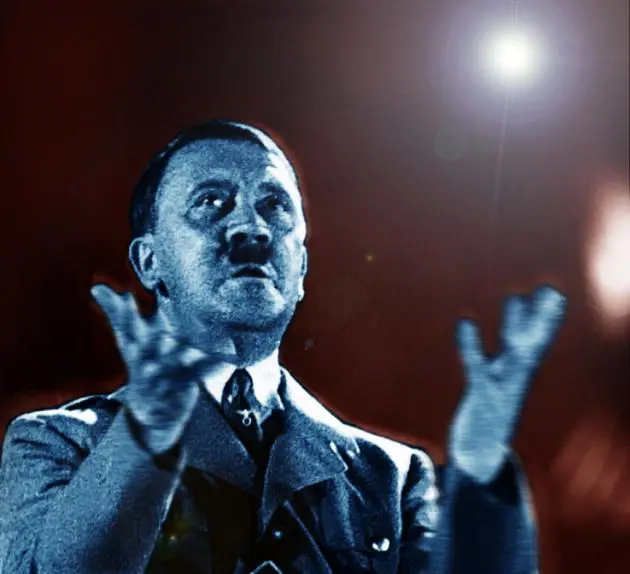
It’s a confounding question leading to complicated answers, and it’s generated a slew of books, some claiming that the key was mass hypnosis, a notion that Laurence Rees immediately dismisses. The title of Rees’ book, “The Dark Charisma of Adolf Hitler”, gives away his thesis that the Fuhrer exuded the irresistible appeal of a holy man, an omniscient saviour. His multitudes of German admirers saw nothing “dark” about this “mystical messiah”, however, until it was too late.
Given Germany’s circumstances following World War I, there never really was any mystery to Hitler’s rise. Its citizens never accepted that they’d started that war in the first place, and yet, having lost it, they were held to account. The punishment meted out by the victors in the Treaty of Versailles is now generally acknowledged as a textbook example of how not to treat a defeated enemy.
Vast territory was seized, sweeping political and social restrictions were imposed and a monetary debt was due, so colossal that it crushed the German economy. And Hitler had been in the army that was left standing on the battlefield, quite ready to fight on, when the armistice was abruptly announced. The sense that their own leaders had betrayed them smothered any shame the Germans might have felt at losing the war.
People yearned for “the man who will come”, the hero of an old folk tale who would arrive in time of need and set things right. Hitler meandered into the mission, having briefly circa 1920 toyed with a German version of Bolshevism, of all things. But, anti-social to his bones, he soon came to regard socialism as a rickety fence and instead scurried up the sturdy wall of fascist National Socialism then being built.
It was a better fit for this insecure orphan’s inbred intolerance. Germany required immense and rapid reform, he believed. That wasn’t possible without the iron fist of a dictator. Hitler “despised democracy”, author Rees quotes one of the Fuhrer’s old associates as saying.
Reform, dictatorship, democracy – all words in common discussion in Thailand today, interestingly enough. “The Dark Charisma of Adolf Hitler” might well send the odd chill of uncomfortable familiarity up the spines of readers here. “Hitler and the Nazis, von Papen reasoned, had the popular support, whilst he and his friends had the intelligence to manage them,” Rees writes, referring to Hitler’s predecessor as chancellor of Germany.
“So the intriguing situation by the autumn of 1932 was that, whilst Hitler was perceived as a charismatic leader by large numbers of ordinary Germans, key members of the German elite were almost scornful of him. Equally instructive is the fact that von Papen and his cronies found it easy to belittle Hitler’s qualities because he was not of their class” – meaning the nobility.
Hitler was by then, however, already a dab hand at winning hearts and minds. He knew, for example, that the best way to make friends was to share enemies. In denouncing Russia (a traditional foe for Germany) and the Jews (then widely perceived in Europe and the US as having undue influence in finance and politics), he had an ideal “bonding element” with the populace.
“As Hitler discovered,” says Rees, “it is much easier for charismatic leaders to define themselves by who they hate rather than what they believe in.”
Hitler offered still more to an electorate that would cease to be an electorate once he cemented power. He assured people that the ends justified any means, that they could ignore moral and ethical strictures if it got them what was owed them. He “acted as a legitimiser, an enabler, a giver of permissions, almost as a father figure who told his followers, ‘Yes, pursue these dreams – forget the conventions of the so-called civilised society.’”
Specifically, in the mid-1930s, Hitler was enabling physicians to kill off severely disabled fellow Germans, since they were a present burden and carried feeble genes that would create a future burden. Tens of thousands of crippled and mentally ill German citizens were euthanised before the first Austrian or Polish or Czech Jew went to the gas chamber, the doctors and nurses joining the soldiers and brown-shirted street thugs in rejecting “modern sentimental humanitarianism”, as the Nazi newspaper Volkischer Beobachter ridiculed it.
Laurence Rees’ prose is workmanlike and he regularly returns from the “charisma” well with a half-full bucket. He’s not a psychologist, after all – he makes films for the BBC – but that job gave him access to “hundreds of interviews with eyewitnesses and perpetrators” that had not been published previously.
He puts these sources to compelling use in offering an account of Hitler’s rise and demise that is unwaveringly interesting, often disturbing and occasionally surprising. More importantly, it is always worthwhile revisiting the lives of such profoundly important historical personalities as Hitler, if only to be reminded of what has been possible in the past and thus be more aware of what could happen in the present.
The Dark Charisma of Adolf Hitler: Leading Millions into the Abyss
By Laurence Rees
Published by Ebury Press, 2013
Available at Asia Books, Bt450
Reviewed by Paul Dorsey
