
Remote Monitoring: the answer for patients with cardiac arrhythmia


Play
Long known to medical professionals the world over, cardiac arrhythmia is the term used to describe an abnormal heart rhythm.
Normally, the heart beats 60-100 times per minute, but a faster heart rhythm can be triggered by exercise or emotion such as becoming excited or frightened. Symptoms of arrhythmia include palpitation, dizziness and fainting due to a fast or slow heart rate.
Arrhythmia can occur in men and women of all ages. If left untreated, an atrial fibrillation that continues for a long time can lead to paralysis or heart failure which is life-threatening and difficult to treat, with patients unlikely to ever recover their full health and quality of life.
These conditions may be caused by internal factors, such as age-related degeneration; mineral imbalances; structural heart disease (for example, congenital heart defects, hypertrophic cardiomyopathy, acute myocardial infarction), Brugada syndrome; hypothyroidism; thyrotoxicosis; and, in some cases, genetic factors.
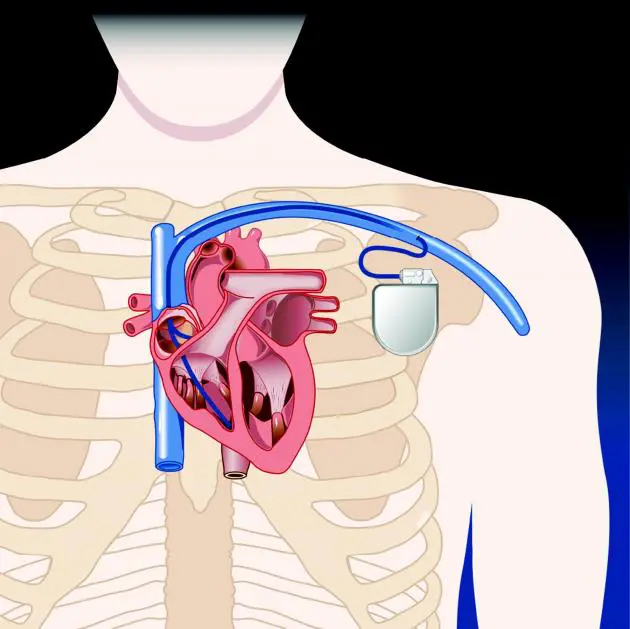
External factors include excessive stress, hard work, lack of sleep, and alcohol consumption. Today, probably because of unhealthy lifestyles, many people suffer from arrhythmia and chronic heart failure. In some cases, they require an implantable device, such as a pacemaker, automatic intracardiac defibrillator or cardiac resynchronization therapy defibrillator. Patients with an implantable device are required to have it regularly checked every 3-6 months, depending on the type of device, to check whether it is still functioning properly. The devices have to be checked for malfunctions, such as frequent shocks or numerous false alarms.
In the past, when a patient had a problem, the doctor would not know what had happened until the patient arrived at the hospital. However, thanks to the introduction of the Carelink Network, patients today receive remote monitoring services. The Carelink Network is a communication centre for patients with implanted heart devices allowing doctors in-charge to provide monitoring via cellular signals. All data is stored securely in a database. At present, there are more than 100,000 patients using the remote monitoring services to communicate with their doctors. The data can be transmitted from home or anywhere at any time.
The benefits of the remote monitoring system are multiple and include reducing the time burden for patients imposed hospital visits, offering a convenient and cost-effective solution for data transmission and making patients feel safe – like having a specialist with him/her at all times.
Experience has shown that the remote monitoring systems can and so safe lives. In one case, the implanted device sent a remote alarm to the doctor indicating a pulmonary oedema when no warning symptoms were present. Upon receipt of the alarm, the doctor telephoned the patient to increase medication dosage so as to prevent the pulmonary oedema and subsequent heart failure. This Carelink Network system reduced the time burden for this patient and avoided hospitalization and even death.
Although some factors that influence the development of the arrhythmia cannot be controlled, exercise, a healthy diet, sufficient sleep, and a stress-free life can prevent and reduce arrhythmia conditions.
And remember, take care of your heart because it works hard for you.
Dr Orapin Chawankul is a Cardiologist at Samitivej Sukhumvit Hospital. For an appointment, call the Heart Institute at (02) 711 8110-2.
