
Give us back our culture!


Play
Activist occupy century-old Belgrade cinema in bid to found arts center
One of the oldest surviving movie theatres in the world is at the centre of a battle with Serbian authorities, with militant occupiers vowing to reinvent the 104-year-old cinema as a self-sufficient centre celebrating culture and cinematography.
The group of young people stormed the defunct theatre in central Belgrade demanding that its privatisation be revoked.
“For too long, we only looked on while our cinemas were being sold, our museums rotted, our libraries folded, our art was turned into merchandise and our cultural goods were sold to private businesses,” the group said in a rallying cry.
“We want something else for Zvezda,” explains one of the leaders, 25-year-old film director Luka Bursac. “This should grow into a cultural centre, something not only to show, but help make movies.”
Zvezda – “star” in Serbian – is not just a hallowed cultural institution, he says, but also “victim of a corrupt society” that allows privatisation of publicly owned treasures.
Bursac came to the November 21 Zvezda invasion from a project which stirred controversy in Serbia while he was a third-year student at the Belgrade University’s Film Academy in 2013.
He made a sexually provocative film, upsetting many in a society where many respect the influence of the conservative Serbian Orthodox Church.
He wanted to screen his film in Partizan, a movie theatre that traditionally showed sexploitation films.
He found it shuttered and its new owner unwilling to open it even for that one occasion.
“That got me going. I found a maze of ‘dirty’ privatisations which have not only stripped Belgrade of its iconic movie theatres, but cost this state and taxpayers millions of dollars,” Bursac says.
Beograd Film, a company owning 14 cinemas in the capital, was controversially privatised in 2007 for 9 million euros (Bt333 millions). Five of those theatres were re-sold in 2010 for 20 million euros.
Because of that profit, Bursac contends it is not enough to just revoke the privatisation.
“It should never be returned to the government, but be organised as a self-governing system, functioning outside the state apparatus, away from the reach of greedy monopolists,” Bursac argues.
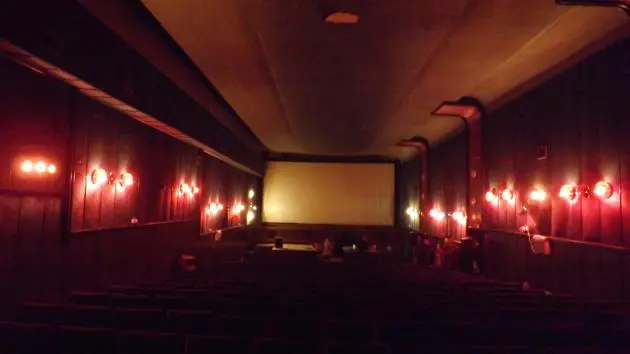
The theatre began screening movies in 1911 in a building dating from 1903. Known then as the Koloseum Cinema, it was the first in Belgrade with a purpose-built screening room. Musicians played music live during the silent movies.
It advertised that it had “luxurious, lemon-scented toilets.”
Belgrade then was capital of Serbia, with the Kingdom of Yugoslavia not to be created until a further seven years into the future.
Zvezda, as it was named from 1945, is located in a part of the city which was occupied in both world wars and survived artillery and air bombardment by both foes and allies as well as street fighting.
Now it only shows the dirt and decay from the eight years of neglect since it was sold in 2007 and shuttered a little later.
There is mould in many places and plaster is falling from the ceiling in the cinema that has around 25 rows of 15 musty seats.
Piped water has been turned off and the occupiers’ only toilet is a mobile plastic cabin in the entry hallway, by the box office.
Despite the chemicals used, a stench emerges from it.
The group launched a campaign on Kickstarter, the Internet platform that raises funding for creative projects, trying to raise 30,000 pounds (Bt1.5 million) for emergency fixes.
But the campaign failed, with only a sixth of the needed funds pledged by the time the campaign period expired.
So things are apparently set to remain as they are, with the occupiers struggling to drum up public support as they spend their days inside. They organised screenings of films and other events over the four months of the winter.
“Here we have young people who gave up their comfort in the cause of dignity and free creativity,” Bursac says, shrugging away the question of what the group would do if it did raise enough money to buy the cinema.
Actor Nikola Surbanovic, another member of the group, points out that many from the core of around two dozen people regularly volunteering had been sacrificing income by not working.
“We have a film director here who has no time to look over a script, we have (spokeswoman) Darinka Vujovic, who is a dentist, we have others, too, but we all choose to be here,” he says.
The wrangling over the old theatre goes beyond the property ownership issue or their lost income, Bursac adds.
“A place like this gives birth to new thoughts. When a cultural revolution like this touches us, what matters is the money that is a means to maintain the instrument, not the money to buy it,” he says.
The occupier movement has been fractured. Bursac has accused some of those who took part in the occupation at its early stage of opportunism, charging that they apparently wanted to use Zvezda as a doorway to politics.
“Some wanted us to join one side or another. Some saw themselves as revolutionaries. Now it is only we who want to save this place to change it into something new, important for the culture in Serbia,” the 25-year-old says.
