
One very fashionable step ahead
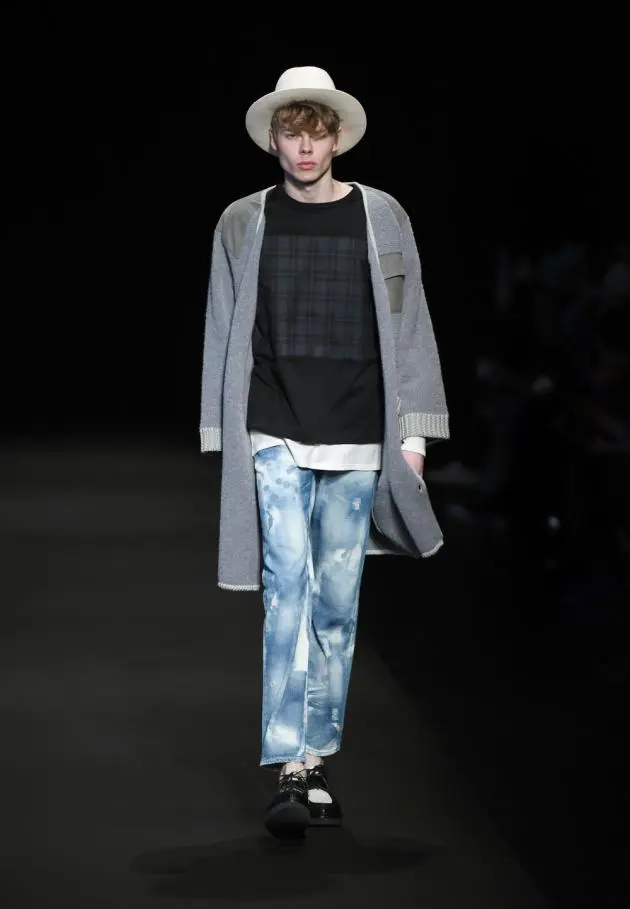


Japanese men showcase their style on the catwalk and in the street
FEMININE GLAMOUR may turn the most heads at fashion weeks in New York or Paris, but in Tokyo it is the style-conscious men who set the sartorial trends. From sharp futurism to wool-and-denim casuals, the finale of Tokyo Fashion Week put the spotlight largely on menswear, aiming to promote the most dynamic area of Japanese clothes design.
“What happens here is probably the future of men’s fashion,” says Antonio Cristaudo from Pitti Immagine, a collection of fashion industry events in Italy.
“There’s individuality, they want to be different,” he adds. “It’s important for all the fashion world to see what’s happening in Japan.”
Such innovation is nowhere more evident than on the streets of Tokyo, from the vintage and skater styles of Ura-Hara to the slick suits of the Marunouchi business district.
With sharp tailoring and eye-catching accessories, from hats and bags to shiny shoes, the get-up of Tokyo gents is striking to the first-time visitor.
“The menswear is just so much more exciting than womenswear here,” says Misha Janette, an American fashion journalist based in Tokyo, who suggests the tendency for women to cover up meant their clothes could be “a bit shapeless”.
For the men, meanwhile, “it’s okay to do your hair, be into fashion, use skincare,” Janette says. “They like to be proper in Japan.”
Although Tokyo’s dandies shine at home and start trends that travel abroad, the success of Japan’s own designers has been limited overseas.
The industry is now trying to change that with the new Tokyo Fashion Awards, backed by the city government, which push home-grown brands to emulate their leading lights such as Junya Watanabe and Rei Kawakubo, founder of Comme des Garcons.
The awards jury chose six brands, predominantly menswear-focused, which were seen to have international potential. The winners held a showroom at Paris Fashion Week this year and presented their autumn/winter collections in Tokyo on Saturday.
They ranged from the “sheep boy” theme of the brand Factotum, designed by Koji Udo and inspired by a Haruki Murakami novel, to the futuristic colour-popped creations of John Lawrence Sullivan, a label by Arashi Yanagawa named after the 19th century American boxer.
“These are brands already very popular in Tokyo but they now have to start going overseas,” says Akiko Shinoda, director of international affairs at Japan Fashion Week Organisation, who cites a lack of focus on sales and few English-language speakers as barriers to success.
Winning designer Udo is upfront about Japan’s need to “develop designs beyond street fashion”, but is confident about his clothes’ practical appeal.
“The special feature of men’s fashion in Japan is that it’s actually wearable on the streets, in contrast to fashion coming from American and European fashion houses,” he says.
Motofumi “Poggy” Kogi, a buyer for local retailer United Arrows and a fashion awards judge, says strong collaboration with craftsmen and textile producers is also a crucial part of Japanese fashion.
“Japan has embraced mass production but has stayed true to the importance of small details,” Kogi says.
That attention to detail was praised by international buyers visiting Tokyo, who said the city’s pioneering styles were becoming all the more important as men worldwide take greater interest in dress and grooming.
Eric Jennings, vice president and fashion director in menswear, home and beauty at Saks Fifth Avenue in New York, notes there had been “unprecedented growth” in the sector in the United States.
“For the first time probably ever, men are embracing fashion, upgrading their wardrobes. They’re now outperforming woman consistently coming out of the recession,” he says.
“The trends start in Japan and then they migrate to Europe and then the US. So this is getting one step ahead for me.”
