
Discounted blind food boxes become popular in China


In several Chinese cities, a new trend known as “leftover blind boxes” has emerged, offering discounted rates on randomly packed boxes of unsold food and beverages, Chinanews reported on Sunday.
This trend has gained popularity among young people who eagerly grab these deals at certain moments to purchase food at reduced prices.
Sushi, for example, originally priced at over 100 yuan ($13.99) or Chinese pastries and cooked food priced at over 30 yuan can now be purchased at around 70 % discounts.
Chengzi (pseudonym), living in Beijing, enjoys buying blind boxes on WeChat’s mini-program, where three types of bread are available for 17.9 yuan instead of their usual price of 40 yuan, likening the experience to the thrill of buying lottery tickets.
Based on her experience, she added that the blind boxes sold on the mini-program are not leftovers, but unsold food from stores before closing time. Businesses randomly combine remaining items for sale to consumers.
The concept of food blind boxes aligns with the goal of the anti-food waste movement in China, offering a solution to reduce food waste
The number of businesses launching the blind box promotion is quite a few and each order of the blind box results in a minimum loss of 10 yuan, said the manager of a sushi chain near Beijing’s Xizhimen.
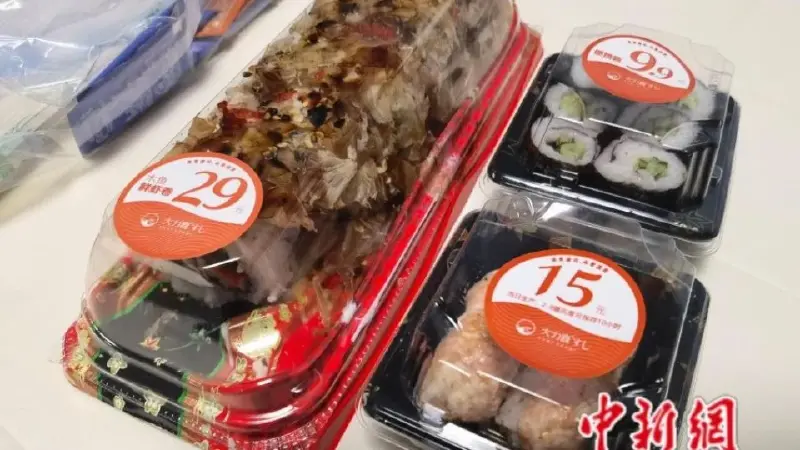
A set of sushi blind boxes were purchased for 19.9 yuan, while the original prices were 29 yuan, 15 yuan and 9.9 yuan respectively, totalling 53.9 yuan, according to a reporter from Chinanews.
Due to greater losses associated with the blind box products, the sushi chain controls the quantity by offering only 7 to 8 different product combinations per day, he added.
The blind box products are mainly available in first-tier and new first-tier cities. For instance, WeChat’s leftover blind box mini program Xishi Magic Bag covers Beijing, Shanghai, Chongqing, Nanjing, Kunshan and other cities.
This trend has gained popularity among young people who eagerly grab these deals at certain moments to purchase food at reduced prices
Companies offering the promotion through the mini-programs are newly established small and micro enterprises, with the highest registered capital of 5 million yuan, according to the report.
The country’s anti-food waste law has been implemented for over two years, and a three-month campaign to curb food waste in the catering industry has been launched by market regulators.
Zhu Danpeng, a food and beverages analyst based in Guangzhou, Guangdong province, however, raised concerns about the potential food safety risks associated with blind boxes, due to the use of near-expiry food and uncertainties regarding storage conditions.
Ma Qing
China Daily
Asia News Network
