
UN says Myanmar military killed at least 702 civilians during junta-run election period
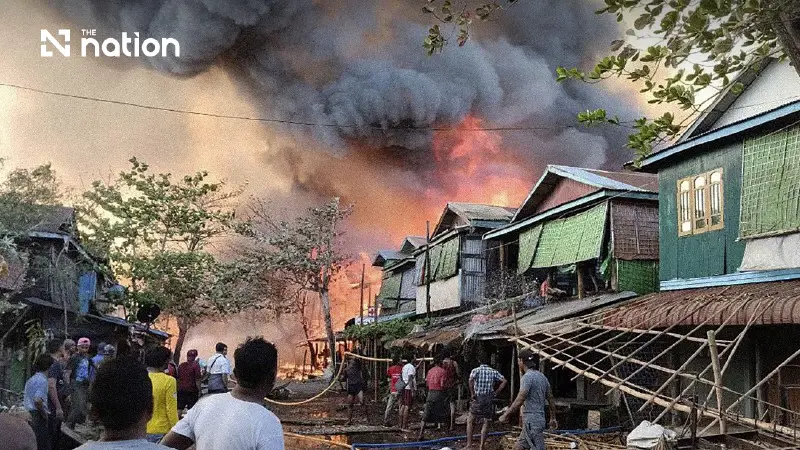


A UN Human Rights report says at least 702 civilians, including 224 women and 153 children, were killed in Myanmar during the six-month period surrounding military-controlled elections.
- A UN report states Myanmar's military was responsible for killing at least 702 civilians during the six-month period of its junta-run elections, from August 2025 to January 2026.
- The victims included 224 women and 153 children, with the UN noting the actual death toll is likely higher due to reporting limitations.
- Airstrikes were the single largest cause of civilian deaths, accounting for at least 505 of the 702 fatalities.
- The central Sagaing and Rakhine regions were the most affected, suffering 573 of the 702 documented civilian deaths.
UN links 702 civilian deaths to Myanmar military violence
The Myanmar military was responsible for the deaths of at least 702 civilians during the six-month period surrounding its military-controlled elections, according to a new report by the United Nations Human Rights Office.
The report, published on June 22, covers violations and abuses between August 1, 2025, and January 31, 2026 — from the military’s announcement of elections through to the end of the voting period. It says the period was marked by serious human rights violations, denial of humanitarian assistance, conflict-related violence and the impact of the junta-run polls.
Women and children among the dead
According to the UN report, credible sources verified at least 702 civilian deaths across Myanmar during the reporting period. Of those killed, 224 were women and 153 were children.
The UN cautioned that the figures are likely an undercount, as internet shutdowns, movement restrictions and funding constraints limited its ability to document abuses comprehensively.
Air attacks remain deadliest threat
Air strikes remained the single largest cause of civilian destruction and suffering, the report said.
At least 505 civilians were killed in attacks involving jet fighters, drones, paramotors and gyrocopters. Among those killed in aerial attacks were 175 women and 112 children. The report also cited open-source analysis indicating that at least 1,015 civilians died in more than 1,400 air strikes over the same period.
The UN said deaths spiked in two periods: August-September 2025 and December 2025-January 2026. These spikes coincided with the junta’s election announcement and military advances as it sought to secure territorial control.

Sagaing and Rakhine hit hardest
Civilians in central Myanmar and Rakhine state suffered the heaviest impact of military violence, with 573 of the 702 verified deaths occurring in these areas, the report said.
Sagaing remained the most dangerous region for civilians, with 191 verified deaths, including 60 women and 30 children. More than 70% of the deaths in Sagaing were caused by air strikes, according to the report.
The UN cited several incidents, including an October 2025 attack in Chaung-U township, Sagaing, where 23 civilians were killed and more than 60 wounded after munitions were dropped on people gathered near a school. Participants had been holding a candlelit event to mark the end of Buddhist Lent, call for the release of political prisoners, oppose conscription and reject the military’s elections.
In another incident, a military aircraft bombed a tea shop in Tabayin township, Sagaing, on December 5, 2025, while residents had gathered to watch a football match. At least 19 civilians were killed and about 20 others wounded, the report said.
UN warns aid cuts are deepening crisis
The report also warned that cuts to international assistance are worsening the suffering of millions of people in Myanmar. The UN said reduced funding has forced civil society groups to cut programmes, close services and lay off staff, while assistance to displaced people, education initiatives and psychosocial support have been curtailed or halted.
Emergency healthcare has also deteriorated because of military blockades and funding cuts, while safe houses for survivors of sexual and gender-based violence have closed or are operating at reduced capacity.
UN High Commissioner for Human Rights Volker Türk said Myanmar’s people appeared to have been “forgotten” by the outside world, adding that the pullback in funding was compounding the harm caused by constant targeting and indiscriminate military attacks.
Rohingya also face forced recruitment and violence
The report said Rohingya men, women, boys and girls remained exposed to forced recruitment by the Arakan Army, as well as killings, arbitrary arrests and sexual violence.
The High Commissioner called for an immediate end to attacks on civilians and civilian objects, including schools, hospitals, religious sites and displacement camps. He also urged all parties to allow rapid and unimpeded humanitarian access to civilians in need.
Source: UN Office at Geneva
