
Royal Thai Army Hits Back at Cambodian Allegations


Bangkok insists air strikes complied with international law after Phnom Penh alleged damage to civilian areas and heritage sites along the border
- The Royal Thai Army denies targeting civilians or heritage sites, insisting its air strikes complied with international law and were aimed exclusively at military targets.
- Thailand justifies striking ancient ruins by stating that Cambodian forces forfeited the sites' protected status by using them as military bases to launch attacks.
- The army accuses Cambodia of spreading "disinformation" and of conducting its own artillery strikes that hit populated civilian zones in Thailand.
- Bangkok has called for a neutral fact-finding investigation and urged Phnom Penh to seek a peaceful bilateral resolution.
Bangkok insists air strikes complied with international law after Phnom Penh alleged damage to civilian areas and heritage sites along the border.
The Royal Thai Army has rejected allegations from Cambodia that its recent military strikes targeted civilians and damaged historical heritage sites along the border, accusing Phnom Penh of spreading "disinformation" to obscure its own cross-border attacks.
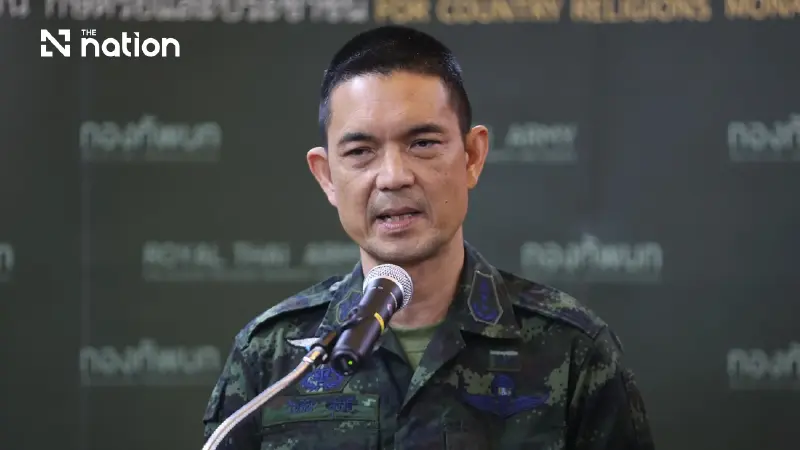
Addressing claims posted on social media by Cambodian Information Minister Neth Pheaktra, army spokesman Major General Winthai Suvaree insisted on Saturday (8 August) that all Thai operations strictly adhered to international law, with air strikes directed exclusively at verified military targets.
"Every use of force by the Thai side has been carried out under the framework of international law, with necessity and proportionality fully taken into account," Maj Gen Winthai said, contrasting Thailand’s protocols with Cambodian artillery strikes that he said directly hit populated civilian zones inside Thailand.
Responding to allegations regarding structural damage to ancient ruins—notably around the contested Ta Khwai Temple—the spokesman stated that Cambodian forces had forfeited the sites' protected legal status by utilising them as troop outposts, drone launchpads, and artillery positions.
"When protected sites are converted into bases to launch attacks against Thai troops and civilians, Thailand is legally obligated to neutralise those threats," Maj Gen Winthai added, maintaining that force was kept to an absolute minimum to preserve historical structures.
He also defended the placement of shipping containers and barbed wire along the frontier as purely preventive safety measures following the discovery of clandestine landmine deployments by Cambodian forces.
Reiterating Bangkok’s readiness to participate in a neutral, standardised fact-finding investigation, Maj Gen Winthai urged Phnom Penh to cease disseminating distorted reports and work towards a peaceful bilateral resolution.
