
Myanmar pushes US to invest in its rare earths sector
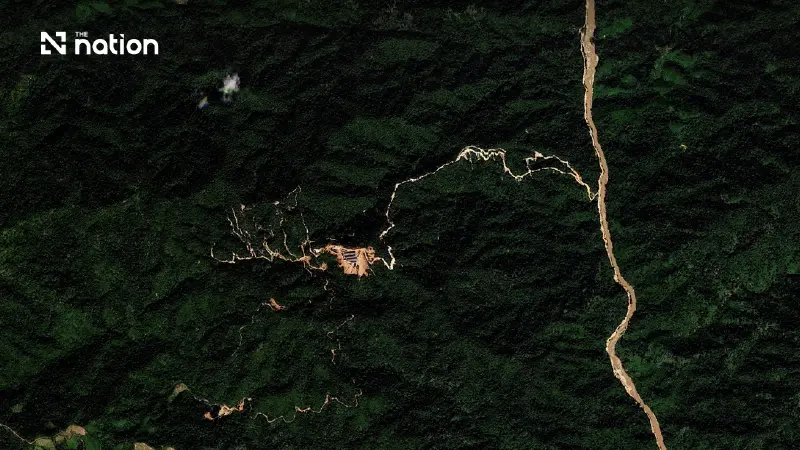


Myanmar wants greater US investment in a sector dominated by China, while an armed group controls the country’s main rare earths production sites.
- Myanmar's military government is actively lobbying the United States to make investment in its rare earths sector a priority for rebuilding bilateral relations.
- The government is pressing for a larger investment commitment than the modest targets in a U.S. strategy, arguing it is necessary to compete with China's established dominance in the sector.
- This appeal aligns with the U.S. goal of reducing its supply chain reliance on China for critical minerals, which has been designated a national security priority.
- A significant challenge to potential U.S. investment is that Myanmar's main rare earth production sites are controlled by an armed opposition group, not the central government.
Myanmar’s military-led government wants the United States to make rare earths a priority in rebuilding bilateral relations and accelerate investment in a mining sector dominated by China.
The appeal follows months of private discussions between US and Myanmar officials. A recently published US State Department strategy outlines plans to expand Washington’s influence and potentially gain access to Myanmar’s rare earth deposits.
Myanmar presses for more ambitious US investment goals
Washington’s strategy targets at least three major commercial or investment agreements worth more than US$5 million each for American companies. Myanmar’s government is pressing for a larger commitment.
Washington lobbying firm DCI Group set out Myanmar’s position in a newsletter published on behalf of the country’s information ministry on November 9, 2026. Myanmar hired the firm in 2025 to help rebuild relations with the United States.
“Ultimately, the United States should treat Myanmar as a critical minerals priority, not simply a diplomatic challenge,” DCI Group wrote.
DCI Group argued that minerals offered a natural starting point for closer relations because they linked Myanmar’s economic potential with US national security and supply-chain priorities. It described Washington’s commercial target as modest relative to Myanmar’s resources and America’s stated ambition to compete with China.
“China has already spent years building its position in Myanmar’s resource sector, and its companies and intermediaries hold advantages that will not be easily displaced,” the firm added.
Armed group controls Myanmar’s main production sites
Myanmar’s principal rare earth production sites in northern Kachin are controlled by the Kachin Independence Army, a long-established armed group fighting the country’s Beijing-backed military.
Myanmar has been engulfed in civil war since the military coup in 2021. The country is one of the world’s main sources of heavy rare earths, most of which are exported to China for processing into magnets used in electric vehicles, wind turbines and other advanced technologies.
China manufactures about 90% of the world’s rare earth magnets, relying partly on raw materials imported from Myanmar. Beijing has recently tightened state control over the industry.
US President Donald Trump has made rare earths a national security priority since returning to office, directing billions of dollars into several companies in an effort to reduce China’s dominance.
US engagement follows years of efforts to isolate the military
Washington began direct talks with Myanmar’s rulers in September 2026, changing course after years of efforts to isolate the generals. Following the 2021 coup, the United States had frozen Myanmar’s assets at the Federal Reserve Bank of New York and imposed sanctions.
A State Department spokesman told Reuters that Washington was encouraging progress on priorities including “improving the domestic operating environment for U.S. businesses, and building towards a genuine peace process that stabilizes the country.”
China’s foreign ministry, responding to Reuters on November 11, described China and Myanmar as “friendly neighbours and important partners” with a special bond.
The ministry expressed opposition to politicising economic and trade cooperation and indicated that Beijing was prepared to work with the international community to maintain stable industrial and supply chains.
Myanmar’s military-led government did not immediately respond for comment.
