
Thailand and Myanmar agree on closer cooperation over border security and polluted rivers



Thailand and Myanmar agreed to accelerate joint river pollution talks after Sihasak Phuangketkeow raised border safety, trade and violence with President Min Aung Hlaing.
Thailand has urged Myanmar to prevent its military operations from affecting people on the Thai side of the border, while both countries have agreed to accelerate cooperation on river pollution, border trade and regional security.
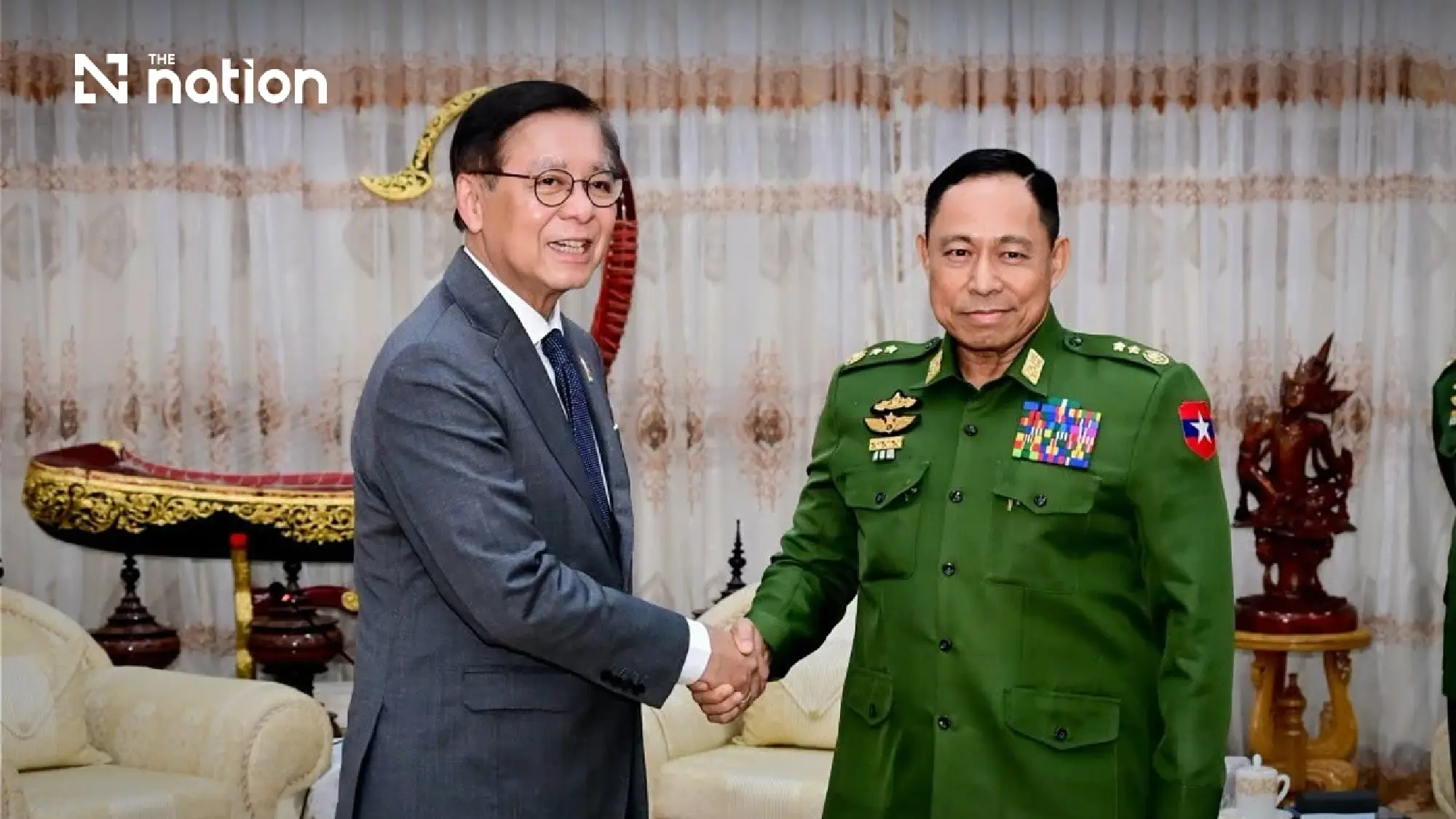
Deputy Prime Minister and Foreign Minister Sihasak Phuangketkeow raised the concerns during an official visit to Myanmar on 12 November 2026, when he met President Min Aung Hlaing and held discussions with senior government officials.

The talks addressed four major issues affecting relations between the neighbouring countries: border security, pollution in the Kok and Sai rivers, obstacles to cross-border trade and the continuing conflict in Myanmar.
Sihasak also met Myanmar's Foreign Minister Tin Maung Swe and Lieutenant General Yar Pyae, the country's Defence Minister and chairman of the National Solidarity and Peacemaking Negotiation Committee.

The Thai delegation included the secretary-general of the National Security Council, the deputy chief of defence forces, the commander of Thailand's Third Army Region and senior Foreign Ministry officials.
Both governments reaffirmed the importance of their bilateral relationship and agreed to maintain close consultations based on mutual trust, respect and shared interests.

Thailand calls for greater border safety
Border security was a central issue, with Thailand expressing concern about military operations in Myanmar affecting communities on its side of the frontier.
Sihasak stressed that protecting Thai residents along the border remained a priority and called on Myanmar to exercise the greatest possible caution to prevent further consequences for people in Thailand.
Both sides recognised the need to maintain security and stability in border areas and agreed to strengthen cooperation against illegal drug trafficking and online scams.
The discussions also covered efforts to address the continuing violence within Myanmar and its consequences for civilian communities.

Joint action planned on river pollution
Environmental concerns were another major focus, particularly cross-border water pollution affecting communities along the Kok and Sai rivers.
Thailand emphasised the need for both countries to work together to address contamination affecting people on either side of the border.
The two governments agreed to convene the Joint Working Group on Water Quality Management for Boundary and Transboundary Rivers as soon as possible to develop practical responses.
Senior representatives from both countries will also conduct a joint field visit to assess progress in addressing the pollution problems.
The agreement reflects a shared commitment to strengthening coordination on environmental issues affecting communities in both countries.


Border trade and economic cooperation
Thailand and Myanmar also discussed measures to improve economic relations, particularly by facilitating cross-border trade and addressing obstacles affecting commercial activities.
The discussions included labour management and energy security, alongside broader efforts to strengthen bilateral economic cooperation.
Both sides agreed that the relevant government agencies should maintain close coordination to resolve outstanding issues and deliver practical results.

Thailand supports efforts to reduce violence
On Myanmar's internal situation, Thailand reiterated its support for the country's peace process and constructive engagement with the Association of Southeast Asian Nations (ASEAN) and the wider international community.
Sihasak encouraged Myanmar to take further steps towards reducing violence, particularly actions that would limit the impact of the conflict on civilians.
Thailand also emphasised the importance of expanding humanitarian access to people affected by the fighting.
The discussions concluded with both countries reaffirming their intention to maintain dialogue and cooperation on security, environmental and economic challenges affecting their shared border.

