
Colette Kress, Nvidia’s interim CEO who challenged Huang’s AI deals
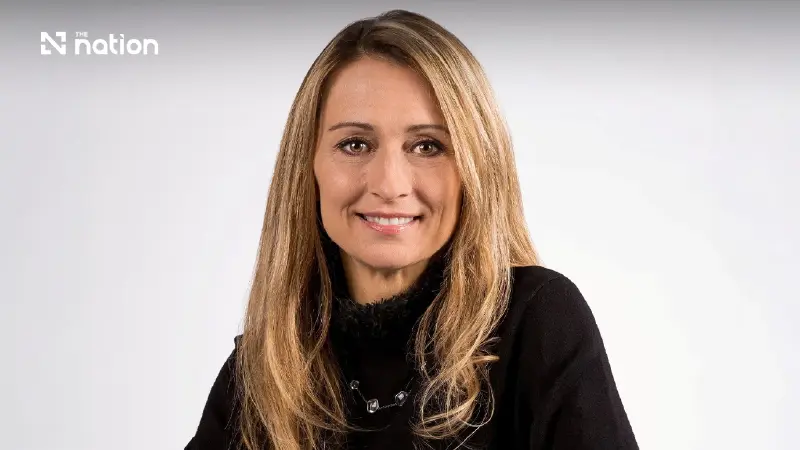


Colette Kress takes temporary charge amid doubts over her ability to sustain Nvidia’s technological risk-taking and questions about oversight of chip sales.
- Nvidia's finance chief, Colette Kress, has been appointed interim CEO following the departure of co-founder Jensen Huang amid a scandal.
- Kress was known for questioning the scale and risks of Huang's large, multibillion-dollar AI investments, acting as a counterbalance to his decisions.
- She and her staff reportedly conflicted with Huang over risky financing deals for AI companies like OpenAI, where a proposed $250 billion project was reduced to $120 billion.
- While seen as a stabilizing force to calm markets, some analysts question if her more pragmatic, finance-focused approach can maintain the aggressive, risk-taking strategy that established Nvidia's AI leadership.
Nvidia has turned to finance chief Colette Kress, 59, for interim leadership after Jensen Huang’s departure.
Two people familiar with the matter described her as the executive who had spent years questioning the scale and risks of Huang’s artificial intelligence (AI) investments.
Huang left on Thursday (November 12) amid a scandal involving his affairs, ending three decades in charge of the company he co-founded.
Nvidia must now find a permanent successor as it undergoes its first change of chief executive.
Before joining Nvidia in 2013, Kress had spent many years working at Microsoft, Cisco and Texas Instruments.
Her education includes an undergraduate degree in finance and a master’s in business administration.
The move to Nvidia had support from her two young sons.
In a 2023 interview with an Israeli publication, she recalled that their familiarity with its chips through video games had prompted them to encourage her to join.
People who know Kress see a calmer temperament than Huang’s often confrontational manner.
One person familiar with the matter believed she could convey calm and help keep markets steady throughout the search for a permanent leader.
“Colette is a pragmatist,” the person said.
Customers and suppliers have also received reassurance from Kress on recent calls as the upheaval unfolded, according to that person.
Nvidia ended Thursday’s trading with its share price 4.3% lower.
Earlier, following the announcement of Huang’s departure, it had fallen 14% to its lowest level in nearly 16 months.
Many investors, analysts and industry sources consulted by Reuters were unsure whether a finance specialist could maintain the technological risk-taking that had established Nvidia as a leading AI chip producer.
Anshel Sag, principal analyst at Moor Insights & Strategy, offered this assessment: “Putting (Kress) in the interim role makes sense to keep the markets calm, but I don't think she is the long-term visionary that Nvidia needs to continue its current trajectory.”
Kress’s future in the job remains undecided.
Names mentioned as possible permanent successors include AMD chief executive Lisa Su and Arm chief executive Rene Haas, as well as Nvidia executive Ian Buck, who led the development of its CUDA software system and helped bring AI to the company’s chips.
Speaking to Reuters on Thursday, the two sources described how Huang’s success gave him considerable freedom over major decisions.
Kress was the only executive willing to question his multibillion-dollar AI commitments, providing a counterbalance to that freedom.
Large, risky financing arrangements, including investments in OpenAI and AI infrastructure companies such as Lambda, brought Kress and her staff into conflict with Huang and Nvidia’s sales team, according to one of those two people.
An initial proposal envisaged US$250 billion in support for an OpenAI data centre project in Ohio.
The amount was subsequently reduced to US$120 billion.
A venture capital investor described Huang’s efforts to get Nvidia to fund start-ups, adding: “I think it's unlikely anyone but Jensen is going to invest in his own customers as aggressively.”
The source who called Kress a pragmatist also anticipated a different approach to Washington under her leadership.
Nvidia was likely to “approach DC more like other tech companies do, by trying to build capital and make friends”, instead of picking “a fight over export controls” as it had under Huang.
On Wall Street, doubts about Huang’s judgement and concerns that his deals were feeding an increasingly circular AI economy had arisen months before reports of his relationship with a woman suspected of being a Chinese spy.
China has rejected the espionage allegations; Reuters could not contact Alice Huang for comment.
Attention has also turned to what Kress knew about Nvidia’s chip sales and Huang’s affairs.
A separate source told Reuters she was aware of his relationship with Kimberly Powell, the company’s vice president of healthcare, who reported to him.
Requests for comment did not receive an immediate response from either Nvidia or Powell.
Possible congressional questioning was raised by Sunny Cheung, an analyst at the Washington-based Jamestown Foundation.
He identified Nvidia’s oversight of chip sales involving institutions linked to China’s military and Southeast Asian intermediaries as an issue Kress could be asked to address.
Forbes placed Kress 32nd on its list of America’s richest self-made women in mid-2026, estimating her wealth at US$1.2 billion.
According to media reports, she had become a billionaire in 2025 through the value of her Nvidia shares.
Her business career has also brought recognition from Fortune and Forbes, both of which have included her among the 50 most powerful women in business in recent years.
Source: Reuters
