
Trump outlines deals across five ASEAN nations at Manila summit, including Thailand’s 4bn baht plan to buy HIMARS
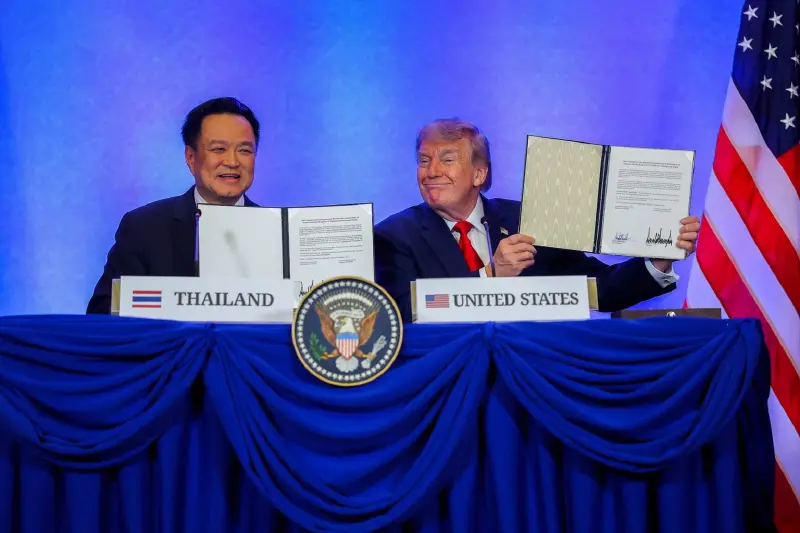


Philippine Airlines ordered 15 Boeing 787s and can buy five more, while Thailand plans to spend up to US$123 million on US-made rocket systems.
- A US$12 billion deal for Boeing aircraft and GE engines with Philippine Airlines represents the largest single component of the announced agreements.
- Defense and security arrangements with the Philippines and Thailand total over US$2.5 billion, covering loans for US military hardware, operational support, and the sale of rocket systems.
- Energy sector deals include a US$100 million coal supply contract for Malaysia and a US$2 billion project to develop coal resources in Indonesia using American technology.
- The US also committed to technology initiatives, including supporting sovereign AI projects in Malaysia and a nearly US$1 billion data center project in Brunei involving American suppliers.
US President Donald Trump announced more than US$17 billion in commercial deals and strategic investments for American companies in Southeast Asia during a two-day visit to the Philippines. The White House detailed the agreements and proposals on 18 November 2026 after the Association of Southeast Asian Nations summit in Manila.
Philippine Airlines placed a firm order for 15 Boeing 787-10 Dreamliners and can buy five more, Boeing said. The White House valued the deal with Boeing and engine maker GE Aerospace at US$12 billion.
Manila and Washington will seek more than US$2 billion in US loans to finance Philippine defence purchases from American suppliers. The United States also pledged US$400 million to support Philippine military operations in the South China Sea.
Subic Grain will build a US$40 million fuel depot at Subic Bay in the Philippines. The Philippine government will also upgrade Basco Airport to improve military access, disaster response and commercial supply chains in the country’s northernmost islands.
Thailand plans to buy US-made rocket systems
Thailand intends to spend up to US$123 million on US-made High Mobility Artillery Rocket Systems (HIMARS), the White House said. If the sale goes ahead, Thailand would be the first country in mainland Southeast Asia to buy the system.
Thai Prime Minister Anutin Charnvirakul and Trump signed a separate joint statement on trade on 17 November in Parañaque, Metro Manila. The statement confirmed that the two sides had agreed on the substance of a reciprocal trade deal. Both countries still have to complete domestic procedures before they can sign the agreement and bring it into force.
Malaysian utility secures three years of coal supplies
Navajo Transitional Energy Company signed a three-year contract worth US$100 million to supply coal to TNB Fuel Services, the fuel-buying arm of Malaysia’s national power utility, Tenaga Nasional Berhad.
In Indonesia, US firm Latitude Energy and Danantara, the Indonesian sovereign wealth fund, are negotiating a US$2 billion project to develop the country’s coal resources using American technology.
US backs artificial intelligence projects in Malaysia and Brunei
Washington pledged support for artificial intelligence development in Malaysia and Brunei. The White House said a US consortium would help the Malaysian government develop its sovereign AI cloud.
The Malaysian Communications and Multimedia Commission said Washington had offered US$50 million for Malaysia’s cloud project, subject to the two governments agreeing on the terms and scope of the assistance. Malaysia would retain control of the infrastructure and the data it holds, the regulator said.
Brunei’s Unified National Networks plans to award the Rimba Data Centre contract to US firm Vertiv and source nearly US$1 billion in goods and services for the project from American suppliers, the White House said.
