
House panel presses SEC over broker loophole in 59m-baht Webull mule-account case



A House committee has pressed the SEC over an alleged broker-platform loophole after a mule account and money-laundering case caused nearly 59 million baht in losses to 393 victims.
A House committee has pressed the Securities and Exchange Commission to explain its response to an alleged mule-account and money-laundering case involving a securities trading platform, after nearly 59 million baht in losses were reported among 393 victims.
The House Committee on the Prevention and Suppression of Money Laundering and Narcotics, chaired by Pitakdej Dejdecho, Democrat Party MP for Nakhon Si Thammarat, held a meeting at Parliament to examine whether broker platforms could be exploited as channels for opening mule accounts and laundering money.
Webull case triggers parliamentary scrutiny
Pitakdej said the committee launched its inquiry after the Central Investigation Bureau carried out an operation in March to arrest and prosecute suspects allegedly linked to mule accounts and money laundering through the platform of Webull Securities (Thailand) Co Ltd.
The committee invited representatives from relevant agencies to provide information, including the Department of Special Investigation, the Central Investigation Bureau, the Anti-Money Laundering Office, the SEC, the Stock Exchange of Thailand, the Association of Thai Securities Companies and Webull Securities Thailand.

Pitakdej said the aim was to establish the facts, prevent scammer networks from using securities platforms to launder money, and trace the case to the real masterminds behind the operation.
SEC asked to explain regulatory response
The committee also questioned the role of the SEC as the regulator responsible for supervising securities companies.
Pitakdej said the committee wanted to know what action the SEC had taken after victims were allegedly tricked into transferring money to mule accounts, before the money was moved on to a securities company.
He said lawmakers also wanted clarity on how authorities were handling cases in which money transferred from mule accounts ended up with securities firms.
Representatives from seven agencies attended the meeting to provide facts and details, while the DSI did not attend because it had not yet accepted the case for investigation.

Nearly 59m baht in losses, 393 victims
After the meeting, Pitakdej said the case involved losses of almost 59 million baht and 393 victims.
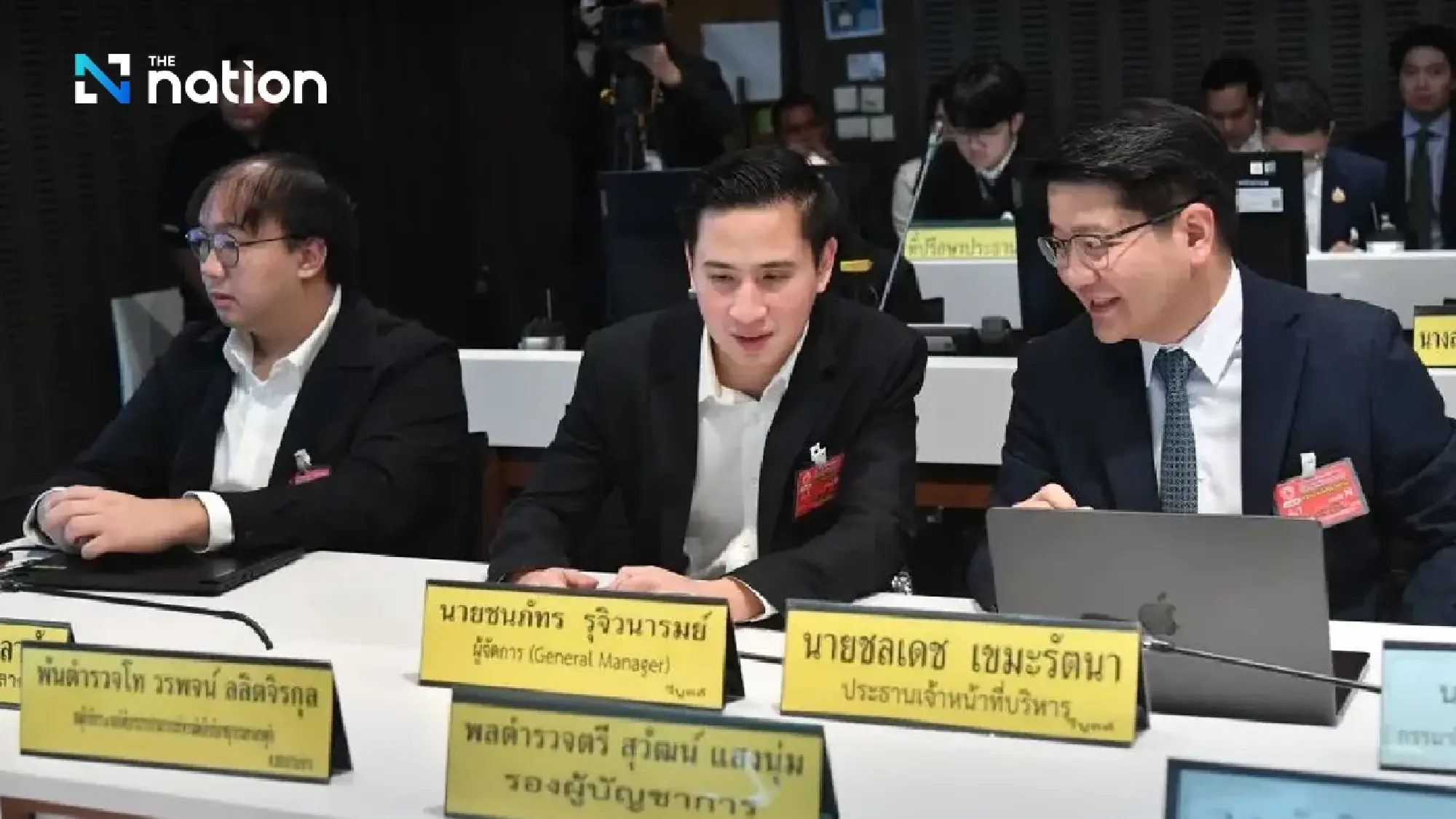
He said a representative of Webull Securities Thailand admitted during questioning that the problem stemmed from failings by company personnel. The committee recorded the statement in its meeting minutes. Webull Securities' representatives attending the meeting were its CEO Chonladet Khemarattana and General Manager Chanapat Rujivanarom.

However, he said that when committee members asked about responsibility for the losses and possible compensation for affected victims, the Webull representative declined to take any action.
Committee says regulator has not acted proactively
Pitakdej criticised the SEC, saying the regulator had not been found to have imposed penalties or taken visible action to prevent members of the public from being affected.
He said the committee would send formal letters to relevant agencies asking them to respond in writing, especially the SEC, which has a duty to supervise securities firms and respond when damage occurs.
The SEC will be asked to explain what action it plans to take against Webull Securities Thailand.
Police asked for case progress
The committee will also write to Muang Pathum Thani Police Station to request details and clarification on the handling of complaints filed by victims.
Pitakdej said the committee wanted to know how the investigation and prosecution were progressing, including action against the first and second tiers of people allegedly involved in the case.
Once the committee receives the information, it plans to summon Webull Securities Thailand to clarify the matter again.
Call to close capital market loopholes
Pitakdej said the case had caused direct damage to the public and raised serious concerns about whether Thailand’s capital market has loopholes that allow scam networks to move money through broker platforms.
He urged the SEC, the Association of Thai Securities Companies and the Stock Exchange of Thailand to tighten operational standards and strengthen policy-level supervision.
He said authorities must find ways to close gaps in the capital market and prevent individuals, scam networks or brokers from using securities trading platforms for illegal activities involving mule accounts or money laundering.
