
OCPB and TISI inspect squishy toys over chemical contamination risk
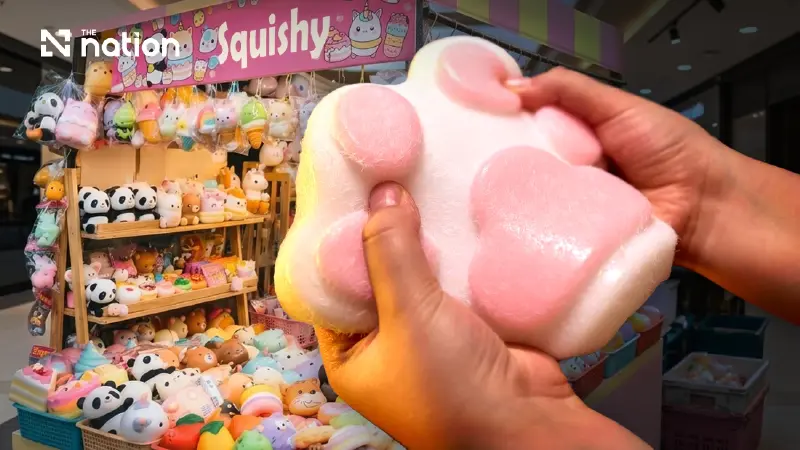


Officials are monitoring toys without labels or clear sources and advise parents to buy products with Thai labels, manufacturer or importer details and a TIS mark.
- Thailand's consumer protection agency (OCPB) and industrial standards institute (TISI) are increasing inspections of "squishy" toys due to the risk of hazardous chemical contamination.
- The primary chemical danger stems from low-grade materials in substandard or unbranded toys, which can release chemicals that may harm a child's respiratory system through inhalation.
- Authorities are actively removing non-compliant products from both physical and online marketplaces as a result of the inspections.
- In addition to chemical risks, officials warn that toys shaped like food can pose a serious choking hazard to young children.
The Office of the Consumer Protection Board (OCPB), in cooperation with the Thai Industrial Standards Institute (TISI), is stepping up inspections of substandard “squishy” toys after finding a risk of chemical contamination that could pose a danger to children.
The agencies are also monitoring products without labels or clear sources, and are taking steps to remove substandard goods from the market.
They advised parents to buy toys with Thai-language labels stating the manufacturer or importer and carrying a Thai Industrial Standard (TIS) mark.
If a toy has a strong chemical smell, is damaged or fails to meet standards, use should be stopped immediately.
Tip-offs or complaints about unsafe products can be made via the OCPB hotline at 1166 or through OCPB channels.
Earlier, Supamas Isarabhakdi, Minister attached to the Prime Minister’s Office, who oversees the Office of the Consumer Protection Board (OCPB), said the OCPB was monitoring and issuing warnings about “squishy” toys, soft toys used for squeezing to relieve stress that have become popular, especially among children and young people.
This followed foreign reports that some products in this group, particularly unbranded imitation versions with no clear source, had been found to be contaminated with hazardous chemicals above safety standards.
The OCPB has coordinated with the Thai Industrial Standards Institute (TISI), the agency directly responsible for toy standards, to monitor and remove substandard products from the market, both in general markets and online channels.
There are two main areas of danger to watch for.
On chemicals, squishies made from low-grade materials often contain residual chemicals; prolonged inhalation may irritate and affect the respiratory system.
On accidents, squishies designed to look like food or snacks, such as doughnuts or cupcakes, may lead young children to mistake them for food and put them in their mouths, with foam pieces possibly breaking off and obstructing the airway, creating a life-threatening danger.
For the OCPB, direct legal authority is provided by the Consumer Protection Act 1979, which requires label-controlled products to carry Thai-language labels clearly stating the manufacturer or importer and information necessary for consumers.
Violations carry legal penalties.
Under the Product Liability Act 2008, if an unsafe product causes consumers to suffer damage, manufacturers and importers, as well as sellers, must be jointly liable for damages suffered by consumers, whether or not the damage was caused intentionally or negligently by the business operator.
Consumers need only prove that they suffered damage from the product.
