
Unlocking India’s 1.4bn Consumer Market: Thai food Exporters urged to Shed Outdated Mindsets to Capture THB7tn Economic Engine
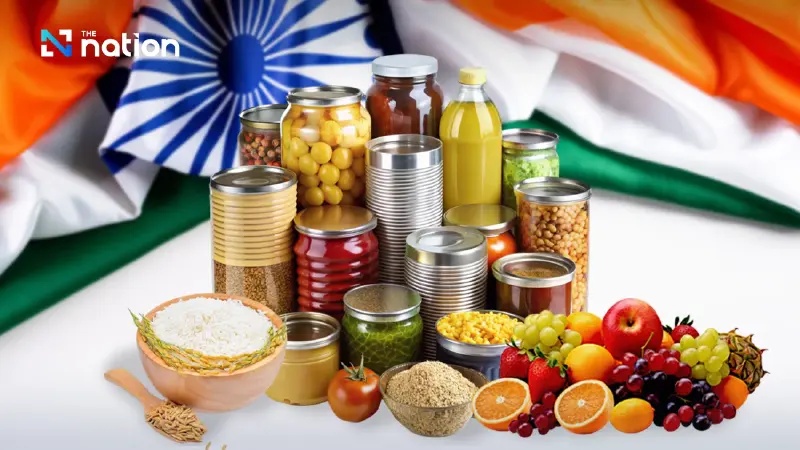


With India projected to become the world’s third-largest economy by 2030, Thai trade experts urge exporters to look past outdated stereotypes
- Thai trade experts are urging the nation's food exporters to abandon outdated mindsets that view India primarily through a lens of poverty, which is a major psychological barrier to entry.
- India is presented as a crucial "Blue Ocean" market and a viable alternative to China, with a projected $7 trillion economy by 2030 and 1.4 billion young, upwardly mobile consumers interested in premium international foods.
- To succeed, Thai businesses must adopt highly regionalized strategies for India's diverse consumer profiles and navigate complex dietary restrictions, such as widespread vegetarianism and the ban on beef.
- The Indian market contains an affluent class of 400 million people with purchasing power greater than the entire U.S., representing a massive opportunity for premium Thai products.
With India projected to become the world’s third-largest economy by 2030, Thai trade experts urge exporters to look past outdated stereotypes.
Thai food manufacturers and agricultural exporters must urgently overhaul their corporate mindsets if they are to successfully penetrate India, which is rapidly eclipsing traditional trading partners to become the premier strategic engine of the global food industry.
As geopolitical friction, trade tariffs, and economic headwinds introduce severe volatility into China—traditionally the primary destination for Thai exports—relying on a single dominant buyer has become an unsustainable business risk.
Trade experts argue that India, with its population of over 1.46 billion and an economy projected to rank third globally by 2030, represents the most viable "Blue Ocean" alternative for Thai commercial expansion.
Paiyada Hanchaisuksakul, director of the National Food Institute (NFI), noted that India’s macroeconomic indicators present an unmissable retail frontier, with gross domestic product (GDP) expected to surpass $7 trillion USD within the decade.
"India is undergoing a profound transformation into the world’s new consumption epicentre," Paiyada stated. "With an average annual growth rate of 7.6 per cent and a young, upwardly mobile workforce boasting a median age of just 28.4 years, we are witnessing a massive surge in disposable income. This younger demographic is highly receptive to international premium foods, health products, and 'Future Food' innovations."

According to PwC’s Voice of the Consumer 2025: India Perspective report, while price remains a factor, contemporary Indian consumers are aggressively prioritizing nutritional value, food safety, and convenience.
High-growth sectors include Ready-to-Eat meals, functional foods, and personalized nutrition, alongside strict demands for robust supply chain traceability.
Inside India's Demographic and Regional Diversity
Penetrating the Indian market requires highly regionalized strategies rather than a monolithic approach. The country features 121 major languages and distinct regional consumer profiles:
Northern India: Wheat-dominated diet centering on flatbreads (naan and roti) with rich, thick gravies.
Southern India: Rice-reliant staple diet with a heavy cultural emphasis on probiotic, fermented items like idli and dosa.
Urban Hubs: High-value targets include Mumbai (financial capital), Delhi (a dense metropolitan market of 32 million people), and the tech hubs of Hyderabad and Bengaluru, which house dense concentrations of expatriates and affluent young professionals.
However, the primary barrier preventing Thai businesses from capturing this wealth is psychological, according to international trade specialist Adul Chotinisakorn.

"The very first thing Thai entrepreneurs must do is execute a radical mindset shift," Adul emphasized. "There remains a pervasive, outdated attitude among Thais that looks down on India, focusing strictly on narratives of poverty. This is a massive commercial error. India has surpassed China as the world's most populous nation, and it contains an affluent middle class and ultra-wealthy tier of at least 400 million people. That segment alone represents a high-purchasing-power market larger than the entire United States."
For the remaining one billion consumers outside the luxury bracket, Adul advised a volume-based FMCG (fast-moving consumer goods) approach. Exporters can successfully penetrate rural regions—which account for 70 per cent of the population—by downscaling packaging into budget-friendly single-use sachets.
Exporters must also carefully navigate religious and faith-based dietary boundaries. Between 30 and 40 per cent of the population practices strict lacto-vegetarianism (consuming dairy but excluding meat and eggs), while beef is entirely banned across Hindu communities.

Furthermore, the elite Jain community avoids all root vegetables, including onions and garlic; despite these restrictions, this group comprises some of India’s wealthiest households and commands immense consumer power.
"India is effectively standing with open arms waiting for us," Adul concluded, pointing out that India's domestic advanced food-processing sector currently lags behind Thailand's manufacturing capabilities.
To formalise this trade push, the NFI and the Board of Trade of Thailand have signed a Memorandum of Understanding (MOU). The alliance aims to integrate academic research, technological innovation, and corporate networks to elevate Thai agricultural enterprises on the global stage, positioning Thailand as the primary food innovation hub for the region.
