
Thailand fruit exports rebound 17.9% in April as durian surges 109%
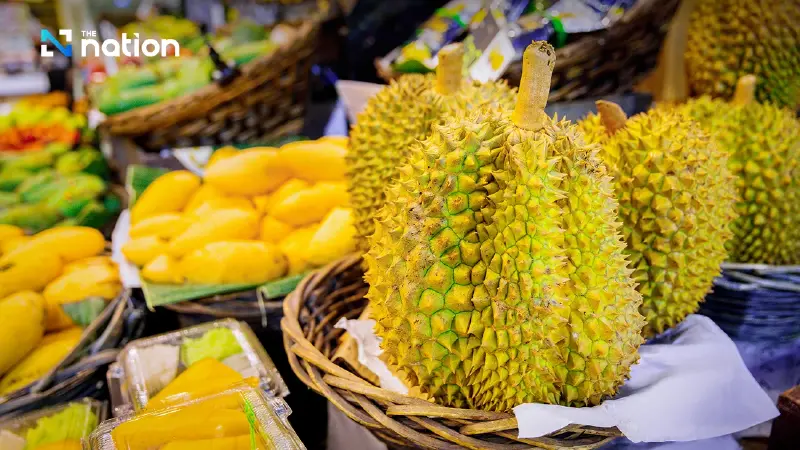


Thailand’s fruit exports rebounded strongly in April, led by soaring durian demand, as the Commerce Ministry pushed aggressive market and logistics measures
Thailand’s agricultural exports staged a sharp recovery in April, with fruit shipments, particularly durian, posting explosive growth after months of contraction, according to the Commerce Ministry.
Deputy Prime Minister and Commerce Minister Suphajee Suthumpun said proactive fruit management measures introduced by the ministry had started delivering clear results, helping revive exports and strengthen Thailand’s fruit industry over the longer term.
The ministry said overall agricultural exports in April rose 17.9%, ending eight consecutive months of negative growth.
Among the strongest performers were durian exports, which surged 109.5% year-on-year, while rambutan exports climbed 92.8% and lychee shipments increased 70%.
The ministry expressed confidence that Thai fruit exports would continue expanding in the coming months, supported by aggressive overseas marketing campaigns and market stimulation measures.
Durian demand drives export rebound
According to the ministry, the turnaround was driven by three key proactive strategies.
The first focused on easing logistics bottlenecks and securing advance orders. Thai trade officials were dispatched to negotiate transport facilitation at border checkpoints in Laos, Vietnam and China, while commercial diplomats worked closely with importers to lock in purchase agreements ahead of the harvest season.
The effort reportedly secured advance orders for between 1 million and 1.1 million tonnes of durian, as well as 150,000 tonnes of mangosteen, across markets including Vietnam, Taiwan, South Korea, Malaysia, India, the UAE and Australia.
The second strategy targeted deeper market penetration in China, including both major and secondary cities, while simultaneously expanding into newer growth markets such as South Korea and India. The ministry also sought to strengthen Thailand’s fruit branding in regions including the Middle East, South Asia, Europe and Central Asia.
The third strategy centred on cross-border e-commerce, with Thai durian sales promoted through overseas online platforms to drive continued orders from foreign consumers.
Domestic market campaign targets 500,000 tonnes
The Commerce Ministry also moved to stimulate domestic consumption through partnerships with wholesalers, retailers, department stores, fresh markets and distribution centres.
Promotional activities include fruit buffet campaigns and nationwide distribution drives under the “Thai Help Thai” initiative through district offices, Thailand Post and mobile grocery truck networks.
Officials are also preparing to launch a major campaign titled “Thailand: The Land of Tropical Fruits” aimed at both Thai and foreign tourists.
The campaign targets domestic consumption of at least 500,000 tonnes of fruit in a bid to help farmers absorb excess supply during peak harvest periods.
Long-term restructuring plan unveiled
Beyond short-term interventions, the ministry said it was also pushing structural reforms across the entire supply chain, from production to marketing.
At the upstream level, authorities are focusing on quality upgrades and traceability systems in cooperation with the Thai Chamber of Commerce and the Agriculture Ministry. This includes support for the Q-Chan quality traceability initiative for Chanthaburi durian.
Midstream efforts will focus on food processing and innovation to absorb excess fruit output during peak harvest periods, helping stabilise and improve prices for farmers.
Downstream measures will promote modern sales channels, including live commerce, TikTok marketing and the use of key opinion leaders and influencers. The ministry also plans to encourage contract farming and increase value creation through geographical indication (GI) products.
Suphajee said the integrated approach would not only help address seasonal price volatility but also lay the groundwork for sustainable income generation and long-term growth for Thai farmers.
