
Dugong calf’s death sounds alarm over Thailand’s marine rescue efforts
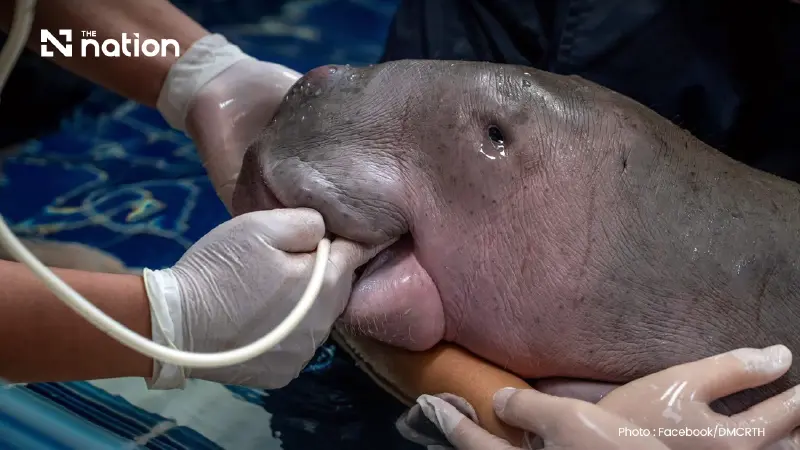


A male dugong calf rescued after stranding at Laem Son beach in Ranong has died despite 24-hour veterinary care, prompting officials to order a detailed necropsy and review rare marine animal rescue plans.
Rescued calf dies despite round-the-clock care
A rescued male dugong calf that stranded at Laem Son beach in Ranong has died despite 24-hour veterinary care, prompting the Natural Resources and Environment Ministry to order a detailed necropsy and use the findings to improve rescue and conservation plans for Thailand’s remaining dugongs.
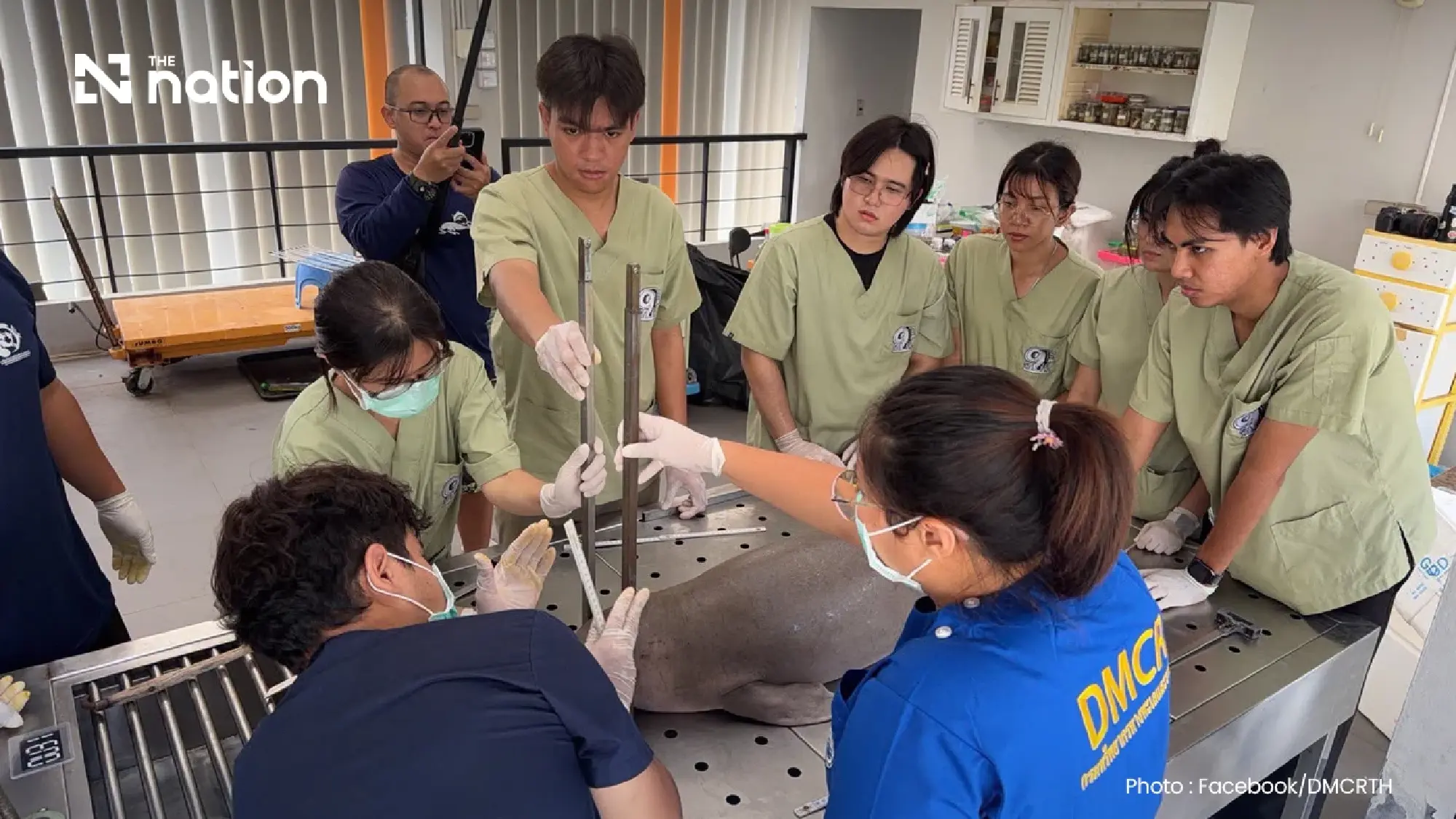
The calf, measuring 112 centimetres in length and weighing 25 kilogrammes, was found separated from its herd and stranded on Laem Son beach on July 5. Local residents helped rescue the animal before it was handed over to officials for further care.
The young dugong was later transferred to the Siritharn Rare Marine Animal Rescue Centre in Phuket, where veterinarians and volunteers monitored and treated it around the clock.


Minister expresses sorrow over loss
Natural Resources and Environment Minister Suchart Chomklin expressed regret over the death and instructed officials to speed up the necropsy to determine the exact cause.
He said the findings should be used to strengthen conservation measures and improve future rescue operations for dugongs and other rare marine animals.
The case has drawn public attention not only because of the loss of a young animal, but also because dugongs are among Thailand’s most vulnerable marine species and rely heavily on effective rescue, habitat protection and long-term conservation planning.

Initial signs showed severe weakness
Dr Pinsak Suraswadi, director-general of the Department of Marine and Coastal Resources, said initial checks found small wounds on the calf’s body and head, believed to have resulted from the stranding.
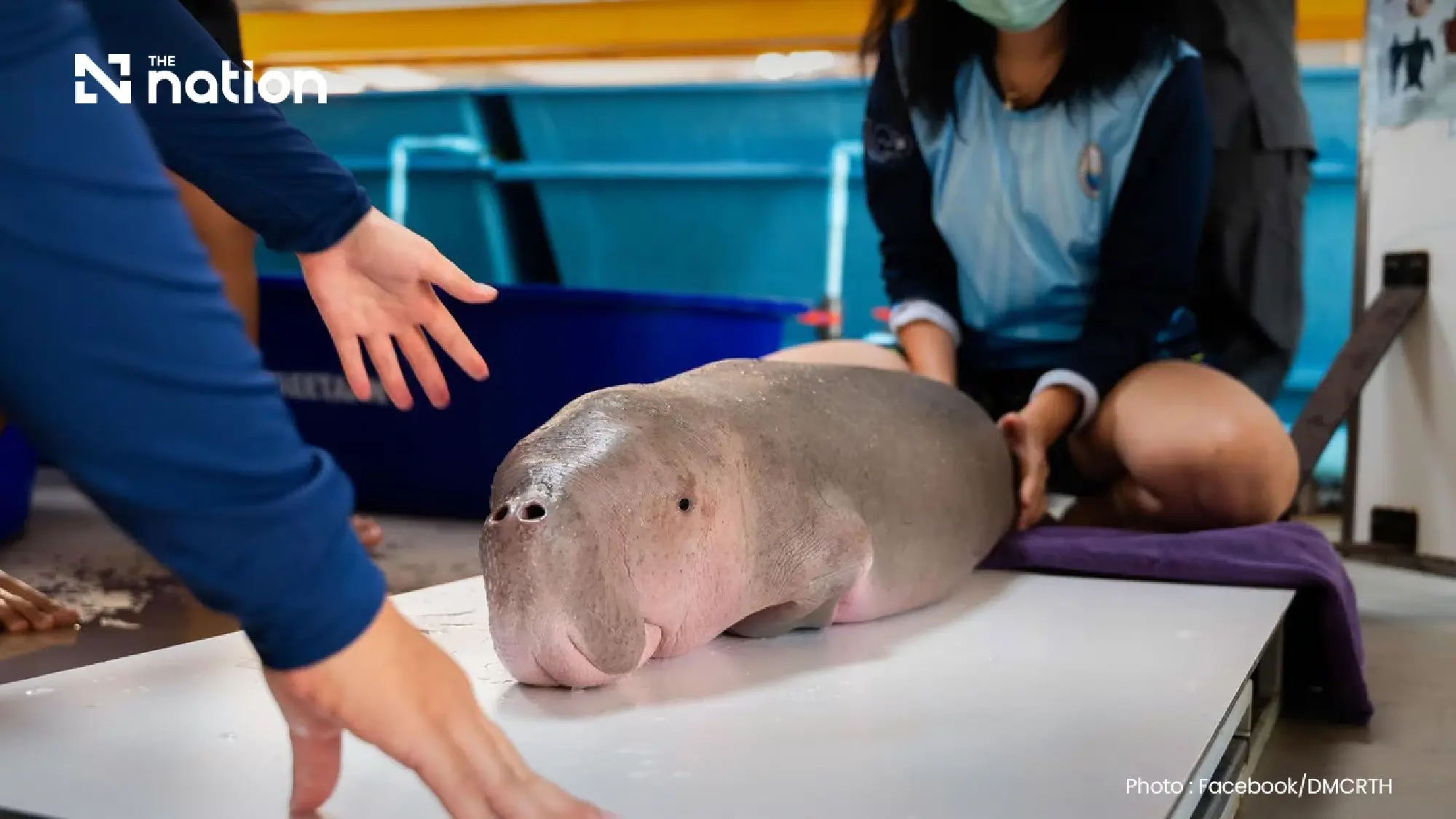
The calf was assessed as fairly thin, with a body condition score of 2.5 out of 5, and had bruising along its body. Veterinarians also detected low blood sugar, moderate to severe dehydration and serious digestive problems.
Officials said the calf had severe bloating, with a large build-up of gas in its digestive tract, likely linked to a prolonged lack of food after becoming separated from its herd.

Veterinary team unable to save calf
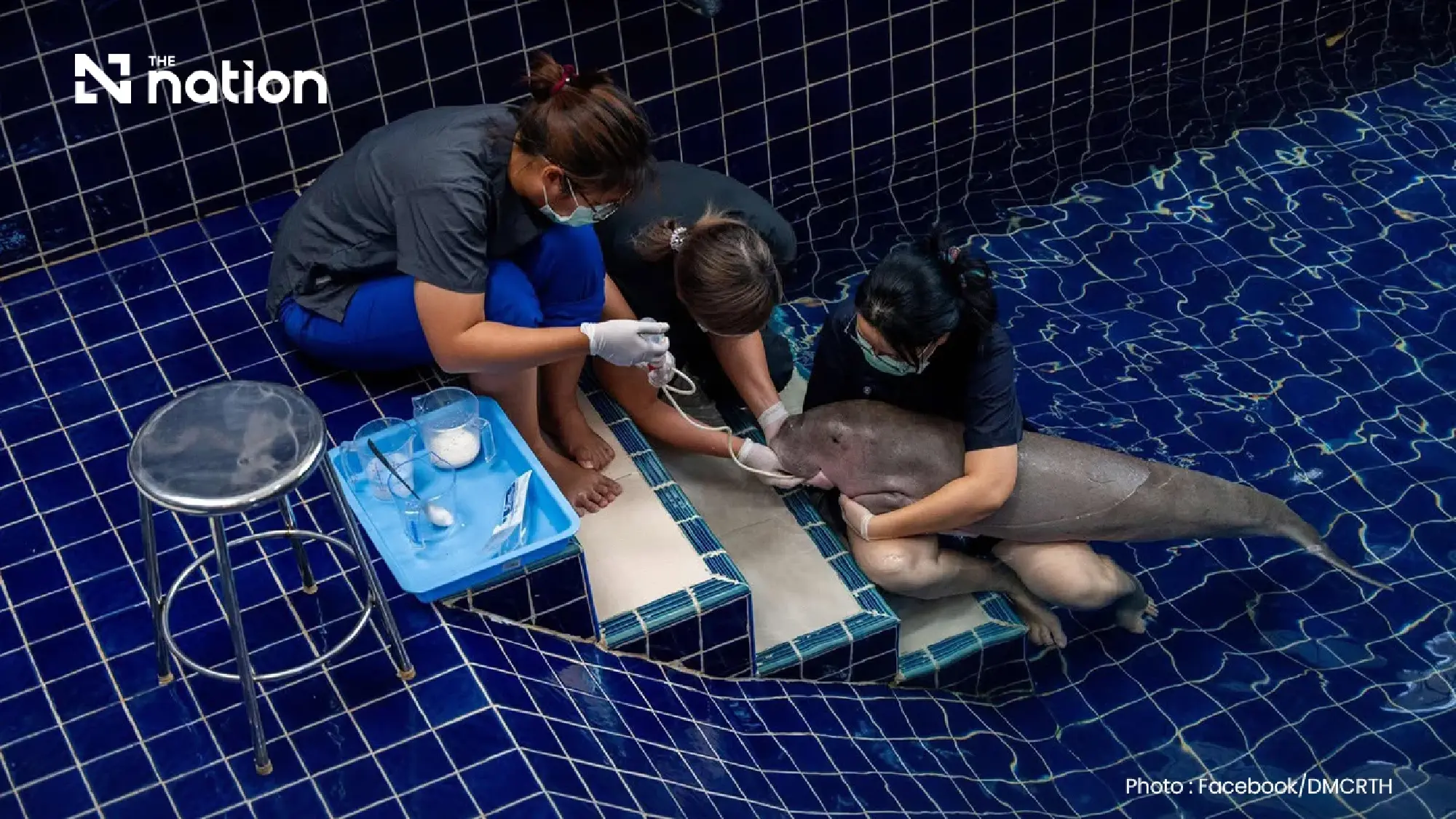
The veterinary team provided symptomatic treatment, oral fluids, supplements and milk substitute in an effort to stabilise the calf.
Despite those efforts, the dugong went into shock. Veterinarians attempted emergency resuscitation and administered medication to stimulate its vital functions, but the calf could not be revived.
Its death has underlined how difficult it can be to save young dugongs once they are stranded, weakened and separated from their mothers or herd.

Necropsy points to infection and dehydration
The Department of Marine and Coastal Resources later reported that necropsy findings suggested the calf died from shock caused by infection in the circulatory system, combined with severe dehydration.
Officials said the condition led to acute circulatory failure.
The examination also found signs of digestive and internal inflammation, while partially digested seagrass was found in the stomach. Blood and tissue samples have been collected from various organs for laboratory testing to confirm the cause of death in greater detail.
Findings to guide future conservation
Authorities said the results of the necropsy and laboratory analysis will be used to improve knowledge and rescue guidelines for rare marine animals.
The aim is to increase survival chances for dugongs and other endangered marine species when they are found stranded or in distress.
Officials said the case would also support wider efforts to strengthen Thailand’s marine conservation work, including dugong population recovery and protection of critical coastal habitats.
