
Thailand builds dry-season reserves amid 10% rainfall deficit
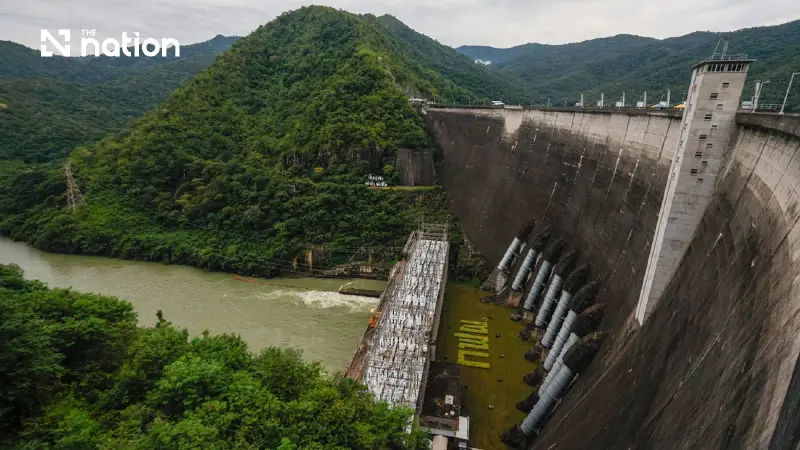


Thailand is prioritising household water supplies for the next dry season, while preparing flood-response equipment as heavy rain continues.
- The Royal Irrigation Department forecasts Thailand’s reservoir storage at 80% of capacity by November 1, 2026.
- The department is prioritising household water supplies as it builds reserves for the next dry season.
- The department has deployed 647 units of machinery and equipment across 55 provinces since May 1, 2026, to assist flood-affected areas.
Thailand’s Royal Irrigation Department (RID) is prioritising water storage for the next dry season after reporting accumulated rainfall about 10% below normal, with household supplies taking precedence. The department forecasts nationwide reservoir storage of about 61.064 billion cubic metres, or 80% of capacity, by November 1, 2026, below the volume recorded at the same point last year.
RID director-general Wittaya Kaewmee outlined the plans after a meeting of the subcommittee responsible for monitoring and analysing water trends at the Smart Water Operation Center (SWOC), at the department’s Samsen headquarters in Bangkok.
Household supplies lead Thailand’s dry-season priorities
RID is focusing on retaining as much water as possible during the closing stages of the rainy season to build reserves for the following dry season. The department’s allocation priorities are, in order:
- Drinking water and other household use.
- Maintaining ecosystems.
- Agriculture.
- Industry and production.
RID attributed the rainfall shortfall mainly to El Niño, with eastern Thailand and the eastern coast of the South recording particularly large deficits compared with normal rainfall. The department said careful storage and allocation would be needed to prepare for lower reserves than a year earlier.
Reservoirs retain room for more than 22 billion cubic metres
Large and medium-sized reservoirs nationwide held about 54 billion cubic metres of water on September 14, 2026, equivalent to 71% of their combined capacity, according to RID. The reservoirs could accommodate more than 22 billion cubic metres of additional water.
The four main Chao Phraya basin dams, Bhumibol, Sirikit, Khwae Noi Bamrung Daen and Pasak Jolasid, held a combined 16 billion cubic metres, or 65% of capacity, in RID’s September 14 assessment. Together, the reservoirs still had room for more than 8 billion cubic metres.
RID said water levels in most major river basins remained within normal ranges and below riverbanks.
For the Eastern Economic Corridor (EEC), RID reported reservoir storage of about 460 million cubic metres, or 61% of combined capacity. The department has planned allocations to meet demand from industry, agriculture and households.
Southern stations record highest 24-hour rainfall
RID said the highest rainfall totals in the 24-hour period covered by its latest update were concentrated in southern Thailand. The three highest rain-gauge readings were:
- Ban Tai subdistrict, Koh Phangan district, Surat Thani: 111.5 millimetres.
- Mayo subdistrict, Mayo district, Pattani: 95.0 millimetres.
- Sin Pun subdistrict, Khao Phanom district, Krabi: 94.0 millimetres.
RID, which is monitoring weather conditions with the Thai Meteorological Department, said a monsoon trough was extending across the upper South, the East and the lower Northeast into a strong low-pressure area over central Vietnam.
RID also reported a moderate south-west monsoon over the lower Andaman Sea, the lower South and the lower Gulf of Thailand. The weather assessment indicated heavy to very heavy rain in parts of the Northeast and East, with heavy rain in some areas of the North, Central region and South.
RID instructed local agencies to pay particular attention to low-lying areas and locations where water had already accumulated, adjusting water management to reduce potential impacts on residents.
RID deploys 647 units across 55 provinces
RID has deployed 647 units of machinery and equipment to flood-affected areas across 55 provinces since May 1, 2026, to accelerate drainage from low-lying land and ease disruption for residents. The department said several affected areas had since returned to normal.
RID has prepared more than 5,000 units of machinery, equipment and supporting tools for flood and flash-flood response. These include water pumps, water-propulsion machines, water tankers and other supporting machinery.
Wittaya instructed Irrigation Offices 1–17 and the Bureau of Mechanical Engineering to increase the frequency of weather and runoff monitoring. Particular attention is being given to water flowing from the upper Chao Phraya basin so that discharge plans can be adjusted to actual conditions.
Wittaya said the operations followed the Ministry of Agriculture and Cooperatives’ water-management policy under Minister Suriya Juangroongruangkit. The policy focuses on efficient water management, reducing the impacts of floods and drought, and strengthening long-term water security for households and agriculture.
