
DDPM issues Phetchabun flood alert after Pa Sak reaches 7.67m on September 15
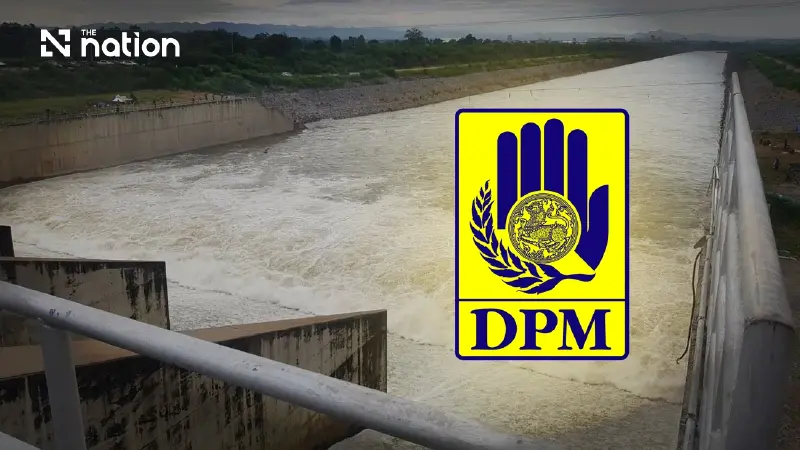


Thailand’s disaster agency urges riverside residents in Tat Kloi, Phetchabun, to move belongings, vehicles and vulnerable people to safety immediately
- The Department of Disaster Prevention and Mitigation (DDPM) issued a flood alert for Phetchabun on September 15 after the Pa Sak River's water level reached 7.67 metres and was still rising.
- The warning urged residents in the Tat Kloi subdistrict to immediately move belongings, vehicles, and vulnerable people to safe, higher ground.
- Villages 1 and 8 in Tat Kloi were identified as being particularly at risk of flooding from the rising river.
- A separate warning from the Office of the National Water Resources also placed Phetchabun on a wider flood watch list from September 15-19.
Department of Disaster Prevention and Mitigation (DDPM) issued a Cell Broadcast warning on September 15, 2026, urging residents along the Pa Sak River in Tat Kloi subdistrict, Lom Kao district, Phetchabun, to move belongings and vehicles and relocate vulnerable people to safety immediately.
DDPM reported that the river level at monitoring station S.33 was 7.67 metres at 8am and was continuing to rise as runoff from accumulated rainfall upstream entered the river.
Immediate action for Tat Kloi residents
DDPM warned that rising water threatened riverside communities and low-lying areas, particularly villages 1 and 8 in Tat Kloi, as well as neighbouring areas.
DDPM urged residents to:
- Move belongings to higher ground immediately.
- Move vehicles to safety immediately.
- Relocate vulnerable people to a safe place.
- Contact subdistrict headmen, village heads or local administrative organisations urgently if they need help evacuating.
DDPM worked with mobile operators Advanced Info Service (AIS), True and National Telecom (NT) to send the warning through Cell Broadcast. The system has also been used for earlier flood warnings in Phetchabun.
DDPM provided the following channels for reporting emergencies and requesting assistance:
Disaster hotline: 1784, available 24 hours a day.
LINE: @1784DDPM
Flood watch for September 15–19
The Office of the National Water Resources (ONWR) issued a separate warning for September 15–19, 2026, identifying areas at risk of flash floods, rapid runoff, mudslides and flooding in urban communities where drainage may be unable to cope.
ONWR listed the following provinces and districts for monitoring:
North
- Mae Hong Son: Sop Moei, Khun Yuam, Mae La Noi, Pai and Mae Sariang.
- Chiang Mai: Omkoi, Mae Chaem, Chom Thong and Hot.
- Chiang Rai: Mae Suai and Mueang Chiang Rai.
- Lampang: Thoen and Chae Hom.
- Phayao: Pong, Dok Khamtai and Chiang Kham.
- Phrae: Song, Nong Muang Khai, Rong Kwang, Mueang Phrae and Wang Chin.
- Nan: Thung Chang, Mae Charim, Bo Kluea, Wiang Sa and Pua.
- Tak: Tha Song Yang, Ban Tak, Umphang, Sam Ngao, Mae Ramat, Mueang Tak and Mae Sot.
- Uttaradit: Nam Pat, Ban Khok and Laplae.
- Phitsanulok: Chat Trakan, Noen Maprang, Nakhon Thai, Wang Thong, Bang Rakam, Bang Krathum, Phrom Phiram and Mueang Phitsanulok.
- Phetchabun: Lom Sak, Mueang Phetchabun, Khao Kho, Lom Kao, Wang Pong, Nong Phai, Nam Nao, Si Thep and Chon Daen.
- Uthai Thani: Ban Rai and Lan Sak.
Northeast
- Loei: Dan Sai, Wang Saphung, Phu Kradueng, Pha Khao and Erawan.
- Chaiyaphum: Kaeng Khro, Mueang Chaiyaphum, Phu Khiao, Kaset Sombun, Khon San, Nong Bua Rawe, Phakdi Chumphon, Nong Bua Daeng, Chatturat and Thep Sathit.
- Sakon Nakhon: Ban Muang, Wanon Niwat, Kham Ta Kla, Akat Amnuai and Khok Si Suphan.
- Nakhon Phanom: Si Songkhram, Phon Sawan, Na Kae, Tha Uthen, Pla Pak, Na Wa, Wang Yang, Na Thom and Mueang Nakhon Phanom.
East
- Chanthaburi: Khlung, Khao Khitchakut, Makham, Pong Nam Ron and Kaeng Hang Maeo.
- Trat: Mueang Trat, Khao Saming, Bo Rai, Laem Ngop, Khlong Yai and Ko Chang.
West
- Kanchanaburi: Sangkhla Buri, Sai Yok, Thong Pha Phum, Dan Makham Tia and Si Sawat.
South
- Ranong: Mueang Ranong, Suk Samran, Kra Buri and Kapoe.
- Phang Nga: Kapong, Khura Buri, Takua Pa, Mueang Phang Nga and Thai Mueang.
- Phuket: Thalang, Mueang Phuket and Kathu.
- Krabi: Ko Lanta, Khlong Thom and Ao Luek.
- Satun: Mueang Satun and La Ngu.
- Songkhla: Saba Yoi and Thepha.
- Yala: Betong, Bannang Sata, Raman, Than To and Mueang Yala.
- Pattani: Yarang and Thung Yang Daeng.
- Narathiwat: Sukhirin, Chanae, Si Sakhon, Rueso, Ra Ngae and Su-ngai Padi.
Reservoirs and rivers under closer watch
ONWR also called for close monitoring of medium and small reservoirs holding more than 80% of their storage capacity in Chiang Mai, Chiang Rai, Phayao, Nan, Phetchabun, Tak, Uthai Thani, Chaiyaphum, Sakon Nakhon, Chanthaburi, Trat, Kanchanaburi, Krabi and Ranong.
ONWR identified the following rivers and waterways for monitoring because of the risk of sudden rises, overflowing banks and flooding in low-lying areas along main channels and tributaries:
- Mae Hong Son: Yuam River.
- Chiang Rai: Sai and Kok rivers.
- Nan: Nan River.
- Tak: Moei River.
- Phitsanulok: Khwae Noi River.
- Phetchabun: Pa Sak River.
- Sakon Nakhon: Songkhram River.
- Narathiwat: Kolok River and Tanyong Mat Canal.
Agencies told to prepare drainage and evacuation plans
ONWR instructed relevant agencies to take the following measures:
- Monitor weather and water conditions continuously, particularly in areas receiving more than 90 millimetres of rain within 24 hours and locations with a history of repeated flooding.
- Inspect and repair river embankments and remove obstructions. Coordinate water management from upstream to downstream across large, medium and small reservoirs, rivers, diversion dams and sluice gates, taking tidal changes into account. Accelerate drainage and lower stored water levels to make room for expected heavy rainfall.
- Prepare flood-response plans, personnel, machinery and equipment. Clear waterways and drainage pipes, and coordinate resources so assistance can be provided immediately.
- Keep residents informed and issue advance warnings. People in areas expected to be affected should receive sufficient notice to prepare for evacuation if conditions require it.
