
Bangkok governor denies cancelling royal flood control projects
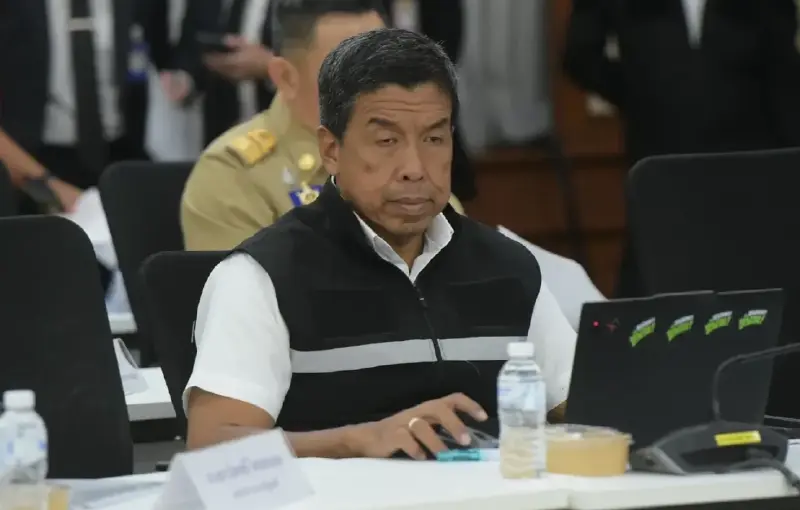


Chadchart puts the disputed retention plan’s land and water system costs at about THB11 billion, citing cheaper and more suitable alternatives.
- Bangkok Governor Chadchart Sittipunt denied cancelling royally initiated flood control projects, clarifying that decisions on specific water retention schemes were based on technical and financial considerations.
- The governor explained that a particular "monkey cheek" water retention plan was not pursued due to the high cost (approx. THB11 billion) of expropriating private land and building necessary infrastructure.
- He stated that the Bangkok Metropolitan Administration (BMA) is still applying the broader royal water management concepts by choosing more suitable and cost-effective alternatives, such as dredging canals and creating diversion tunnels.
- Chadchart dismissed allegations that the decision favoured private interests as a "misunderstanding," insisting the BMA is simply selecting the most effective flood prevention methods for local conditions.
Bangkok Governor Chadchart Sittipunt denied cancelling royally initiated flood prevention projects at the Department of Disaster Prevention and Mitigation (DDPM) on Thursday (October 1, 2026), explaining that decisions on kaem ling, or “monkey cheek”, water retention schemes were based on technical considerations.
Water retention was one of five approaches to flood prevention put forward by His Majesty the King, Chadchart explained.
The others involved constructing barriers to hold back water, creating diversion channels and tunnels, improving canals and the condition of the water, and building embankments.
“Water retention requires space to hold water temporarily, with convenient routes for water to flow in and out.
When there is a lot of water, it can be brought in and stored, then released when the time comes.
But several areas the Bangkok Metropolitan Administration (BMA) had studied for water retention were found to have limitations in terms of land and drainage systems following the major floods in 2011.
The land is privately owned, so proceeding would require land expropriation and further investment in systems to bring water in and drain it out,” Chadchart said.
The original plan for the area in question would require about THB11 billion for land expropriation and system development, according to the governor.
Alternative approaches, such as dredging and improving canals or creating diversion channels and tunnels, could cost less and better suit local conditions.
These choices reflected technical considerations rather than a cancellation of the royal initiative.
The water retention concept remained in use, particularly where existing lakes or areas capable of holding water could be developed and connected to the BMA’s drainage network, including Nong Bon Lake.
Western areas around Bang Khun Thian on the drainage route to the sea also served as a large retention area supported by the main water system.
In Bueng Kum, the BMA would focus on developing water retention space if it was already available, making effective use of it through canal dredging and links to the drainage network.
Chadchart stressed that the royal concepts extended beyond water retention and could combine diversion channels, canal improvements and water management suited to each area.
Allegations that cancelling the project favoured private interests were untrue, Chadchart insisted.
If private land was suitable and needed for water retention, the BMA would still have to expropriate it and pay the owners.
On that basis, the governor maintained that cancelling the project did not amount to favouring private interests.
Linking the issue to opposition to or cancellation of royally initiated projects was a misunderstanding, according to Chadchart.
The BMA continued to apply the royal water management concepts, choosing methods suited to local conditions for the greatest benefit.
Water levels in Bangkok’s canals had already been lowered as appropriate, the governor added, but heavy inflows required management according to the situation, including the effects of high and low tides in each area.
Chadchart expressed no objection to the prime minister deciding whether to remove him as Bangkok governor, following calls from some members of the public for his dismissal.
The governor said he was fine and was doing his best, stressing that the issue had no connection with royal projects.
Decisions were based primarily on technical assessments, with the BMA pursuing measures that worked. While recognising that residents in some areas wanted the project, Chadchart emphasised that treating an entire province as a retention area required an overall assessment of whether it would actually receive water, whether water could be brought in, how it would be drained out and how much investment would be needed.
If the project had been around for a long time, its value for money needed to be reassessed, and replacement technology was available.
The governor believed there were other systems that could replace the project and were more efficient.
Chadchart reiterated his respect for all opinions, including criticism that Bangkok had made many mistakes in handling the flooding and calls for his removal.
Some people liked him, and others did not, but everyone was free to express their views.
The governor again left any decision on removal to the prime minister, while maintaining that he could answer every question about what had happened and what the BMA was doing.
